
21 Days self Drive Car Rental in Uganda
21 Days self Drive Car Rental in Uganda, Uganda, fondly called the Pearl of Africa by Winston Churchill in 1908, is one of East Africa’s most rewarding yet underrated self-drive destinations. With a compact geography, excellent road infrastructure on main routes, diverse wildlife, and some of the world’s last remaining mountain gorillas, Uganda offers an unparalleled 3-week road trip experience.
Unlike Kenya or Tanzania where vast open plains dominate, Uganda combines dense equatorial forests, volcanic crater lakes, the mighty River Nile, and the Albertine Rift escarpment – all within a single road trip. Self-driving means freedom: you set your own pace, stop whenever a spectacular viewpoint calls, and craft a personalized African adventure without the premium cost of organised group tours.
A 21-day self-drive itinerary is considered the sweet spot – long enough to cover Uganda’s top-tier attractions from Kidepo Valley in the far north to Bwindi Impenetrable Forest in the southwest, without feeling rushed. This guide covers everything you need for a safe, memorable, and well-planned Ugandan road trip.
| Quick Facts at a Glance |
| Duration: 21 Days / 20 Nights |
| Total Distance Covered: Approximately 3,200 – 3,800 km |
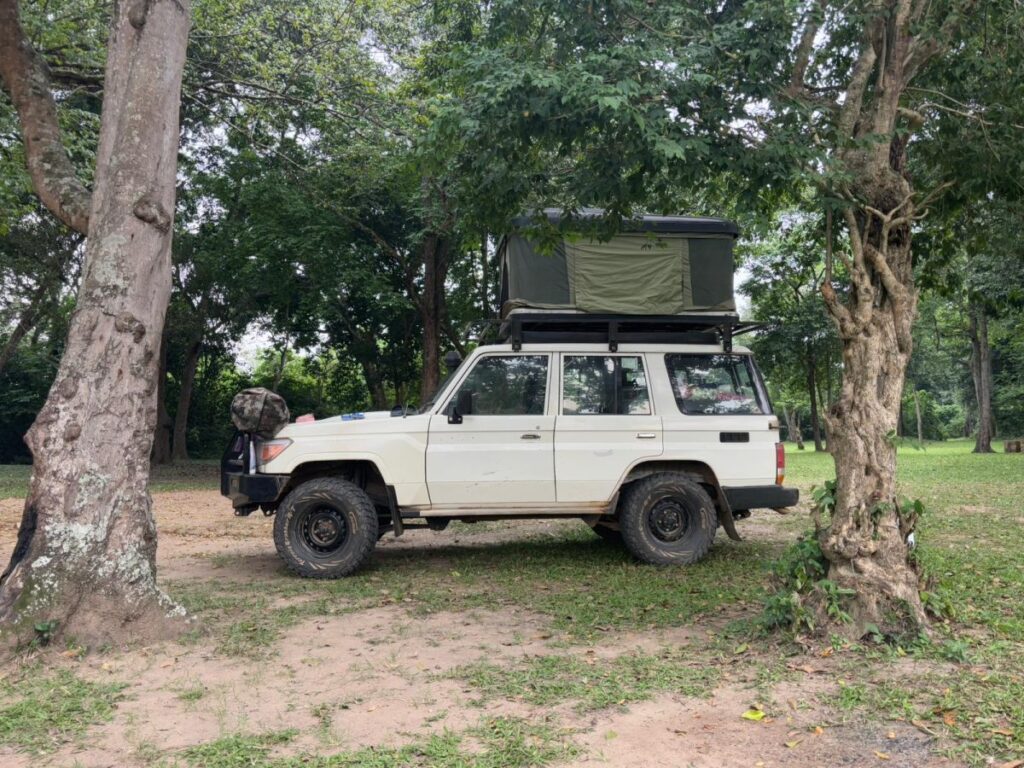
| Recommended Vehicle: Toyota Land Cruiser or Prado 4×4 |
| Best Travel Seasons: June – September | December – February |
| Minimum Driver Age: 25 years (most rental companies) |
| Valid License Required: International Driving Permit (IDP) + home country license |
| Currency: Ugandan Shilling (UGX) | USD widely accepted |
| Entry Visa: East Africa Tourist Visa (EAV) – covers Uganda, Kenya & Rwanda |
Choosing the Right Rental Car for Uganda
Vehicle selection is the single most important decision for a Uganda self-drive safari. Road conditions vary enormously – from smooth tarmac on the Kampala-Entebbe Expressway to corrugated laterite tracks inside Kidepo Valley and muddy forest trails near Bwindi, especially during the rainy season.
Recommended Vehicle Types & Rental Rates
| Vehicle Type | Daily Rate (USD) | Best For | Ground Clearance |
| Toyota RAV4 (2WD) | $45 – $60 | Paved roads, city drives | Moderate |
| Toyota Land Cruiser (4×4) | $100 – $160 | All national parks, off-road | High |
| Toyota Prado (4×4) | $80 – $130 | Most parks & rough terrain | High |
| Toyota Hilux (4×4 Pickup) | $70 – $110 | Rugged routes, camping trips | Very High |
| Safari Minivan (Pop-up roof) | $80 – $120 | Group safaris, game drives | Moderate |
| Toyota Hiace (Minibus) | $90 – $140 | Groups of 7-14 people | Moderate |
4×4 vs 2WD: The Real Verdict
Many travelers wonder whether a 4×4 is truly necessary. The short answer for a 21-day Uganda circuit that includes Kidepo, Bwindi, and Murchison is: YES – a 4×4 with high ground clearance is essential. Even if roads look fine in the dry season, a single rain shower can transform a laterite track into a mud slide. The Toyota Land Cruiser (V8 or V6) remains the gold standard for Uganda safaris. The Prado is an excellent alternative for those wanting comfort plus capability. Avoid 2WD saloons for any national park routing.
What Should Be Included in Your Rental Package
- Comprehensive insurance (third-party at minimum, full cover strongly recommended)
- 24/7 roadside assistance and emergency breakdown contacts
- Rooftop tent or camping equipment (for budget travellers)
- GPS tracker installed on the vehicle for safety and security
- Two spare tyres (essential for remote routes like Kidepo)
- Jack, toolbox, tow rope, and basic workshop tools
- Jerry can for extra fuel – northern Uganda has sparse fuel stations
- First-aid kit and vehicle fire extinguisher
- Valid vehicle logbook and insurance papers in original
Uganda Driving Rules & Road Safety Tips
Licensing Requirements
Uganda follows left-hand traffic (British system). You must hold a valid driving licence from your home country. For most international visitors, an International Driving Permit (IDP) is required alongside your national licence. If staying over 90 days, a Ugandan licence is mandatory. Obtain your IDP from your national automobile association before departure.
Speed Limits & Key Traffic Laws
- Urban areas / towns: 50 km/h maximum
- Rural highways: 80 km/h maximum
- School zones: 30 km/h mandatory
- Seatbelts compulsory for driver and all passengers
- Mobile phone use while driving prohibited – hands-free only
- Alcohol limit: 0.08% BAC – zero tolerance strongly recommended on safari roads
- Boda-bodas (motorcycle taxis) are extremely common road hazards – remain vigilant
Road Conditions by Region
| Road Quality Quick Reference Guide |
| Kampala – Entebbe Expressway: Excellent tarmac, well-maintained dual carriageway |
| Kampala – Jinja – Mbale: Good tarmac, moderate traffic, safe year-round |
| Kampala – Murchison (via Gulu Highway): Good to fair, some sections under repair |
| Fort Portal – Queen Elizabeth NP: Fair tarmac with some rough patches near park |
| Bwindi – Ishasha Route: Rough murram (dirt), 4×4 essential year-round |
| Kidepo Valley NP (internal tracks): Poor, heavily corrugated, 4×4 mandatory |
| Lake Bunyonyi Area: Hilly, narrow mountain roads – drive slowly and cautiously |
Driving Safety Dos and Don’ts
- DO start long drives before 7:00 AM to arrive at destinations before dark
- DO carry physical maps as backup – GPS signal drops in remote areas
- DO cross rivers via official ferries only (e.g., Paraa Ferry at Murchison Falls)
- DO keep your fuel tank above half at all times, especially in northern Uganda
- DO NOT drive inside national parks after dark – wildlife on roads is extremely dangerous
- DO NOT stop for strangers on isolated roads at night
- DO carry USD cash in small denominations for remote fuel stations
21-Day Suggested Self Drive Itinerary
This carefully planned itinerary balances driving distances, wildlife experiences, cultural encounters, and rest days. It follows a logical geographical loop departing and returning to Kampala/Entebbe, covering all of Uganda’s major national parks and highlights.
| Day | Location / Route | Highlights & Activities | Drive Distance |
| Day 1 | Entebbe / Kampala | Arrive, vehicle pickup, UWEC wildlife centre, Entebbe Botanical Gardens | 40 km |
| Day 2 | Kampala City | Kasubi Tombs, Uganda Museum, Owino Market, Nakasero Market | City drives |
| Day 3 | Kampala – Jinja | Source of the Nile, white-water rafting, bungee jumping, Nile boat cruise | 85 km |
| Day 4 | Jinja – Mbale / Sipi Falls | Sipi Falls hike (3 waterfalls), Mount Elgon views, coffee plantation tour | 130 km |
| Day 5 | Mbale – Kidepo Valley NP | Drive through Karamoja region, arrive Kidepo, evening game drive | 340 km |
| Day 6 | Kidepo Valley NP | Full-day game drive, Narus Valley, spot lions, cheetahs, ostriches, wild dogs | Park drives |
| Day 7 | Kidepo – Gulu | Karamojong cultural village, Gulu town, war memorial sites | 290 km |
| Day 8 | Gulu – Murchison Falls NP | Paraa Ferry crossing, Nile game drive, Murchison Falls viewpoint | 150 km |
| Day 9 | Murchison Falls NP | North bank game drive (lions, elephants, giraffes), Top of the Falls hike | Park drives |
| Day 10 | Murchison Falls NP | Nile Delta boat safari, chimp tracking in Kaniyo Pabidi Forest | 80 km |
| Day 11 | Murchison – Fort Portal | Scenic Albertine Rift drive, Hoima town stopover, arrive Fort Portal | 310 km |
| Day 12 | Fort Portal / Kibale NP | Chimpanzee tracking (permit required), 13 primate species in one forest | 30 km |
| Day 13 | Fort Portal Crater Lakes | Crater Lakes Loop drive, Amabere Caves, Nyinabulitwa Crater Lake | 60 km |
| Day 14 | Fort Portal – Queen Elizabeth NP | Kyambura Gorge chimp trek, Kazinga Channel boat cruise | 90 km |
| Day 15 | Queen Elizabeth NP (Ishasha) | Kasenyi Plains game drive, tree-climbing lions of Ishasha sector | 110 km |
| Day 16 | Ishasha – Bwindi | Arrive Bwindi Impenetrable Forest, gorilla trekking briefing | 90 km |
| Day 17 | Bwindi Impenetrable NP | Mountain gorilla trekking (USD 700 permit), Batwa cultural experience | Hike only |
| Day 18 | Bwindi – Lake Bunyonyi | 29 islands, canoe rides, 200+ bird species, island hopping | 60 km |
| Day 19 | Lake Bunyonyi – Kampala | Kabale town, Kigezi highlands (Switzerland of Africa), arrive Kampala | 410 km |
| Day 20 | Kampala / Entebbe | Craft Village shopping, Bahai Temple panoramic views, final preparations | 40 km |
| Day 21 | Entebbe Departure | Return rental vehicle, Entebbe airport transfer, fly home | 40 km |
Detailed Day-by-Day Itinerary Breakdown
Days 1-2: Kampala & Entebbe – Settling In
Begin your 21-day Uganda self-drive adventure in Entebbe, where Entebbe International Airport is the arrival point for most international flights. After collecting your rental vehicle and completing all paperwork at the rental office, spend your first afternoon at the Uganda Wildlife Education Centre (UWEC) – a world-class conservation facility where you can see chimpanzees, lions, white rhinos, and the prehistoric-looking shoebill stork. The Entebbe Botanical Gardens, where scenes from The African Queen were filmed in the 1950s, makes for a lovely late-afternoon stroll.
Day 2 is dedicated to Kampala, Uganda’s vibrant and fast-growing capital city. Visit the Kasubi Tombs (a UNESCO World Heritage Site and spiritual home of the Buganda Kingdom), the Uganda Museum (Africa’s oldest), and the sprawling Owino Market. Lunch at a local restaurant serving matoke (steamed green bananas), groundnut stew, and the famous rolex – Uganda’s beloved street wrap of egg omelette and vegetables rolled in chapati – is a cultural must. The Nakasero fresh produce market and the Craft Village on Buganda Road offer excellent shopping and photography opportunities.
Days 3-4: Jinja & Sipi Falls – Adventure & Scenery
The 85 km drive from Kampala to Jinja along the well-maintained Jinja Highway takes approximately 1.5 hours. Jinja is Uganda’s adventure capital, dramatically situated at the northern shore of Lake Victoria – the source of the mighty River Nile, the world’s longest river. Activities available in and around Jinja include white-water rafting on Grade 5 rapids (half-day or full-day options), bungee jumping 44 metres over the Nile at Adrift Jinja, stand-up paddleboarding, kayaking, and the peaceful Source of the Nile boat trip to the exact spot where the Nile begins its 6,650 km journey to the Mediterranean Sea.
On Day 4, drive northeast to Sipi Falls near Mbale (approximately 130 km, about 2.5 hours). Three breathtaking waterfalls cascade down the lush slopes of Mount Elgon – Uganda’s second-highest peak at 4,321 m. Guided hikes to all three falls are available through local community guides, and the route passes through fertile arabica coffee farmland with spectacular views across the plains far below. A coffee tour – from bean picking to fermentation, drying, roasting, and cupping – is one of the most culturally enriching and delicious experiences available in eastern Uganda.
Days 5-7: Kidepo Valley National Park – Uganda’s Untamed North
The long but rewarding drive north to Kidepo Valley National Park (approximately 340 km from Mbale, 6-7 hours) takes you through the vast Karamoja semi-arid region – one of Uganda’s most culturally distinct areas. The Karamojong pastoralists, traditionally semi-nomadic cattle herders known for their colourful beaded jewellery, striped blankets, and traditional manyatta homesteads, inhabit this otherworldly landscape of acacia savannah and granite inselbergs.
Kidepo Valley National Park is consistently rated by wildlife experts and travel publications as one of Africa’s greatest wilderness experiences. It receives dramatically fewer visitors than Kenya’s Masai Mara or Tanzania’s Serengeti, making every sighting feel utterly exclusive and personal. Wildlife found in Kidepo includes: lions, leopards, cheetahs (extremely rare elsewhere in Uganda), African wild dogs, spotted hyenas, black-backed jackals, elephants, Cape buffalos, Rothschild’s giraffes, Burchell’s zebras, beisa oryx, bat-eared foxes, ostriches, and over 475 recorded bird species. The Narus Valley in the park’s south is the prime year-round game-viewing zone. On Day 7, head south through Gulu – northern Uganda’s commercial capital – before continuing toward Murchison Falls.
Days 8-10: Murchison Falls National Park
Murchison Falls National Park is Uganda’s largest protected area at 3,840 km2 and home to what is considered one of the world’s most powerful waterfalls – the Murchison Falls, where the entire flow of the Victoria Nile is squeezed through an impossibly narrow 7-metre gorge and plunges 43 metres in a deafening cascade of white water and mist. The park is accessed from the south via the Paraa Ferry crossing over the Nile – a game drive in itself, with hippos surfacing alongside the cable-guided pontoon ferry.
Day 9 delivers a classic African morning game drive on the north bank of the Nile, where large prides of lions, elephant herds, towering Rothschild’s giraffes, Uganda kob antelopes, Jackson’s hartebeest, and Cape buffalos are regularly encountered. The afternoon hike to the top of Murchison Falls is just 2 km each way but rewards with thunderous, adrenaline-inducing views of the falls and the Nile below. Day 10 combines the famous Nile Delta boat safari near Lake Albert (where the Nile meets the Albert delta in a vast wetland paradise of crocodiles, hippos, and elephants) with optional chimpanzee tracking in the neighboring Kaniyo Pabidi Forest Reserve – one of Uganda’s more intimate chimp tracking experiences.
Days 11-13: Fort Portal & Kibale Forest National Park
The scenic drive from Murchison to Fort Portal (approximately 310 km, 5-6 hours) sweeps through the length of the Albertine Rift Valley – a UNESCO Global Biodiversity Hotspot and one of Africa’s most biologically rich regions. Fort Portal is a charming highland tea town with a cool climate, spectacular crater lake scenery, and immediate proximity to Uganda’s finest primate habitat. The journey itself – through Hoima district, along the escarpment above Lake Albert, and into the lush Rwenzori foothills – is one of Uganda’s most scenic drives.
Day 12 is dedicated to Kibale National Park, widely regarded as the best chimpanzee tracking destination in Africa. With approximately 1,500 resident chimpanzees and 12 other primate species including red colobus, L’Hoest’s monkeys, olive baboons, and the rare grey-cheeked mangabey, a single morning forest walk is a multi-species primate extravaganza. Chimpanzee tracking permits cost USD 200 per person and must be pre-booked through Uganda Wildlife Authority. Day 13 explores the spectacular Fort Portal Crater Lakes region – over 50 volcanic explosion craters forming deep sapphire-blue lakes amid rolling tea estates and banana plantations. The Amabere Caves with their remarkable stalagmite formations and the serene Nyinabulitwa Crater Lake are standout stops.
Days 14-15: Queen Elizabeth National Park
Queen Elizabeth National Park (QENP) is Uganda’s most visited protected area, offering remarkable ecological diversity across savannahs, dense forests, crater lake chains, and the twin-lake Kazinga Channel. The 90 km drive from Fort Portal takes about 2 hours along a scenic road offering views of the Rwenzori Mountains – Africa’s legendary ‘Mountains of the Moon.’ The Kazinga Channel boat cruise (2-3 hours) is one of Uganda’s most wildlife-rich experiences, providing exceptional close-range sightings of massive hippo pods, Nile crocodiles, African fish eagles, and hundreds of water bird species literally metres from the boat.
Day 15 begins with a game drive on the Kasenyi Plains – the park’s primary savannah zone – where large lion prides, elephant herds, topi, Uganda kob, warthogs, and African buffalos are regularly spotted at close range. The 110 km afternoon drive south to the Ishasha sector is rewarded with sightings of the globally famous tree-climbing lions of Queen Elizabeth – the only lion population in the world known to habitually rest in the branches of ancient fig trees, a remarkable behavior documented since the 1950s and still not fully explained by wildlife scientists.
Days 16-17: Bwindi Impenetrable Forest – Gorilla Trekking
Bwindi Impenetrable National Park is the undisputed highlight of any Uganda safari and the defining experience of this entire 21-day journey. The 90 km drive from Ishasha through winding mountain roads arrives at Bwindi – a UNESCO World Heritage Site and one of Africa’s most ancient forests, estimated to be over 25,000 years old. Bwindi harbours approximately 530 individual mountain gorillas – roughly half of the world’s total surviving population of 1,063 individuals. The park is managed across four sectors: Buhoma (most established), Rushaga (largest group selection), Nkuringo (most dramatic scenery), and Ruhija (highest altitude).
Day 17 is gorilla trekking day – an experience of such raw power and emotional depth that virtually every visitor describes it as the single most memorable wildlife encounter of their lives. Treks can range from 1 to 8 hours of hiking through dense, moss-draped, primeval rainforest, depending on the gorilla family’s movements that morning. Once found, you have exactly 60 precious minutes with the gorilla family – watching silverback males beat their chests, mothers nurse babies, juveniles wrestle and play, and the entire family go about their ancient daily rhythms, indifferent to human observers. Gorilla trekking permits cost USD 800 per person and must be booked months in advance directly through Uganda Wildlife Authority (UWA) or via a licensed Ugandan tour operator. Following the gorilla trek, a visit to the Batwa Pygmy community provides profound cultural context – the Batwa people lived as hunter-gatherers inside Bwindi’s forests for thousands of years before the park’s gazettal in 1991.
Days 18-19: Lake Bunyonyi & Return to Kampala
Lake Bunyonyi – meaning ‘place of many little birds’ in Rukiga – is widely considered one of Africa’s most beautiful lakes and a perfect post-gorilla-trek retreat. Nestled among steep Kigezi terraced hills at an altitude of 1,962 metres above sea level, the deep, bilharzia-free lake contains 29 named islands and is home to over 200 recorded bird species. A morning canoe ride or traditional wooden dugout boat trip between the islands at dawn – when mist rises off the dark water and papyrus warblers sing from the reeds – is a serenely beautiful counterpoint to the physical intensity of the previous day’s gorilla trek.
Day 19 covers the long return drive to Kampala (approximately 410 km, 6-7 hours) via Kabale and the scenic Kigezi highlands region – historically called the ‘Switzerland of Africa’ for its extraordinary terraced hillscapes of green ridges, valleys, and tea plantations. Allow extra time for the spectacular viewpoints along this stretch, particularly around Kabale and the Kanungu District road. Stop in Kabale for fuel and lunch at one of the local restaurants serving fresh tilapia from Lake Bunyonyi.
Days 20-21: Kampala Farewell & Departure
Spend Day 20 in Kampala for last-minute souvenir shopping at the Uganda Craft Village on Buganda Road and the African Village Market near Garden City shopping mall. The Gaddafi National Mosque (donated by Libya’s Colonel Gaddafi and one of East Africa’s largest mosques) welcomes respectful visitors of all faiths and offers panoramic city views from its minaret. The Bahai Temple on Kikaya Hill, one of only eight Bahai Houses of Worship worldwide, provides spectacular 360-degree panoramic views over the seven hills of Kampala and is open to all.
Return your rental vehicle on the morning of Day 21 at the agreed rental office. Allow at least 3 hours for vehicle handover, inspection, and documentation before your scheduled Entebbe departure. If your international flight departs in the evening, a final morning visit to Mabamba Swamp (40 minutes from Entebbe) for a dawn shoebill stork boat excursion is a magical final Ugandan memory. Entebbe Airport itself has good departure facilities, and several excellent souvenir shops are located in the departures hall.
Essential Permits & Park Entry Fees (2026-2027)
| Uganda Wildlife Authority (UWA) Fee Reference |
| Gorilla Trekking Permit: USD 800 per person (Bwindi or Mgahinga Gorilla NP) |
| Chimpanzee Tracking – Kibale Forest: USD 300 per person |
| Chimpanzee Tracking – Kyambura Gorge (QENP): USD 50 per person |
| Murchison Falls NP Entry Fee: USD 40 per person per day (foreign non-resident) |
| Queen Elizabeth NP Entry Fee: USD 40 per person per day |
| Kidepo Valley NP Entry Fee: USD 40 per person per day |
| Bwindi Impenetrable NP Entry Fee: USD 50 per person per day |
| Vehicle Entry Fee (all parks): USD 30-40 per vehicle per day |
| Nile Boat Safari – Murchison Falls: USD 30 per person (2-hour cruise) |
| Kazinga Channel Boat Cruise: USD 30 per person (2-3 hours) |
| Golden Monkey Tracking (Mgahinga): USD 100 per person |
| Rhino Tracking – Ziwa Sanctuary: USD50 per person |
IMPORTANT: All permits – especially gorilla and chimpanzee tracking – must be booked and paid for well in advance. Gorilla permits regularly sell out months ahead, particularly for peak season (June-September and December-February). Book directly through the Uganda Wildlife Authority website (ugandawildlife.org) or use a licensed and AUTO-registered Ugandan tour operator as your booking agent.
Accommodation Options for Self Drive Travelers
Budget Camping (USD 10-25 per night per person)
Uganda has a growing and well-managed network of designated campsites within and immediately outside national parks, managed by Uganda Wildlife Authority. Most offer basic ablution blocks with running water, long-drop toilets, and fire pit areas. Popular budget camp spots include Red Chilli Rest Camp (Murchison Falls), Rwoho Forest Camp (near Queen Elizabeth), and Bwindi Community Campsite. Carrying a rooftop tent on your 4×4 significantly reduces accommodation costs on a 21-day trip and dramatically increases flexibility to camp in spectacular wild locations.
Mid-Range Lodges (USD 80-180 per night)
Mid-range accommodation options strike an excellent balance between comfort and price for the self-drive traveller. Standout properties include Kasenyi Safari Camp (QENP), Mweya Safari Lodge (QENP), Pakuba Safari Lodge (Murchison Falls), Heritage Safari Lodge (Murchison), and Ichumbi Gorilla Lodge (Bwindi). Book gorilla-area lodges many months ahead – they sell out fast during peak season.
Luxury Safari Lodges (USD 250-600+ per night)
Uganda’s luxury safari lodge offering has expanded significantly over the past decade. Apoka Safari Lodge in Kidepo Valley is consistently rated among Africa’s top ten safari lodges by Conde Nast Traveller and Travel + Leisure. Additional exceptional luxury properties include Wildwaters Lodge on a private river island above the Nile near Jinja, Clouds Mountain Gorilla Lodge above Bwindi, Kyambura Gorge Lodge (QENP), and Bwindi Lodge for those wanting a premium gorilla trekking night.
Budget Planning: 21-Day Uganda Self Drive Costs
| Estimated Budget Breakdown Per Person (Based on 2 Travellers Sharing Vehicle) |
| Car Rental – Toyota Land Cruiser 4×4, 21 days: USD 2,100 – 3,360 (USD 100-160/day) |
| Fuel – estimated 3,500 km at 10L/100km, USD 1.30/litre: USD 455 – 500 |
| National Park Entry Fees – all parks, approx. 12 park days: USD 480 – 540 |
| Gorilla Trekking Permit (1 trek, mandatory booking): USD 700 per person |
| Chimpanzee Tracking Permit – Kibale Forest: USD 200 per person |
| Accommodation – 21 nights, mid-range average USD 100/night shared: USD 1,050 |
| Boat Safaris & Activities (rafting, bungee, crater lake): USD 150 – 250 |
| Meals & Drinks – estimated USD 30-50/day: USD 630 – 1,050 |
| Uganda Entry Visa (East Africa Tourist Visa): USD 100 |
| Travel Insurance (strongly recommended for safari travel): USD 80 – 150 |
| Miscellaneous / Tips / Guides / Souvenirs: USD 200 – 400 |
| ESTIMATED TOTAL PER PERSON (mid-range): USD 6,145 – 8,300 |
Budget travellers using UWA campsites, a rooftop tent, and self-catering can reduce the total to approximately USD 3,500-5,000 per person for the full 21 days. The gorilla permit (USD 700 fixed) and car rental are the two largest non-negotiable expenses. Splitting all costs between 2-3 travellers sharing a single 4×4 vehicle makes this self-drive significantly more economical per person.
Health, Safety & Practical Travel Tips
Mandatory Health Requirements & Precautions
- Yellow Fever vaccination certificate is mandatory for entry into Uganda – no exceptions
- Malaria prophylaxis strongly recommended – consult your doctor 4-6 weeks before departure
- Typhoid, Hepatitis A, and Rabies vaccines are advisable for safari travellers
- Drink only bottled or boiled water; avoid ice cubes from unknown sources
- Apply DEET-based insect repellent at all times, especially at dusk and dawn
- Keep a basic medical kit: antihistamines, rehydration salts, plasters, antiseptic wipes
Safety & Security
- Uganda is generally very safe for tourists; violent crime specifically targeting visitors is rare
- Kidepo Valley area borders South Sudan – follow UWA ranger safety guidance at all times
- Do not photograph military installations, government buildings, or police stations
- Insure your camera gear separately – electronics theft can occur in busy Kampala markets
- Keep certified copies of all documents: passport, IDP, insurance certificate, rental agreement
Connectivity & Communication
- MTN Uganda and Airtel Uganda offer affordable local SIM cards with strong 4G coverage in towns
- Remote parks (Kidepo, deep Bwindi, Nkuringo) have very limited or no mobile signal
- Download offline maps on Maps.me or Google Maps before entering remote zones
- A satellite communicator (e.g., Garmin inReach Mini) is recommended for solo drivers
Money & Payments
- USD is widely accepted at lodges, national parks, and for all major tourist transactions
- Ugandan Shillings (UGX) needed for local fuel stations, markets, and small eateries
- ATMs available in Kampala, Jinja, Fort Portal, Gulu, Kabale – carry emergency USD cash
- Visa/Mastercard accepted at upscale lodges and hotels; not reliable at remote locations
Best Time to Visit Uganda for a Self Drive Safari
Long Dry Season: June – September (Highly Recommended)
The long dry season is the most popular and strongly recommended time for a Uganda self-drive safari. Wildlife concentrates around remaining water sources, making game viewing in all parks exceptional. Roads are at their driest and most accessible – critically important for Kidepo’s corrugated tracks and Bwindi’s steep, slippery forest roads. Gorilla and chimpanzee trekking trails are far more manageable without mud. Expect higher accommodation costs and the need to book all permits and lodges many months in advance.
Short Dry Season: December – February (Excellent)
Uganda’s second dry window offers excellent driving conditions and very good wildlife visibility. This period coincides with European and North American winter holidays, making Bwindi gorilla permits extremely competitive. Migratory birds from Europe and Asia are present between November and April, making it the absolute peak period for birdwatching. Uganda officially holds over 1,065 recorded bird species – making it one of Africa’s top three birding destinations per unit area.
Rainy Seasons: March – May and October – November (Experienced Drivers Only)
While Uganda’s ‘Green Seasons’ offer lower rental rates (15-25% discount), lush photogenic landscapes, and significantly fewer crowds, they present serious logistical challenges for self-drivers. Bwindi, Kidepo, and Ishasha sector roads can become genuinely impassable even in a fully equipped 4×4 during heavy rain periods. However, for experienced off-road drivers who plan carefully and carry recovery equipment, the rains create a dramatically beautiful Uganda – waterfalls at their thundering peak, newborn animals in the parks, vibrantly green landscapes, and extraordinary photography conditions.
Top Wildlife Experiences on the 21-Day Circuit
Mountain Gorilla Trekking – Bwindi Impenetrable Forest
The unrivalled, irreplaceable highlight of any Uganda itinerary. With roughly 530 individual mountain gorillas in Bwindi alone – and the global wild population standing at just over 1,063 individuals – this is among the rarest wildlife encounters on Earth. Unlike any zoo or captive experience, seeing these intelligent, gentle giants in their ancient, misty rainforest home is a profoundly humbling and life-changing experience. Many experienced wildlife travelers who have visited all seven continents describe their Bwindi gorilla encounter as the single most emotionally powerful wildlife moment of their lives.
Chimpanzee Tracking – Kibale Forest National Park
Kibale National Park is Africa’s premier chimpanzee destination with approximately 1,500 resident chimpanzees – the highest density of any protected area on the continent. The park also supports 12 other primate species including the red colobus monkey, L’Hoest’s monkey, olive baboon, grey-cheeked mangabey, and black-and-white colobus, making a single forest walk a multi-species primate extravaganza that rivals any East African primate destination.
Big Five Safari – Murchison Falls & Queen Elizabeth
While Uganda lacks wild rhinos (the last were poached in the 1980s – white rhinos can be seen at Ziwa Rhino Sanctuary en route to Murchison), the other four of the classic Big Five – lions, leopards, elephants, and Cape buffalos – are present across both Murchison Falls and Queen Elizabeth National Parks. QENP’s Ishasha sector holds Uganda’s most globally photographed wildlife subjects: tree-climbing lions lounging in ancient fig trees, a behaviour exhibited by this population since the 1950s.
Shoebill Stork – Africa’s Most Sought-After Bird Sighting
The prehistoric-looking shoebill stork (Balaeniceps rex) – standing over 1.2 metres tall with a massive shoe-shaped bill capable of catching lungfish and small monitor lizards – is one of the world’s most sought-after and bucket-list bird sightings. Uganda offers some of Africa’s most reliable shoebill encounters at Mabamba Swamp near Entebbe (excellent on Day 1 or Day 21), the Nile Delta area of Murchison Falls, and the Kazinga Channel wetlands in Queen Elizabeth. A guided papyrus boat excursion into Mabamba at dawn is a world-class birding experience.
Top Tips for Booking Your Uganda Self Drive Rental
- Book the full rental package at least 3-6 months in advance, especially for peak season (June-September)
- Choose only a rental company registered with the Association of Uganda Tour Operators (AUTO)
- Request a vehicle with two full-size spare tyres – one is insufficient for Kidepo routes
- Confirm whether the rental includes satellite phone or emergency communication device
- Read all rental agreement insurance exclusions carefully – many policies exclude river crossings and flood damage
- Avoid rental companies that prohibit off-road driving – this is unavoidable in Uganda’s national parks
- GPS-enabled vehicles with real-time tracking are preferred for self-drive safety
- Test drive the vehicle for at least 30 minutes before departing the rental office
- Photograph all existing vehicle damage from multiple angles before accepting the keys
- Carry the rental company’s 24-hour emergency number and UWA rescue contacts at all times
- Request a roof rack or rooftop tent pre-fitted if you plan to camp in national parks
Final Word: The Freedom of Uganda’s Open Road
A 21-day self-drive car rental adventure across Uganda is more than a holiday – it is a transformative journey through one of Earth’s most extraordinary and varied landscapes. From locking eyes with a silverback mountain gorilla in Bwindi’s ancient primeval forest to watching the Nile thunder through Murchison’s narrow gorge, from the vast solitude of Kidepo’s wilderness under an unblemished African sky to the sparkling crater lakes of Fort Portal at golden hour – every single day delivers something genuinely unforgettable.
The self-drive format places you firmly in the driver’s seat of your own African adventure. You choose when to linger over a perfect sunrise turning the savannah gold, when to follow a pride of lions off the track into the bush, when to stop for 20 minutes watching a giraffe drink, and when to pull over at a roadside market for a rolex from a local mama. That freedom – raw, authentic, unscripted, and deeply rewarding – is the greatest gift Uganda’s roads have to offer any traveller.
Plan carefully, choose the right vehicle, book your gorilla permits many months early, embrace the beautiful and occasionally exasperating unpredictability of East African travel, and trust Uganda to deliver. The Pearl of Africa has been waiting for you, and the road ahead is nothing short of magnificent.