
30 Days Self Drive Car Rental In Uganda
30 Days Self Drive Car Rental In Uganda, Uganda, known as the Pearl of Africa, is one of the most biodiverse and scenically stunning nations on the continent. With ten national parks, two mountain ranges, the source of the River Nile, and over half of the world’s remaining mountain gorilla population, Uganda rewards adventurous travelers who take their time to explore beyond the usual tourist trail.
A 30-day self drive itinerary gives you the rare freedom to set your own pace — linger in a forest clearing when chimpanzees are active, detour to a remote waterfall, or simply pull over to photograph a breathtaking sunset over Lake Victoria. Unlike packaged tours that shuffle you between lodges on a fixed schedule, self driving puts every decision in your hands.
This comprehensive guide covers everything you need to know: the best vehicles to hire, the finest routes to follow, essential documentation, park entry fees, budget planning, safety advice, and a day-by-day suggested itinerary that covers Uganda’s greatest highlights within a 30-day window.
Uganda At a Glance
| Capital City | Kampala |
| Currency | Ugandan Shilling (UGX) — approx. UGX 3,700 to USD 1 |
| Language | English (official), Luganda, Swahili |
| Driving Side | Left-hand side (same as Kenya, Tanzania, UK) |
| International Licence | Required alongside your home country licence |
| Best Seasons | June–September (dry) & December–February (short dry) |
| Rainy Seasons | March–May & October–November |
| Typical Road Conditions | Mix of tarmac highways and rough murram (dirt) tracks |
| Recommended Vehicle | 4WD/4×4 SUV (essential for national parks) |
| Fuel Type | Petrol & Diesel widely available; fuel up in major towns |
Choosing the Right Vehicle for 30 Days
Vehicle selection is the single most important decision for a Uganda self drive. The country’s terrain ranges from smooth tarmac highways near Kampala to deeply rutted, waterlogged murram tracks inside national parks. A standard saloon car will fail you the moment you leave the tarmac, and breakdowns in remote park interiors can be genuinely dangerous.
Recommended Vehicle Types
Toyota Land Cruiser (V8 or 4.5L Diesel) — Best Overall
The Toyota Land Cruiser is the gold standard for Uganda self drive rentals. Its combination of high ground clearance, robust 4WD system, and exceptional reliability in African conditions makes it the preferred choice of experienced safari travellers. The V8 version handles river crossings, steep escarpment climbs, and heavily corrugated tracks with ease. Rental rates typically range from USD 120–180 per day including insurance.
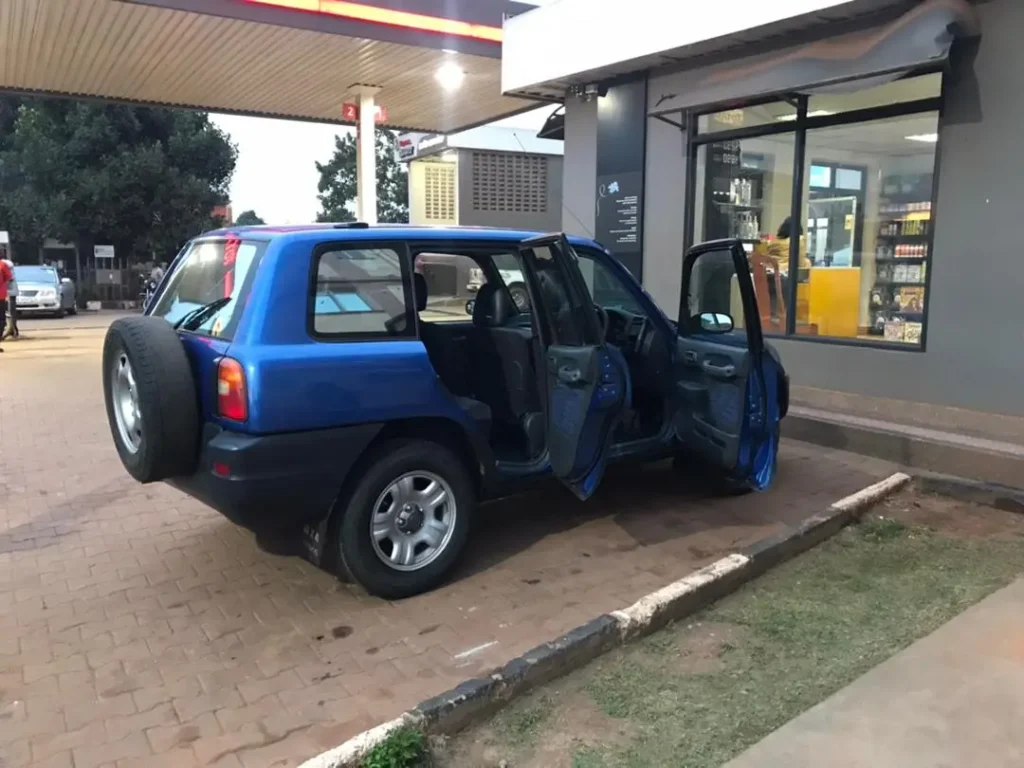
Toyota RAV4 — Best Budget 4WD Option
The RAV4 is a popular mid-range option that handles most Ugandan park roads adequately in dry season. It is more fuel-efficient than the Land Cruiser and rents for approximately USD 60–90 per day. However, it is not recommended for the Bwindi Forest roads or Kidepo Valley in wet season without an experienced guide.
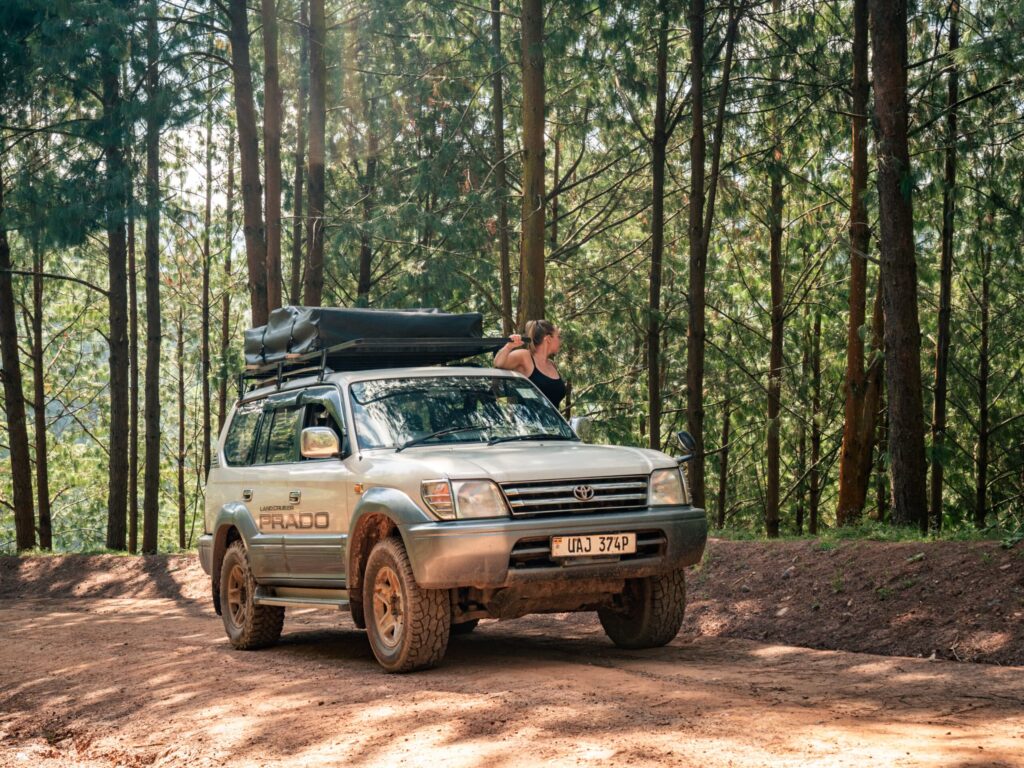
Toyota Land Cruiser Prado — Best Comfort
The Prado combines Land Cruiser capability with superior interior comfort, making it ideal for travellers who plan long daily drives. It rents for USD 100–150 per day and is particularly well-suited for couples or solo travellers on extended self drive trips.
Safari Van (Customised Pop-up Roof)
Safari vans with pop-up roofs are excellent for larger groups (up to 7 passengers) and wildlife photography. The roof hatch provides a stable 360-degree viewing platform. They are less capable on extreme off-road terrain but handle most main park circuits comfortably. Rates range from USD 80–140 per day.
Vehicle Comparison Table
| Vehicle | Daily Rate (USD) | Ground Clearance | Fuel Economy | Best For |
| Land Cruiser V8 | $120–$180 | Excellent | Moderate | All parks, wet season |
| Land Cruiser Prado | $100–$150 | Very Good | Moderate | Comfort touring |
| Toyota RAV4 | $50$50 | Good | Good | Dry season, highways |
| Safari Van | $80–$140 | Moderate | Moderate | Groups, photography |
| Nissan X-Trail | $45–$50 | Good | Good | Budget, dry season |
Essential Documents & Legal Requirements
Driving in Uganda without the correct documentation can result in fines, vehicle impoundment, or more serious legal complications. Ensure every document below is in order before you pick up your vehicle.
Documents You Must Carry
- Valid passport (original, not a photocopy)
- International Driving Permit (IDP) — must be obtained in your home country before travel
- Home country driving licence (original)
- Comprehensive vehicle rental agreement from the hire company
- Third-party liability insurance certificate
- Vehicle registration papers (provided by hire company)
- Uganda Wildlife Authority (UWA) park entry permits where required
- Yellow fever vaccination certificate (mandatory for all visitors)
International Driving Permit
The IDP is a multilingual translation of your national licence recognised under the 1949 Geneva Convention on Road Traffic, to which Uganda is a signatory. Apply for it through your national automobile association (e.g. AA in the UK, AAA in the USA) before departure. It is valid for 12 months and costs a nominal fee of approximately USD 20–30 depending on your country.
30-Day Rental Budget Breakdown
Below is a realistic budget breakdown for a 30-day self drive rental. Costs vary based on vehicle choice, season, and fuel prices. All figures are in USD and represent approximate averages as of 2025.
| Expense Category | Estimated Cost (USD) | Notes |
| Vehicle rental (Land Cruiser V8) | $3,600–$5,400 | $120–$180/day × 30 days |
| Comprehensive insurance | $300–$600 | Often included; verify with agent |
| Fuel (diesel ~USD 1.30/litre) | $600–$900 | Est. 4,000–6,000 km driven |
| National park entry fees | $600–$900 | Multiple parks, multi-day |
| Gorilla trekking permit | $700–$800 | USD 700 per person (Bwindi) |
| Chimpanzee trekking permit | $150–$200 | USD 150 per person |
| Accommodation (30 nights) | $900–$3,000 | Budget to mid-range camps |
| Food & daily expenses | $600–$1,200 | $20–$40 per day |
| Guides & activity fees | $300–$600 | Nature walks, boat rides etc. |
| Emergency/contingency (10%) | $800–$1,300 | Strongly recommended |
| TOTAL ESTIMATE | $8,550–$14,900 | Varies by vehicle & style |
30-Day Self Drive Itinerary
This itinerary has been carefully designed to balance Uganda’s major wildlife experiences with cultural encounters, scenic drives, and adequate rest days. Distances and drive times assume reasonable road conditions. Always add buffer time during rainy season.
Week 1: Kampala to Murchison Falls (Days 1–7)
Day 1 — Arrival in Kampala
Collect your rental vehicle from Kampala city centre or Entebbe International Airport. Most reputable hire companies will deliver to the airport for a nominal surcharge. Spend the afternoon acclimatising and conducting a thorough vehicle check — inspect tyres (including the spare), jack, wheel spanner, engine oil, coolant, and first aid kit. Check that the rental company has loaded offline maps for Uganda on your GPS or phone.
Day 2 — Kampala City Exploration
Before heading upcountry, explore Kampala. Visit the Kasubi Tombs (a UNESCO World Heritage Site), Namugongo Martyrs’ Shrine, the Uganda Museum, and the lively Owino Market. Drive up to Lugard’s Fort at the Old Kampala Hill for panoramic city views. This day also lets you practice driving on Ugandan roads without the pressure of a long highway journey.
Days 3–4 — Drive to Murchison Falls National Park (305 km, ~5 hrs)
Depart Kampala via the Gulu Highway heading north. The road is largely good tarmac. Stop at the Ziwa Rhino Sanctuary en route — Uganda’s only wild rhino population, offering guided bush walks to within metres of the rhinos. Arrive at Murchison Falls in the afternoon and check in at your camp near the Nile.
Days 5–6 — Murchison Falls Activities
Murchison Falls National Park is Uganda’s largest protected area at 3,840 sq km. Day 5: Take a boat cruise on the Victoria Nile to the base of Murchison Falls — where the entire River Nile squeezes through a 7-metre gorge in a thunderous cascade. Spot hippos, Nile crocodiles, African fish eagles, and elephants on the riverbanks. Day 6: Morning game drive in the northern sector. Murchison is one of the best parks for lion, elephant, giraffe (Rothschild’s — an endangered subspecies), buffalo, and Uganda kob.
Day 7 — Murchison to Hoima / Rest Day
Drive south from Murchison (approximately 3 hours) to Hoima, the oil city on Lake Albert’s escarpment. This is a gentle transition day. You can visit the Buhimba Hot Springs or simply rest and plan the coming week. Top up fuel here as supplies become irregular further west.
Week 2: Western Uganda — Queen Elizabeth & the Crater Lakes (Days 8–14)
Days 8–9 — Drive to Queen Elizabeth National Park (Hoima to QENP, ~280 km, 5 hrs)
Queen Elizabeth National Park (QENP) is Uganda’s most visited park and one of Africa’s most biologically diverse areas. The drive south from Hoima is scenic, passing through tea estates and the Rwenzori foothills. Check in at a camp near Mweya Peninsula, which juts into the Kazinga Channel.
Days 10–11 — Queen Elizabeth Activities
Day 10: The Kazinga Channel boat cruise is one of East Africa’s finest wildlife experiences — the channel hosts the world’s highest density of hippos and enormous Nile crocodiles. Hundreds of water birds line the banks. Day 11: Drive to the Ishasha sector (southern QENP, ~100 km). Ishasha is world-famous for its tree-climbing lions — prides that lounge on the branches of giant fig trees. This curious behaviour is shared only with a population in Lake Manyara, Tanzania.
Days 12–13 — Crater Lakes Region (Kibale Forest Area)
Drive northeast from QENP to the Fort Portal / Kibale region, home to a stunning chain of volcanic crater lakes. The Ndali-Kasenda crater lake loop is a spectacular 40-km drive past turquoise lakes set inside ancient volcanic calderas. These peaceful lakes are excellent for birdwatching, kayaking, and swimming.
Day 14 — Chimpanzee Trekking in Kibale Forest
Kibale National Park contains the highest density of primates in Africa and is the premier destination for chimpanzee trekking in Uganda. Permits cost USD 150 per person and must be booked in advance through the Uganda Wildlife Authority (UWA) or a licensed agent. Treks depart at 08:00 and 14:00 and typically last 2–5 hours depending on chimpanzee movements.
Week 3: Bwindi & Gorilla Trekking (Days 15–21)
Days 15–16 — Drive to Bwindi Impenetrable National Park (~150 km from Kibale, 4 hrs)
Bwindi Impenetrable National Park is Uganda’s most iconic destination — a UNESCO World Heritage Site and home to approximately 459 mountain gorillas (over half the world’s total population). The drive through the Kigezi Highlands offers some of Uganda’s most dramatic scenery: terraced hillsides, misty valleys, and the green infinity of the impenetrable forest itself. Check in to your lodge the afternoon before your trek.
Days 17–18 — Mountain Gorilla Trekking
A gorilla trekking permit costs USD 700 per person per trek and is one of the world’s great wildlife experiences. Treks can range from 1 to 8 hours depending on gorilla movements through the forest. You are guaranteed one full hour with the gorilla family upon finding them. The experience of locking eyes with a 200-kg silverback in the misty forest is utterly transformative. Book a second permit for Day 18 if budget permits — no two treks are ever the same.
Day 19 — Bwindi Forest Walks & Community Visits
Rest your legs with a shorter guided nature walk in the forest buffer zone. Your guide will point out forest elephants’ tracks, rare birds including the African green broadbill and Shelley’s crimsonwing, and the extraordinary biodiversity of the impenetrable forest floor. Afternoon: visit the Batwa community — the original forest-dwelling people of Bwindi — for a cultural experience that supports their post-forest-eviction livelihood programs.
Days 20–21 — Lake Bunyonyi Relaxation
Drive one hour north from Bwindi to Lake Bunyonyi, Africa’s second deepest lake and arguably Uganda’s most beautiful. The lake is dotted with 29 islands and encircled by steep, emerald-green terraced hillsides. Spend two nights here kayaking between islands, swimming (the lake is bilharzia-free), and simply decompressing after the intense experiences of gorilla country.
Week 4: Jinja, Source of the Nile & Return (Days 22–30)
Days 22–23 — Drive to Mgahinga Gorilla National Park (Optional Extension)
For those with a second gorilla permit or wishing to track the endangered golden monkeys, Mgahinga Gorilla National Park is 45 minutes from Lake Bunyonyi. The park sits on the slopes of three dormant volcanoes — Mt. Muhavura, Mt. Gahinga, and Mt. Sabyinyo — and offers spectacular volcano hiking on top of its primate experiences.
Days 24–25 — Drive East to Lake Mburo National Park (~280 km, 5 hrs)
Lake Mburo National Park is the only park in Uganda where zebras roam. It also contains elands, impalas, topis, hippos, crocodiles, and over 350 bird species. The park is famous for its walking safaris and horseback safaris — rare opportunities in Uganda’s national park system. Stay two nights to enjoy an evening boat cruise on Lake Mburo.
Days 26–27 — Jinja & the Source of the Nile
Drive from Lake Mburo to Jinja (approximately 3.5 hours on the Masaka-Kampala highway). Jinja is the adventure capital of East Africa, sitting at the point where the River Nile exits Lake Victoria. Activities include white-water rafting on Grade 4–5 rapids (one of Africa’s best rafting experiences), kayaking, quad biking, bungee jumping over the Nile, and boat trips to the symbolic Source of the Nile monument.
Days 28–29 — Return to Kampala & Final Exploration
Jinja is only 80 km from Kampala — a comfortable 2-hour drive. Spend Day 28 doing last-minute Kampala shopping: Ndere Cultural Centre performances, the Craft Village at Nommo Gallery, and the Nakasero Market are all worth a visit. On Day 29, drive to Entebbe for a boat ride to the Ngamba Island Chimpanzee Sanctuary on Lake Victoria — a rewarding half-day excursion before departure.
Day 30 — Vehicle Return & Departure
Return your vehicle to the rental company, ensuring you allow at least 2 hours for the handover inspection, fuel top-up, and completion of final paperwork. Entebbe International Airport is a 40-minute drive from Kampala city centre under normal traffic conditions, but allow considerably more time during morning rush hour.
Uganda National Park Entry Fees (UWA — 2025 Rates)
All fees are in USD and are payable at park gates. Major credit/debit cards are accepted at most main gates, but carry cash (USD or UGX) as a backup for remote entry points.
| National Park | Foreign Citizen (USD/day) | East African (USD/day) | Main Attractions |
| Bwindi Impenetrable NP | $40 | $20 | Mountain gorillas, forest birds |
| Murchison Falls NP | $40 | $20 | Nile falls, lion, giraffe, elephant |
| Queen Elizabeth NP | $40 | $20 | Tree-climbing lions, Kazinga Channel |
| Kibale Forest NP | $40 | $20 | Chimpanzees, primates |
| Lake Mburo NP | $40 | $20 | Zebra, walking safaris, hippos |
| Mgahinga Gorilla NP | $40 | $20 | Gorillas, golden monkeys |
| Rwenzori Mountains NP | $40 | $20 | Glacier hiking, rare flora |
| Mount Elgon NP | $40 | $20 | Volcano hiking, sipi falls |
| Kidepo Valley NP | $40 | $20 | Remote wilderness, cheetah |
Road Safety & Driving Tips in Uganda
Uganda’s road network has improved substantially in recent years, but self drive travellers must understand the unique challenges and respect local road conditions to ensure a safe journey.
Essential Driving Rules
- Drive on the LEFT-hand side of the road at all times.
- The national speed limit is 80 km/h on highways and 50 km/h in towns — strictly enforced at police checkpoints.
- Never drive after dark in national parks — this is illegal and dangerous.
- Avoid night driving on rural roads even outside parks — pedestrians, livestock, and cyclists without lights are serious hazards.
- Speed bumps (‘humps’) appear suddenly on all Ugandan roads — slow down approaching towns and villages.
- Boda-bodas (motorcycle taxis) frequently cut across traffic lanes — maintain constant vigilance in towns.
- In case of an accident, call your rental company’s emergency line first, then police on 999.
- Always wear seatbelts — it is legally required and fines are enforced.
- Do not use a mobile phone while driving — use a hands-free kit.
- Carry a physical map or download offline Uganda maps (Maps.me, Gaia GPS) as mobile data can be patchy in remote areas.
Vehicle Maintenance on the Road
- Check tyre pressures every 3–4 days. Reduce pressure slightly (to approximately 28 PSI) on rough murram tracks.
- Check engine oil and coolant levels daily on a 30-day trip.
- Know how to change a tyre — practise before you leave Kampala if you are unfamiliar.
- Carry 5–10 litres of spare diesel/petrol when heading into remote areas like Kidepo.
- Carry a basic recovery kit: tow rope, jump cables, shovel, and traction mats if driving in wet season.
Best Time to Self Drive Uganda
Uganda straddles the equator and receives rainfall year-round, but there are distinct dry and wet seasons that significantly affect road conditions, particularly in national parks.
| June–September (Long Dry) | BEST season. Firm murram roads. Grass short = excellent wildlife viewing. Gorilla trekking in manageable conditions. |
| December–February (Short Dry) | EXCELLENT. Short grasses, clear skies, great for photography. Migratory birds present. |
| March–May (Long Rains) | CHALLENGING. Park roads can become impassable even in 4WD. Not recommended for first-time self drivers. |
| October–November (Short Rains) | MODERATE. Lighter rains than March–May. Possible with a capable 4WD, but add extra buffer days. |
Accommodation Along the Route
Uganda offers accommodation across all budgets, from basic UWA campgrounds at USD 10–20 per night to luxury tented camps exceeding USD 400 per night. For a balanced 30-day self drive, a mix of mid-range lodges and budget guesthouses is the most practical approach.
Budget Accommodation (USD 15–50/night)
- UWA Bandas & Campsites — inside or adjacent to national parks, basic facilities
- Red Chilli Hideaway (Kampala & Murchison) — popular backpacker hub with camping
- Leopard Rest Camp (QENP) — simple chalets near the park
- Arcadia Cottages (Lake Bunyonyi) — charming island-style cottages
Mid-Range Accommodation (USD 80–200/night)
- Paraa Safari Lodge (Murchison Falls) — iconic Nile-side lodge
- Mweya Safari Lodge (Queen Elizabeth) — stunning Kazinga Channel views
- Bwindi Lodge — convenient for gorilla trekking, beautiful forest setting
- Source of the Nile Hotel (Jinja) — comfortable, well-located
- Ndali Lodge (Crater Lakes) — award-winning lodge with panoramic crater views
Travel Insurance Requirements
Comprehensive travel insurance covering emergency medical evacuation is non-negotiable for a 30-day Uganda self drive. Medical evacuation from a remote park to Kampala or Nairobi can cost USD 10,000–50,000. Ensure your policy specifically covers:
- Emergency medical evacuation by aircraft
- Vehicle recovery in remote areas
- Trip cancellation including permit non-refund clauses
- Personal liability and third-party vehicle damage
Top 15 Tips for a Successful 30-Day Uganda Self Drive
- Book gorilla and chimpanzee permits months in advance — they sell out. The Uganda Wildlife Authority online system opens bookings 30 days ahead; travel agents can secure permits further in advance.
- Carry an offline map. Download Maps.me Uganda, Gaia GPS, or OsmAnd before leaving the airport. Mobile data is unreliable in all national parks.
- Get a local SIM card at Entebbe Airport. MTN Uganda and Airtel Uganda are the best networks for data coverage outside Kampala.
- Carry USD cash in small denominations. Many park gates, guides, and rural businesses do not accept cards. UGX is also essential for fuel, food, and local markets.
- Always fuel up in major towns before entering national parks or remote areas. Fuel stations inside parks are non-existent.
- Report all police checkpoints honestly. Uganda police checkpoints are frequent and legitimate. Attempting to bribe officers is illegal and risks serious penalties.
- Drive slowly on murram roads. High speed on corrugated tracks destroys tyres and suspension. 40–50 km/h is optimal; you will arrive feeling far better.
- Pack a quality first aid kit. Include antiseptic, bandages, rehydration salts, anti-diarrhoeal medication, antihistamines, and your prescribed antimalarials.
- Never feed wildlife. This applies to baboons, monkeys, hippos, and every other animal. Feeding creates dangerous habituation and can endanger both animals and future visitors.
- Respect wildlife distances. Stay 7 metres from gorillas, 25 metres from elephants, and 15 metres from hippos when on foot. These are UWA minimum safety regulations.
- Keep your vehicle immaculate inside. Food waste in the cabin attracts baboons and monkeys who will strip a car in minutes if left unattended with windows open.
- Photograph respectfully. Always ask permission before photographing individuals, particularly in cultural villages and markets. Offer a small tip or a copy of the photo if possible.
- Hire a local guide for at least some parks. A knowledgeable ranger-guide dramatically increases wildlife sighting success and the depth of your experience.
- Keep an eye on weather forecasts during shoulder seasons. The Uganda Met Authority app and Weather.com both provide regional forecasts that can help you reroute around heavy rain.
- Build in rest days. A 30-day trip that is entirely on the move is exhausting. Two or three genuine rest days — at Lake Bunyonyi, the crater lakes, or Jinja — make the entire experience more sustainable and enjoyable.
Reputable Car Hire Companies in Uganda
When selecting a rental company for a 30-day self drive, prioritise those with 24/7 roadside assistance, GPS-equipped vehicles, comprehensive insurance options, and clearly documented breakdown policies.
Key Criteria for Choosing a Rental Company
- Physical office address in Kampala or Entebbe (not only a website)
- Verifiable fleet of modern, well-maintained 4WD vehicles
- 24/7 emergency breakdown assistance across Uganda
- Clear insurance and liability terms in writing before payment
- Option for rooftop tents or camping equipment for self-sufficient travellers
- Positive reviews on TripAdvisor, Google, and SafariBookings
- Transparent pricing with no hidden airport or fuel surcharges
Conclusion: 30 Days Well Spent in the Pearl of Africa
A 30-day self drive through Uganda is one of Africa’s most rewarding travel experiences. You will sit face to face with mountain gorillas in the mist of Bwindi, drift down the Kazinga Channel past thousands of hippos, stand at the point where the world’s longest river begins its 6,650-kilometre journey to the Mediterranean, and drive through landscapes that shift from equatorial rainforest to open savannah to volcanic highlands within a single week.
The freedom of a self drive itinerary means that when a family of elephants crosses the track ahead of you, you can simply stop the engine, open your window, and sit in silence — for as long as the moment demands. No tour driver checking his watch, no group schedule to maintain.
Plan carefully, drive patiently, respect the wildlife and communities you encounter, and Uganda will reward you with memories that endure a lifetime. The Pearl of Africa is waiting.