
Self drive in Murchison Falls National Park with 4×4 Landcruiser
Murchison Falls National Park is Uganda’s largest and oldest protected area, covering approximately 3,840 square kilometres of sweeping savanna, dense riverine forest, and the dramatic Victoria Nile. Gazetted in 1952, the park straddles the districts of Nwoya, Masindi, Kiryandongo, and Buliisa in northwestern Uganda, making it one of East Africa’s premier safari destinations.
At the heart of the park lies one of the world’s most spectacular natural phenomena: the Murchison Falls, where the entire force of the River Nile is compressed through a narrow gorge just 7 metres wide before exploding into a 43-metre drop below. This dramatic spectacle, combined with the park’s extraordinary wildlife density, makes Murchison Falls National Park a must-visit destination for any serious safari traveller in Africa.
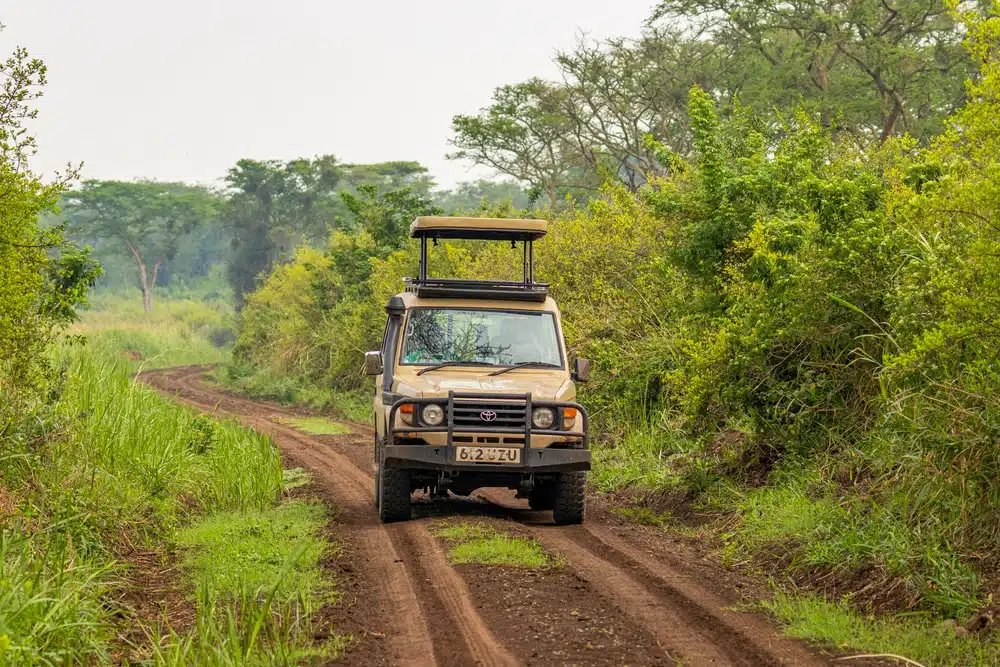
Self-driving in Murchison Falls National Park offers unparalleled freedom, intimacy with nature, and the opportunity to design your own wildlife adventure at your own pace. Unlike group tours, self-drive safaris allow you to linger at a lion sighting, return to a favourite spot at sunset, and fully immerse yourself in the rhythms of the African bush. This guide is your comprehensive companion for planning and executing a successful self-drive safari in one of Uganda’s greatest natural treasures.
Murchison Falls National Park: At a Glance
| DETAIL | INFORMATION |
| Location | Northwestern Uganda |
| Total Area | 3,840 km² |
| Established | 1952 |
| Elevation Range | 619 m – 1,292 m above sea level |
| Main River | Victoria Nile |
| Key Feature | Murchison Falls (7m wide, 43m drop) |
| Nearest City | Masindi (84 km) / Kampala (305 km) |
| Managed By | Uganda Wildlife Authority (UWA) |
| Best Season | December – February & June – September |
| Accommodation | Budget camps to luxury lodges |
Why Choose a Self-Drive Safari?
A self-drive safari in Murchison Falls National Park is one of the most rewarding ways to explore Uganda’s wildlife. Here are the compelling reasons to take the wheel:
Complete Freedom and Flexibility
Set your own schedule. Wake up early for dawn game drives without waiting for a group, or stay out late to watch a dramatic sunset over the Nile. You choose which tracks to explore, how long to spend at each sighting, and when to take breaks.
Cost Efficiency for Groups
For families or groups of four or more, self-drive can be significantly cheaper than hiring a professional safari guide and vehicle. Park entry fees, accommodation, and fuel costs remain the same regardless of how you get there.
Intimate Wildlife Experience
Without the noise and distraction of a larger guided group, self-drive safaris often yield quieter, more intimate wildlife encounters. Animals are less disturbed by a single calm vehicle lingering at a sighting.
Personal Achievement
There is a unique satisfaction in navigating the African bush independently, reading the landscape, identifying tracks, and discovering wildlife on your own terms. It transforms a holiday into a genuine adventure.
Customised Itinerary
You can combine the northern and southern sectors of the park according to your interests, whether your priority is the Big Five, birding, the falls, or the boat cruise. No fixed itinerary means no compromises.
Getting to Murchison Falls National Park
Distance from Major Cities
Murchison Falls National Park is approximately 305 km from Kampala, Uganda’s capital. The drive typically takes 4 to 5 hours depending on traffic and road conditions. The park can also be reached from Gulu (approximately 100 km, about 2 hours) and Masindi (84 km, roughly 1.5 hours).
Recommended Routes from Kampala
Route 1: Via Masindi (Most Popular – Southern Entrance)
- Kampala → Nakasongola → Masindi (approximately 210 km on tarmac)
- Masindi → Kichumbanyobo Gate or Masindi Port Gate (approximately 84 km on murram road)
- Total: approximately 305 km | Estimated time: 4.5 to 5.5 hours
Route 2: Via Gulu (Northern Entrance)
- Kampala → Gulu via Karuma (approximately 340 km, mostly tarmac)
- Gulu → Pakuba Gate or Paraa (approximately 100 km)
- Total: approximately 440 km | Estimated time: 5.5 to 6.5 hours
Pro Tip: The route via Masindi is the most commonly used for first-time visitors and gives you access to the southern game-viewing areas. If you plan to focus on the northern sector, consider entering via Pakuba Gate from Gulu.
Road Conditions
The Kampala-Masindi road is well-paved tarmac throughout. From Masindi to the park gates, expect murram (red laterite) roads that can become slippery and deeply rutted during the rainy seasons (March-May and October-November). Within the park, roads vary from fair murram tracks to rough bush trails requiring 4WD. Always check with park authorities for current road conditions before your visit.
Vehicle Requirements for Self-Drive
Recommended Vehicle Types
Not all vehicles are suitable for self-drive safaris in Murchison Falls National Park. The terrain demands a vehicle that is capable, reliable, and well-equipped. Here is what to look for:
- 4×4 Vehicle: An absolute must during the rainy season and strongly recommended year-round. Toyota Land Cruiser (V8 or Prado), Toyota RAV4, Nissan Patrol, or Land Rover Defender are ideal choices.
- High Ground Clearance: Essential for crossing dry riverbeds, navigating ruts, and handling uneven bush tracks.
- Manual Transmission: Preferred by experienced off-road drivers for better control on difficult terrain.
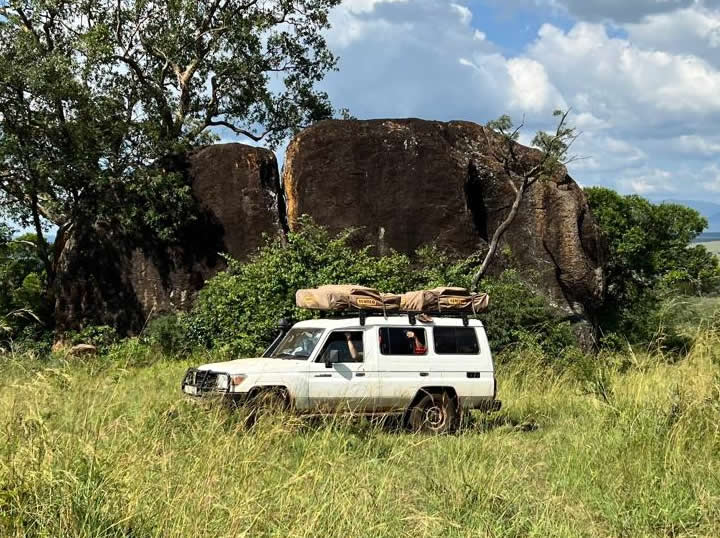
- Pop-Up Roof or Open Roof: Highly recommended for game viewing. A roof hatch allows for 360-degree wildlife photography and a more immersive safari experience.
- Extended Fuel Range: Fill up in Masindi. Fuel is occasionally available at Paraa, but supply is unreliable. Carry a 20-litre jerry can as a backup.
Vehicle Hire in Uganda
If you do not have your own suitable vehicle, 4WD cars with or without rooftop tents can be hired from reputable rental companies in Kampala. Well-established providers include Acacia Car Hire Uganda, Quick Car Hire Uganda, and Go Uganda Drivers, among others. When hiring:
- Confirm unlimited mileage or agree on an acceptable daily mileage cap.
- Inspect the vehicle thoroughly before departure. Document any pre-existing damage.
- Ensure the rental includes a spare tyre (ideally two), a jack, a tyre iron, tow rope, and basic tools.
- Confirm that the vehicle has comprehensive insurance that covers national park use.
- Request a GPS device or offline mapping application preloaded with Uganda parks data.
Essential Equipment and Packing List
Navigation
- Offline maps (Maps.Me or Google Maps downloaded for offline use)
- A physical park map available at the UWA gate
- GPS device (preferred for remote tracks)
- Compass as a backup
Vehicle Emergency Kit
- Two full-size spare tyres
- High-lift jack and base plate
- Tow rope or recovery strap
- Tyre pressure gauge and portable inflator
- Jumper cables
- Basic toolkit (spanners, screwdrivers, duct tape, zip ties)
- Spare engine oil, coolant, and brake fluid
Personal and Camp Supplies
- Minimum 4 litres of drinking water per person per day
- High-energy snacks and packed meals for full-day game drives
- Sunscreen (SPF 50+), wide-brim hat, and UV-protective sunglasses
- Insect repellent (DEET-based, 30-50%)
- Lightweight, neutral-coloured clothing (khaki, olive, tan, beige)
- Warm fleece or jacket for early morning drives
- First aid kit including antihistamines, bandages, antiseptic, and blister treatment
- Malaria prophylaxis and prescription medication
- Binoculars (8×42 or 10×42 recommended)
- Camera with telephoto lens (300mm or longer ideal for wildlife)
- Portable power bank and vehicle charging cables
Safety Note: Always carry a charged mobile phone. MTN and Airtel have limited coverage in parts of the park. Inform your accommodation of your planned game drive routes each morning.
Park Entry Fees and Permits
Uganda Wildlife Authority (UWA) Fees
All visitors must pay park entry fees at the gate. Fees are charged per person per 24-hour period. As of 2026, the approximate fees are as follows (subject to change; always confirm with UWA before your visit):
| CATEGORY | FEE (USD) |
| Foreign Non-Resident Adult | $40 per person per day |
| Foreign Resident Adult | $25 per person per day |
| East African Citizen Adult | UGX 30,000 per person per day |
| East African Citizen Child (5-15) | UGX 15,000 per child per day |
| Vehicle (Foreign) | $30 per vehicle per entry |
| Vehicle (East African Reg.) | UGX 30,000 per entry |
| Boat Cruise (Murchison Falls) | $30 per person |
| Top of the Falls Hike | Included in boat cruise ticket |
Payment is accepted in USD cash, Uganda Shillings, or by card at major gates. It is advisable to carry exact change and USD cash as a backup.
Game Drives: Routes, Timing, and Wildlife
North of the Nile: The Core Game Viewing Area
The northern bank of the Victoria Nile is where Murchison Falls National Park truly shines for game viewing. This vast open savanna supports exceptional concentrations of Uganda’s iconic wildlife. The circuit of tracks north of the river is the primary destination for self-drive game drives.
Key Wildlife in the North Bank
- African Elephant: Murchison Falls is home to one of Uganda’s largest elephant populations, with over 1,500 individuals. Encounters are frequent, particularly near water sources and along the Nile.
- African Lion: Several resident prides inhabit the northern sector. Lions are commonly sighted on Wankwar and Albert tracks, particularly in the early morning and late afternoon.
- African Buffalo: Large herds roam the open grasslands. Buffalo are abundant and among the easiest of the Big Five to photograph.
- Uganda Kob: The national antelope of Uganda, found in immense herds across the savanna. Watch for territorial males on lekking grounds.
- Rothschild’s Giraffe: One of the world’s rarest giraffe subspecies, with a healthy and growing population in Murchison Falls. Murchison is among the best places on earth to see this species.
- Oribi: Small, delicate antelope commonly seen in pairs on open grassland.
- Jackson’s Hartebeest: Frequently encountered on open plains in the north bank.
- Nile Crocodile: Monitor the riverbanks and delta areas for some of the largest crocodiles in Africa.
- Common Hippopotamus: In extraordinary density along the Victoria Nile. The delta near the Albert Nile confluence is world-famous for hippo concentrations.
Key Self-Drive Tracks in the North Bank
- Wankwar Track: The main loop through classic savanna habitat. Excellent for lions, elephants, and Uganda kob. Well-maintained and suitable for most 4WD vehicles.
- Albert Track (Rabongo Track): Runs toward the Nile delta and Albert Nile shores. Outstanding for hippos, crocodiles, and waterbirds. Rough in sections.
- Buligi Track: Connects toward the western edge of the park. Good for elephants and less crowded than the main circuit.
- Tangi Gate Area Tracks: Less-visited tracks toward the north gate offering solitude and good game viewing.
South of the Nile: Forest, Falls, and Birding
The southern bank of the Nile is dominated by forest habitats, the Kaniyo Pabidi forest, and the dramatic Murchison Falls themselves. While large mammal densities are lower south of the river, this sector offers exceptional birding, chimpanzee tracking (in Kaniyo Pabidi), and the unforgettable experience of the falls.
- Murchison Falls Viewpoint: An easy 5-minute walk from the parking area to the top of the falls offers one of Africa’s most dramatic vistas.
- Kaniyo Pabidi Forest: Home to habituated chimpanzees. Chimp tracking requires an advance permit from UWA.
- Rabongo Forest: A small patch of forest south of the main tracks. Good for forest birds and the occasional chimpanzee.
Best Times for Game Drives
Timing your game drives correctly is one of the most important factors in self-drive success:
- Dawn Drive (6:00 AM – 9:00 AM): The golden hour of African wildlife. Predators are most active, the light is perfect for photography, and temperatures are comfortable. This is the single most productive time for game viewing.
- Late Afternoon Drive (3:30 PM – 6:30 PM): The second most productive window. Animals move toward water sources, light improves dramatically, and predators begin to stir.
- Midday (10:00 AM – 3:00 PM): Most wildlife rests in shade during the heat of the day. Focus midday on the boat cruise, the falls, or resting at your lodge.
Park Rule: All vehicles must be out of the park or at designated accommodation by 7:00 PM. Night driving is strictly prohibited and can result in heavy fines or expulsion from the park.
The Murchison Falls Boat Cruise
No self-drive visit to Murchison Falls National Park is complete without the legendary boat cruise on the Victoria Nile. This is widely regarded as one of the finest wildlife boat experiences in Africa and an absolute highlight of any Uganda safari.
What to Expect
The standard launch trip departs from Paraa and travels upstream approximately 17 km to the base of the falls, returning the same way. The journey takes approximately 3 hours each way and is conducted on comfortable motorised boats operated by UWA or licensed private operators.
Along the river banks, you will witness staggering concentrations of wildlife:
- Nile Hippopotamus in some of the highest densities anywhere in Africa
- Nile Crocodile, including enormous individuals exceeding 5 metres in length
- African Elephant and Cape Buffalo frequently coming to the river to drink
- Rothschild’s Giraffe visible on the northern bank
- African Fish Eagle, Goliath Heron, Saddle-billed Stork, and a wealth of kingfisher species
- Shoebill Stork – occasionally seen in papyrus margins (more reliably in the delta area)
Boat Cruise Options
- UWA Launch: Departs Paraa daily. Reliable, affordable, and shared with other park visitors.
- Private Charter: Several lodges offer private boat charters for a more exclusive experience. More expensive but excellent for photography and intimate wildlife observation.
Booking Tip: Book the boat cruise at the Paraa ferry or UWA headquarters in advance during peak season (July-September). Arrive at least 30 minutes before departure.
Birding in Murchison Falls National Park
Murchison Falls National Park is an outstanding birding destination with over 451 recorded bird species. For self-drive birders, the park offers an extraordinary diversity of habitats and target species across the savanna, riverine forest, wetlands, and open grasslands.
Top Bird Species
- Shoebill (Balaeniceps rex): The holy grail of East African birding. Best sought in the Nile delta papyrus swamps and accessible via the boat cruise or dedicated birding excursions.
- Abyssinian Ground Hornbill: Frequently encountered striding across the savanna north of the river.
- African Finfoot: Found along shaded riverine sections. Boat cruise gives the best access.
- White-crested Turaco: Common in forested areas south of the Nile.
- Standard-winged Nightjar: Spectacular in display flight at dusk during breeding season.
- Black-billed Barbet, Grey-capped Warbler, and over 50 raptor species complete an impressive list.
Best Birding Locations for Self-Drivers
- Victoria Nile riverbanks (boat cruise): Herons, storks, kingfishers, fish eagles, and potential Shoebill.
- Rabongo Forest (south bank): Forest species including turacos and barbets.
- Kaniyo Pabidi: Forest interior species and Afrotropical migrants.
- Open savanna tracks: Raptors, hornbills, starlings, and weavers.
Accommodation Options
Murchison Falls National Park offers a range of accommodation options to suit every budget and style, from luxury tented camps to basic budget bandas within the park, and guesthouses in nearby Masindi.
Luxury and Upper Mid-Range (Within the Park)
- Paraa Safari Lodge: Iconic lodge perched on a bluff above the Nile. Stunning views, excellent food, pool, and boat cruise access directly from the lodge.
- Chobe Safari Lodge: Located on the Nile below Murchison Falls with exceptional views. A beautiful lodge with excellent service and wildlife right on the doorstep.
- Baker’s Lodge: A Sanctuary Retreats property offering intimate luxury in an authentic bush setting on the south bank.
Mid-Range Options
- Pakuba Safari Lodge: Good-value lodge in the north of the park with reliable game viewing nearby.
- Sambiya River Lodge: Comfortable tented camp with a welcoming atmosphere and excellent location for game drives.
- Kabalega Wilderness Lodge: Spacious accommodation with good amenities. Popular with families and groups.
Budget Options
- UWA Bandas and Campsites at Paraa: Basic but functional accommodation managed by Uganda Wildlife Authority. Camping within the park is an extraordinary experience.
- Red Chilli Rest Camp: A popular budget option on the south bank, well-organised and sociable with self-catering facilities available.
- Masindi Hotel: Comfortable guesthouse in Masindi town (84 km from the park). A historic hotel with good facilities, ideal as a base for day visits.
Booking Advice: During peak season (July-September and December-February), accommodation in the park fills quickly. Book at least 3-4 months in advance. UWA bandas can be booked through the Uganda Wildlife Authority website or by phone.
Best Time to Visit for Self-Drive
Dry Season: June to September (Peak Season)
This is widely considered the best time to visit Murchison Falls National Park. The dry season dramatically reduces vegetation, concentrating wildlife around remaining water sources and making game viewing far more predictable. Roads within the park are at their most accessible, greatly reducing the risk of getting stuck in mud. Boat cruise conditions on the Nile are excellent, and the falls are less obscured by river spray.
- Advantages: Best game viewing, passable roads, no mud, easier navigation
- Disadvantages: Highest accommodation prices, busiest period, advance booking essential
Short Dry Season: December to February
A second excellent window for visiting. Conditions are similar to the main dry season, wildlife viewing is excellent, and crowds are somewhat lower. Christmas and New Year period sees higher occupancy at lodges.
Rainy Seasons: March to May and October to November
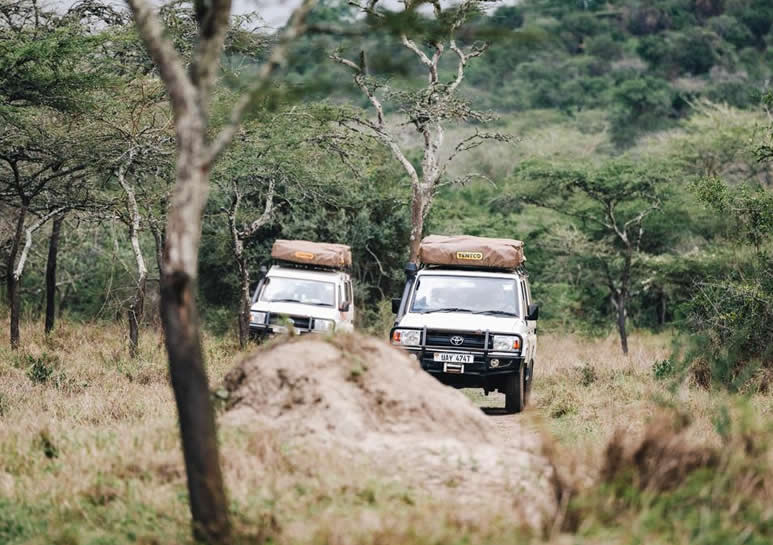
The long rains (March-May) and short rains (October-November) bring lush green landscapes, excellent birding with migratory species present, and significantly lower accommodation prices. However, park tracks can become impassable even for 4WD vehicles, and some remote areas may be inaccessible. This period is recommended only for experienced off-road drivers and adventurous visitors.
- Advantages: Green, photogenic landscapes; excellent birding; lower costs; fewer visitors
- Disadvantages: Difficult road conditions, some tracks may close, risk of vehicle recovery situations
Practical Self-Drive Tips and Safety
On the Road
- Drive slowly and quietly. Approaching wildlife at speed disturbs animals and diminishes your experience. The recommended maximum speed in the park is 40 km/h.
- Stay on designated tracks. Off-road driving is prohibited in Murchison Falls National Park and carries heavy penalties. It also damages fragile ecosystems.
- Never get out of your vehicle in the open bush. Exceptions include designated viewpoints, Top of the Falls, and official picnic sites with rangers present.
- Keep windows up when near dangerous animals, particularly elephants, buffalos, lions, and hippos.
- Always give animals the right of way. Switch off your engine and wait patiently if animals are crossing the track.
- Do not honk your horn to move animals. This is considered highly inappropriate behaviour and disturbs wildlife.
- Be particularly cautious of elephants with calves. Mother elephants with young are unpredictable and potentially dangerous if they feel threatened.
- Keep noise to a minimum inside the vehicle and on game drives. Loud conversations and music are counterproductive and disrespectful to other visitors.
Navigation Within the Park
Park tracks are not always clearly signposted. The UWA gate staff will provide a basic paper map on entry. For more reliable navigation:
- Download offline maps via Maps.Me, OsmAnd, or iOverlander before entering the park.
- Photograph the detailed track map at the gate before setting off.
- Note the positions of key landmarks: Paraa ferry crossing, Wankwar track junction, and the Albert Nile viewing area.
- Ask your accommodation for updated track condition information each morning.
Paraa Ferry Crossing
To access the north bank game viewing area from the south bank (where Paraa Lodge and the main offices are located), you must use the Paraa vehicle ferry. This small ferry crosses the Victoria Nile and operates on a regular schedule throughout the day. Key details:
- Ferry operates from approximately 7:00 AM to 7:00 PM
- Maximum vehicle capacity: 6-8 vehicles per crossing
- Crossing time: approximately 10 minutes
- Queue during peak periods can take 30-45 minutes; arrive early for dawn game drives
- Ferry fee is included in your park entry ticket
Ferry Tip: For the best dawn game drives, cross the Paraa ferry the evening before and camp or stay at accommodation on the north bank. This eliminates ferry queue delays and gets you into prime game viewing territory at first light.
Wildlife Encounters and Safety
Murchison Falls National Park is home to Africa’s Big Five as well as hippos, Nile crocodiles, and other potentially dangerous wildlife. While safari vehicles provide an excellent degree of safety, always exercise caution and common sense:
- Hippopotamus are responsible for more human fatalities in Africa than any other large animal. Never approach hippos on foot, particularly at water’s edge.
- Nile crocodiles are powerful ambush predators. Do not wade, swim, or approach the river bank at ground level.
- Elephants can be aggressive if surprised or if they have calves. Maintain a respectful distance and be ready to reverse slowly if an elephant displays signs of agitation (raised trunk, spread ears, kicking of dust).
- Lions are powerful and unpredictable. Keep windows closed and do not lean out of the vehicle during lion sightings.
Sample 3-Day Self-Drive Itinerary
Day 1: Kampala to Murchison Falls
- Early morning departure from Kampala (6:00 AM) via Masindi road
- Stop in Masindi for fuel, supplies, and a brief town visit
- Arrive at Kichumbanyobo Gate for park entry and vehicle registration
- Cross the Paraa ferry to the north bank
- Afternoon game drive: Wankwar Track circuit (elephants, lions, Uganda kob)
- Sunset at the Nile delta viewpoint
- Check into north bank camp or lodge
Day 2: Full Day Game Viewing and Boat Cruise
- Pre-dawn departure for dawn game drive on Albert and Wankwar tracks
- Return for breakfast at camp
- 10:00 AM: Board the Paraa launch for the Victoria Nile boat cruise to the base of Murchison Falls
- Hippos, crocodiles, elephants, and spectacular birdlife along the river
- Arrive at the base of the falls, photograph the dramatic gorge
- Return upstream to Paraa
- Late afternoon: Second game drive focusing on lion prides
- Sundowner drinks at the Nile viewpoint
Day 3: Murchison Falls, South Bank, and Departure
- Morning: Drive to the Top of the Falls for the walk to the falls viewpoint (30 minutes)
- Optional: Bird walk in Kaniyo Pabidi forest (advance chimp tracking permit required)
- Picnic lunch at the falls viewpoint
- Depart the park via Kichumbanyobo gate
- Drive south to Kampala, arriving early evening
Conservation and Responsible Tourism
Murchison Falls National Park faces ongoing conservation challenges including poaching, human-wildlife conflict along park boundaries, and the impacts of oil exploration in the Albertine Rift region. As a self-drive visitor, you play an important role in supporting responsible wildlife tourism:
- Stay strictly on designated tracks. Off-road driving causes irreversible damage to fragile savanna soils and disturbs wildlife.
- Do not litter within the park. Carry a rubbish bag and remove all waste.
- Never feed wildlife. This creates dangerous dependency and alters natural behaviours.
- Respect all Uganda Wildlife Authority regulations and instructions from UWA rangers.
- Choose accommodation providers that demonstrate genuine commitment to conservation and community benefit.
- Consider making a voluntary donation to the Uganda Wildlife Authority’s Community Wildlife Program, which supports communities living alongside the park.
Your park entry fees directly fund wildlife conservation, anti-poaching patrols, ranger salaries, and park infrastructure. By visiting, you are making a tangible contribution to the protection of one of Africa’s great natural treasures.
Conclusion
A self-drive safari in Murchison Falls National Park is a journey into the heart of wild Africa, a place where the world’s longest river thunders through an impossibly narrow gorge, where elephants crowd the riverbanks at dusk, where lion prides stir in the golden morning light, and where Rothschild’s giraffes move in slow, majestic procession across the savanna.
With careful preparation, the right vehicle, a spirit of adventure, and respect for the wilderness, Murchison Falls National Park will reward you with memories that last a lifetime. This is Uganda at its most wild and most wonderful. Drive in, explore freely, and let Africa’s greatest spectacles unfold at your own pace.