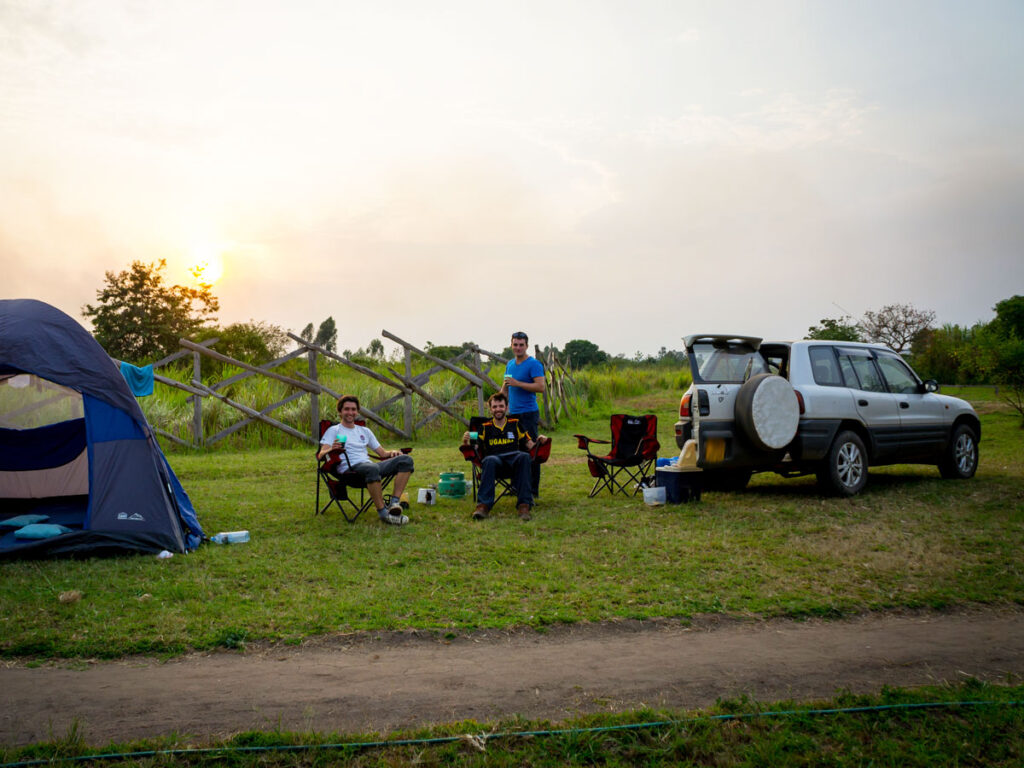
Self Drive Camping Sites in Murchison Falls National Park
Self Drive Camping Sites in Murchison Falls National Park , Murchison Falls National Park is Uganda’s largest and oldest national park, covering approximately 3,840 square kilometres of diverse wilderness in the northwestern part of the country. Straddling the Albert Nile and Victoria Nile, the park is anchored by one of the world’s most powerful waterfalls — the Murchison Falls — where the entire volume of the Nile River is forced through a narrow 7-metre gorge before cascading 43 metres into a turbulent pool below.
For self drive campers and overlanders, Murchison Falls National Park represents one of East Africa’s premier camping destinations. Unlike lodge-based safaris, self drive camping in Murchison gives travellers the freedom to wake up inside the park, experience nocturnal wildlife activity, and explore at their own pace in a 4×4 vehicle fitted with a rooftop tent or ground tent. The combination of savannah, riverine forest, and the mighty Nile creates a camping backdrop that is unmatched anywhere in Uganda.
This guide covers every official camping site within Murchison Falls National Park — from the popular riverbank campsites of the north bank to the quieter community sites on the park’s fringes — with detailed information on fees, facilities, wildlife, road access, and insider tips for self drive visitors.
| 🌍 Quick Park Facts |
| Location: Masindi / Kiryandongo / Nwoya / Buliisa Districts, Northwestern Uganda |
| Size: 3,840 km² (Uganda’s largest national park) |
| Altitude: 619 – 1,292 metres above sea level |
| Key Feature: Murchison Falls — the world’s most powerful waterfall |
| Wildlife: Lions, elephants, buffaloes, leopards, hippos, crocodiles, giraffes, 450+ bird species |
| Best Access: Masindi Gate (south), Tangi Gate (north), Wankwar Gate (east) |
|
Park Authority: Uganda Wildlife Authority (UWA) |
Why Choose Self Drive Camping in Murchison Falls?
Self Drive Camping Sites in Murchison Falls National Park , Self drive camping is the most immersive and cost-effective way to experience Murchison Falls National Park. When you camp inside the park boundary, you are not just a visitor — you are a temporary resident of one of Africa’s great wild landscapes. Here is why self drive campers consistently rate their Murchison experience as among the best on the continent:
Freedom and Flexibility
Camping inside the park eliminates the daily commute from lodges in Masindi or Kampala, which can consume two to three hours of prime game viewing time each morning. Self drive campers can leave their campsite at dawn for the best lion sightings and return for a riverside sundowner — all without missing a game drive session.
Cost Savings
Camping fees in Murchison range from USD 15 to USD 40 per person per night, compared to lodge rates of USD 150 to USD 600+. For families, groups, or long-stay visitors, the savings over a week-long trip can fund an additional safari destination entirely.
Wildlife Encounters
Several campsites in Murchison are unfenced, meaning wildlife moves freely around the tents at night. Hippos graze past tents after dark, hyenas patrol the edges, and lions have been heard calling from within metres of some riverside sites. This proximity to wildlife is the defining experience of camping in Murchison and cannot be replicated in any lodge.
Rooftop Tent Advantage
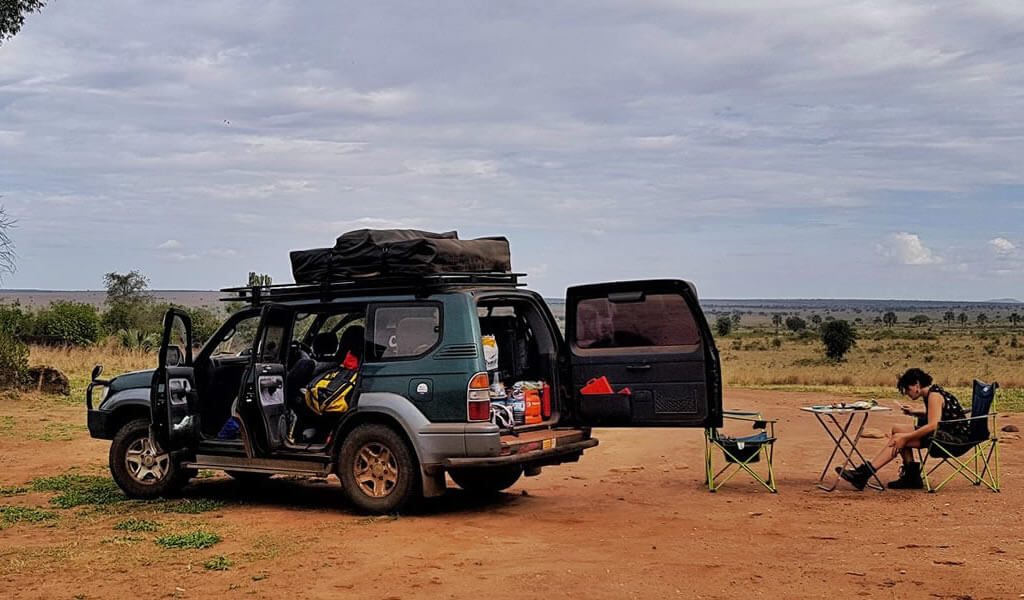
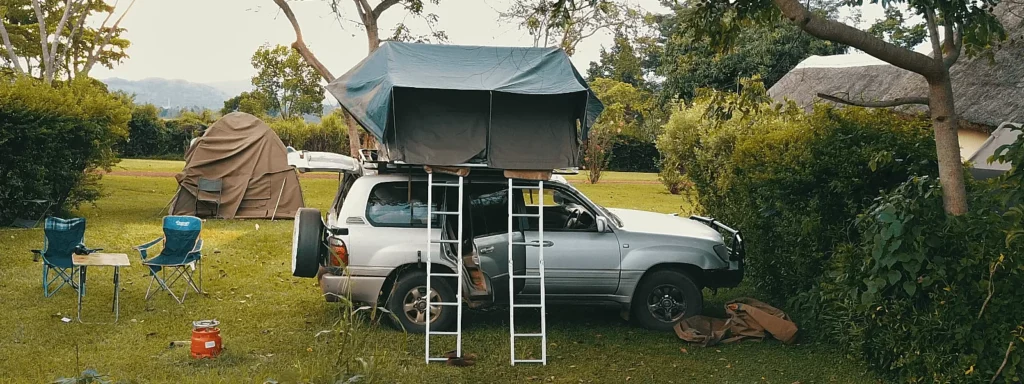
Self drive overlanders with rooftop tents or pop-up roof 4×4 vehicles are especially well-suited for Murchison’s camping sites. Rooftop tents provide elevation above ground-level wildlife movement, faster setup on arrival, and excellent ventilation during hot savannah nights. Many Uganda car rental companies offer Land Cruisers, RAV4s, and Land Rovers fitted with rooftop tents specifically for Murchison and other national park camping.
Murchison Falls National Park Entry & Camping Fees (2026/2027)
All fees are payable in USD or Uganda Shillings equivalent at the park gates or online via the Uganda Wildlife Authority portal. Fees are per person per 24-hour period for park entry, and per person per night for camping. Children under 5 years enter free; children 5–15 years pay a reduced rate.
| Category | Park Entry Fee (USD) | Camping Fee (USD) | Notes |
| Foreign Non-Resident Adult | $40 | $15 – $40 | Varies by campsite tier |
| Foreign Resident Adult | $25 | $15 – $30 | Valid resident permit required |
| East African Citizen (Adult) | $15 | $10 – $20 | EAC passport required |
| East African Citizen (Child 5–15) | $5 | $5 – $10 | EAC passport required |
| Ugandan Citizen (Adult) | UGX 20,000 | UGX 10,000+ | National ID required |
| Vehicle Entry (Foreign plated) | $150/day | Included in campsite | Per vehicle, per 24hrs |
| Vehicle Entry (Uganda plated) | UGX 20,000/day | Included in campsite | Per vehicle, per 24hrs |
| Community Campsites (adjacent to park) | N/A | $10 – $20 | Park re-entry fee applies |
| 💡 Fee & Booking Tips |
| ✅ Book campsites in advance through the Uganda Wildlife Authority (UWA) online portal or at Masindi UWA office |
| ✅ Carry USD cash in small denominations — card payment is available at gates but connectivity is unreliable |
| ✅ Fees are subject to annual revision; always confirm the current rates with UWA before your visit |
| ✅ Multi-day park passes offer savings for stays of 3+ days — ask at the gate |
| ✅ Vehicle entry fees apply per calendar day, not per 24 hours — arriving late afternoon and leaving next morning counts as two days |
Complete Guide to Camping Sites in Murchison Falls National Park
Murchison Falls National Park has camping sites spread across both the north bank and south bank of the Nile. The north bank is where the majority of game viewing activities take place, while the south bank encompasses the falls viewpoint area and the Budongo Forest. Each campsite has a distinct character, wildlife, and level of facilities.
1. Pakuba Safari Lodge Campsite (North Bank)
Pakuba Campsite is one of the most popular self drive camping destinations in Murchison Falls National Park, located on the north bank of the Victoria Nile approximately 15 kilometres west of Paraa. The campsite is set within the grounds of the Pakuba Safari Lodge but maintains a separate camping area with its own facilities.
Location & Access
Pakuba is accessible via the north bank main game track, a murram road that is passable by 4×4 vehicles in all seasons. During the rainy season (April–May and October–November), some sections become muddy and a 4WD with good ground clearance is essential. The GPS coordinates place Pakuba at approximately 2°09’N, 31°32’E.
Facilities
- Flush toilets and shower facilities (basic but functional)
- Running water (availability may vary in dry season)
- Designated fire pit areas
- Vehicle parking within the campsite
- Basic bar and meal service available from the main lodge
- Security: UWA ranger patrol overnight
Wildlife at Pakuba
Pakuba Campsite is renowned for its nighttime wildlife activity. Hippos are regular nocturnal visitors to the campsite grounds, grazing on the short grass between tents after dark. Olive baboons and vervet monkeys are active during the day and will investigate unattended food, so securing all supplies in your vehicle is essential. Lions from the park’s resident prides have been reported in the vicinity, and campers routinely hear hyenas at night.
Self Drive Highlights from Pakuba
- Karuma Wildlife Reserve border — accessible game tracks to the east
- Albert Nile boat launch — morning boat safaris available from Pakuba launch
- Central north bank game circuit — lions, giraffes, elephants, kobs within 20km
2. Paraa Campsite (South Bank — Near Paraa Ferry)
Paraa is the most centrally located campsite in Murchison Falls National Park and the primary camping hub for most self drive visitors. Situated near the Paraa ferry crossing on the south bank of the Nile, the campsite offers spectacular river views and some of the best wildlife density of any site in the park.
Location & Access
Paraa Campsite is reached via the main Masindi–Murchison road, turning left after crossing the Tangi Gate (for travellers coming from Masindi) and following the tarmac road to Paraa. The ferry crossing connects north and south bank — schedules are typically 7am, 9am, 12pm, 3pm, and 5pm, though self drive visitors should confirm current schedules with UWA as these change seasonally.
Facilities
- Well-maintained flush toilet and shower block with hot water
- Electricity points available (limited — charge devices during daylight hours)
- Communal cooking area with benches and shade
- UWA reception desk and information board on-site
- Proximity to Paraa Safari Lodge bar and restaurant (open to campers)
- Fuel available at Paraa — the only fuel point inside the park boundary
Wildlife at Paraa
The Paraa area holds exceptional wildlife year-round. Nile crocodiles and hippos are visible from the campsite riverbank. Elephant herds regularly cross between north and south bank using the shallow river sections near Paraa, and the riverine vegetation hosts shoebill storks, African fish eagles, pied kingfishers, and giant kingfishers. At night, the bellowing of hippos from the river is a constant, extraordinary soundtrack.
Self Drive Highlights from Paraa
- Morning boat launch from Paraa — upstream to the base of Murchison Falls (return trip 3–4 hours)
- South bank game drive loop — leopards, Uganda kobs, buffaloes, oribis
- Top of the Falls hike — 2.5 km trail from Paraa to the falls viewpoint
- Ferry crossing for north bank game drives — lions, cheetahs, Rothschild’s giraffes
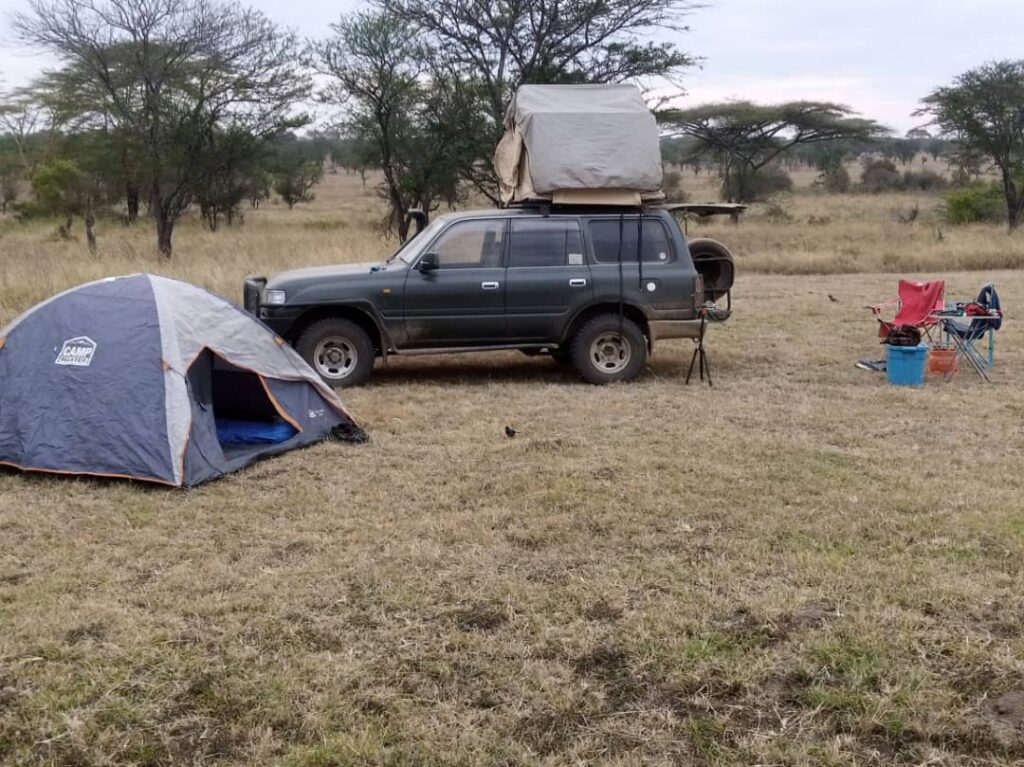
Red Chilli Rest Camp & Campsite (Paraa, South Bank)
Red Chilli Rest Camp is arguably the most celebrated budget and mid-range camping option in Murchison Falls National Park. Operated by Red Chilli Hideaway (a Kampala-based budget accommodation brand), the campsite is located directly opposite Paraa Safari Lodge on the south bank of the Nile and caters specifically to self drive travellers and backpackers.
Location & Access
Red Chilli is accessible via the main Paraa road, south bank, and sits just metres from the Nile riverbank. The campsite is extremely well-signposted from the Masindi Gate and is a common first-night destination for self drive visitors arriving from Kampala on the main A109 highway.
Facilities — Red Chilli is the most facilities-rich campsite in the park
- Multiple clean toilet and shower blocks, hot water available morning and evening
- Full restaurant and bar on-site with a varied menu (breakfast, lunch, dinner)
- Electricity — power points, device charging available throughout the day
- Wi-Fi (intermittent but available near the main reception building)
- Secure vehicle parking with 24-hour security
- Banda accommodation available for non-campers at the same site
- Boat safaris, game drives, and walking safaris bookable at reception
- Swimming pool (check current operational status)
Wildlife at Red Chilli
Being unfenced on the river side, Red Chilli guests experience the full range of Paraa riverfront wildlife. Hippos graze the lawn after dark, olive baboons raid breakfast tables unless watched, and Nile monitors prowl the riverbank throughout the day. The campsite gardens attract superb starlings, little bee-eaters, and weaverbirds.
Murchison River Camp (Nile Safari Camp Area, North Bank)
Located on the northern bank of the Albert Nile within the park’s western section, Murchison River Camp offers a more remote and exclusive self drive camping experience. The campsite serves overlanders and self drive visitors who want seclusion without the facilities compromise of a fully wild bush camp.
Location & Access
Access is via the north bank track from Paraa ferry — approximately 25 kilometres west along a graded murram road. A 4×4 vehicle is essential, and during the wet season some stretches require low-range four-wheel drive. Self drive visitors should plan 45–60 minutes of driving from the ferry landing to reach this site.
Facilities
- Bucket shower facilities and long-drop latrines
- Designated tent pitching areas with shade trees
- Firewood available for purchase from the camp manager
- No electricity — solar lanterns and power banks recommended
- Fresh water available from the camp (treat before drinking)
Wildlife
The northern riverbank area around this campsite delivers outstanding wildlife concentration. Shoebill sightings are more reliable here than anywhere else in Murchison. Elephant herds, Cape buffaloes, and Nile lechwe are regularly seen from the campsite perimeter. The undisturbed riverbank supports one of the highest hippo and crocodile densities in Uganda.
Sambiya River Lodge Campsite (Masindi Gate Entrance)
Sambiya River Lodge offers a dedicated campsite for self drive visitors approaching Murchison Falls from the south via the Masindi Gate. While not located inside the core park boundary, Sambiya sits within the park’s buffer zone and provides an excellent staging point for visitors arriving late or departing early.
Location & Access
Sambiya is approximately 3 kilometres past the Masindi Gate (Kichumbanyobo Gate) on the main Paraa road. The road is well-maintained tarmac for the majority of the Masindi–Sambiya stretch, making it accessible to all vehicles including 2WD. This is one of the most convenient campsites for first-time Murchison visitors.
Facilities
- En-suite bandas and tented accommodation options alongside camping
- Restaurant with good food and a bar
- Hot showers and flush toilets
- Swimming pool
- Electricity and mobile phone charging
- Wi-Fi coverage near the main building
Nearby Activities
Sambiya is an ideal base for exploring the Budongo Forest Reserve, which lies between Masindi and the park boundary. Chimpanzee tracking in Budongo can be booked from Sambiya, and a morning in the forest followed by an afternoon game drive into the park is a popular self drive itinerary.
Boomu Women’s Group Community Campsite
The Boomu Women’s Group Community Campsite is a community-run camping facility located near Murchison Falls National Park’s southern entrance. This campsite was established as a community tourism initiative to benefit local women’s groups in the Murchison buffer zone, and it offers an authentic, grassroots camping experience.
The campsite is particularly popular with budget travellers, backpackers, and overlanders who want to support local communities. Camping fees are lower than UWA-operated sites, but travellers must pay park re-entry fees each time they return to the park after leaving for the community campsite.
Facilities
- Long-drop toilet and bucket shower facilities
- Traditional meals prepared by the women’s group on request
- Cultural entertainment — traditional dance and storytelling available
- Designated campfire areas
- No electricity — bring your own lighting

Top of the Falls Campsite (Near the Falls Viewpoint)
The Top of the Falls Campsite is one of the most dramatically located camping spots in East Africa. Positioned within walking distance of the actual Murchison Falls, campers here fall asleep to the constant roar of the Nile forcing through its 7-metre channel. This is a UWA-operated public campsite and one of the most sought-after pitches in the park.
Location & Access
The campsite is accessed via the south bank of the Nile, approximately 10 kilometres east of Paraa along the falls road. The road to the falls viewpoint is graded murram and passable by both 4×4 and capable 2WD vehicles in dry season. During rains, 4WD is recommended for the final section.
Facilities
- Basic toilet and shower facilities — maintained by UWA rangers
- UWA ranger presence for security (falls area has wildlife including hippos and baboons)
- Picnic benches and shaded rest areas
- No electricity — entirely off-grid experience
- Walking trail to the falls viewpoint directly from campsite
Wildlife and Experience
African fish eagles, cormorants, herons, and yellow-billed storks are constant companions at the falls campsite. Olive baboons are numerous and extremely bold — food must be locked in vehicles at all times. The sound of the falls at night, combined with the Milky Way over the Nile, makes this one of Uganda’s most memorable camping experiences.
Rabongo Forest Camp (Southeastern Murchison)
Rabongo Forest is a small, isolated rainforest patch within the otherwise savannah-dominated landscape of Murchison Falls National Park. The Rabongo Camp offers camping within forest surroundings, a complete contrast to the open plains of the north bank. This is one of the least-visited campsites in the park and offers a truly off-the-beaten-path experience.
Location & Access
Rabongo is in the southeastern corner of the park, approximately 60 kilometres from Paraa. The access road is rough and requires a high-clearance 4×4 vehicle at all times of year. Self drive visitors should allocate at least 2–3 hours for the drive from Paraa and should carry sufficient fuel, water, and supplies as there are no facilities along the route.
Wildlife
Rabongo Forest is a primate hotspot within Murchison. Chimpanzees inhabit the forest and can sometimes be heard calling from the campsite. Red-tailed monkeys, black-and-white colobus monkeys, and olive baboons are common. Forest-specialist birds including the Nkulengu Rail, African Pygmy Kingfisher, and various hornbill species make Rabongo a destination for serious birders. Outside the forest edge, elephants are frequently seen browsing in the forest-savannah interface.
Campsite Comparison Table: At a Glance
| Campsite | Location | Fee Range (USD/person/night) | Facilities Level | Wildlife Highlight | Best For |
| Pakuba | North Bank (West) | $20–$30 | ⭐⭐⭐ | Hippos, lions, giraffes | Self drive overlanders |
| Paraa Campsite | South Bank (Central) | $25–$40 | ⭐⭐⭐⭐ | Hippos, crocs, birds | First-time campers |
| Red Chilli | South Bank (Paraa) | $15–$20 | ⭐⭐⭐⭐⭐ | Hippos, baboons, birds | Budget & backpackers |
| Murchison River Camp | North Bank (West) | $20–$35 | ⭐⭐ | Shoebill, hippos, elephants | Remote overlanders |
| Sambiya River Lodge | Masindi Gate Area | $25–$45 | ⭐⭐⭐⭐ | Forest edge wildlife | Late arrivals, comfort |
| Boomu Community | Buffer Zone (South) | $10–$15 | ⭐⭐ | Forest & savannah mix | Budget/community tourism |
| Top of the Falls | South Bank (East) | $20–$30 | ⭐⭐ | Fish eagles, baboons | Nature lovers, birders |
| Rabongo Forest | Southeast Murchison | $20–$30 | ⭐ | Chimpanzees, colobus | Adventurous, birders |
Essential Self Drive Tips for Camping in Murchison Falls
Vehicle Preparation
A 4×4 vehicle with high ground clearance is strongly recommended for all camping sites in Murchison Falls. Roads on the north bank — where the majority of wildlife and campsites are concentrated — are unpaved murram tracks that become deeply rutted and slippery during the rains. A rooftop tent-equipped Land Cruiser 70 Series, Land Cruiser Prado, or Mitsubishi Pajero provides the ideal self drive camping setup.
- Carry at least 20 litres of extra fuel — the only fuel point inside the park is at Paraa
- Inflate tyres to road pressures before entering the park; carry a compressor for airing down on sandy tracks
- A snatch strap, shovel, and hi-lift jack are essential recovery gear for north bank roads
- Carry 10+ litres of drinking water per person per day — campsite water should be treated
- Ensure your spare tyre is in good condition — murram roads are hard on tyres

Ferry Crossing — North Bank Access
The Paraa Ferry is the only way to cross between the north and south banks of the Nile within the park. The ferry carries approximately 4–6 vehicles per crossing and runs to a fixed schedule. During peak season (June–September) and public holidays, queues of 1–3 hours are common. Self drive visitors planning to camp on the north bank should budget extra time for the crossing.
| ⛴️ Paraa Ferry Key Information |
| Typical Schedule: 7:00 AM, 9:00 AM, 12:00 PM, 3:00 PM, 5:00 PM (confirm with UWA) |
| Last Crossing: 5:00 PM — do not miss this if camping on north bank |
| Ferry Fee: Included in vehicle park entry fee |
| Wait Times: Up to 2–3 hours during peak season — arrive early |
| Tip: Park entry receipts required to board the ferry — keep documents accessible |
Wildlife Safety at Campsites
Murchison Falls campsites are located within active wildlife habitat. Unlike safari lodges with electric fences, most UWA-operated campsites in Murchison are unfenced or minimally fenced. This creates extraordinary wildlife encounters but requires sensible precautions:
- Never leave food, cookware, or rubbish outside your vehicle overnight — hippos, hyenas, and baboons will investigate any scent
- Use a torch or headlamp when moving around camp after dark — check for hippos and other wildlife before walking to toilet facilities
- Do not approach hippos on the riverbank — they are the most dangerous large mammal in Africa and move fast on land
- Store food in sealed containers inside your vehicle — never in a rooftop tent unless in sealed drybags
- UWA rangers are present at most campsites overnight — always know the location of the ranger post before nightfall
- Do not walk outside the designated campsite perimeter after dark without ranger escort
Best Time to Visit & Camp in Murchison Falls National Park
Peak Season: June – September (Dry Season)
The dry season from June to September is the best time to camp and self drive in Murchison Falls National Park. Vegetation is low, animals concentrate around water sources (making game viewing outstanding), and park tracks are in their best condition. This is also the best period for boat safaris, as water levels are lower and wildlife along the riverbanks is denser. Temperatures are hot (25–35°C) but evenings cool considerably — a sleeping bag rated to 15°C is sufficient.
Shoulder Season: December – February
The short dry season from December to February offers a second excellent window for camping. Migratory birds from the Palearctic are present in large numbers, the park is less crowded than the June–September peak, and accommodation and camping prices may be slightly lower. Road conditions are generally good, though some north bank tracks can still be soft.
Rainy Seasons: March–May and October–November
The two rainy seasons bring challenges for self drive campers but also rewards. The landscape transforms to lush green, baby animals abound, and the falls are at their most spectacular volume and power. However, north bank tracks become treacherous for unprepared vehicles, insects and mosquitoes increase significantly, and some campsites may be temporarily closed due to flooding. 4×4 with diff lock is essential during rains, and travellers should check current road conditions with UWA before departing.
| Month | Rainfall | Game Viewing | Road Conditions | Mosquitoes | Recommended |
| Jan–Feb | Low | ⭐⭐⭐⭐ | Good | Low–Med | ✅ Yes |
| Mar–May | High | ⭐⭐⭐ | Poor–Fair | High | ⚠️ 4×4 only |
| Jun–Aug | Very Low | ⭐⭐⭐⭐⭐ | Excellent | Low | ✅ Best Season |
| Sep | Low | ⭐⭐⭐⭐⭐ | Excellent | Low | ✅ Best Season |
| Oct–Nov | High | ⭐⭐⭐ | Poor–Fair | High | ⚠️ 4×4 only |
| Dec | Low–Med | ⭐⭐⭐⭐ | Good | Med | ✅ Yes |
Camping Packing List for Murchison Falls Self Drive
Sleeping & Shelter
- Rooftop tent or quality ground tent (waterproof, mosquito net rated)
- Sleeping bag — 12–18°C rating is adequate for most seasons
- Sleeping mat or self-inflating pad (for ground tents)
- Pillow and blanket for cool nights
Cooking & Food
- Portable gas stove or camping stove with spare gas canisters
- Camping cookware set (pot, pan, utensils)
- Cooler box / icebox with ice — restock ice at Masindi or Paraa
- Sufficient food supplies for the duration — only basic provisions at park gates
- Water purification tablets or filter — backup water treatment
Safety & Health
- Malaria prophylaxis — start course before arrival; consult a travel health clinic
- DEET mosquito repellent (50%+ concentration) and mosquito coils
- First aid kit including wound care, oral rehydration salts, antihistamines
- Sunscreen SPF 50+ and lip balm — equatorial sun is intense
- Headlamp with spare batteries — essential for night movement in camp
Navigation & Communication
- Downloaded offline maps of Murchison (Maps.me or Google Maps offline — save before entering the park)
- GPS device or smartphone mount in vehicle
- UWA ranger emergency contact numbers (available at park gates)
- Satellite communicator (SPOT or Garmin inReach) for remote north bank camping

How to Get to Murchison Falls National Park by Self Drive
Route 1: From Kampala via Masindi (Most Popular)
The most common self drive route from Kampala to Murchison Falls takes approximately 4–5 hours under normal road conditions. Depart Kampala on the Gulu Highway (A109) through Luwero and Karuma. From Karuma, continue northwest through Masindi town, then follow the signs to Kichumbanyobo Gate (Masindi Gate) — the main southern entrance to the park. The road from Masindi to the gate is partly paved and partly murram.
Route 2: From Kampala via Gulu (North Bank Approach)
Travellers targeting north bank camping sites can approach via the Gulu highway, turning off at Tangi Gate near the Nile bridge. This route avoids the ferry crossing and delivers you directly to the north bank game tracks. The road from Kampala to Tangi Gate is approximately 350 kilometres and takes 5–6 hours.
Route 3: From Entebbe Airport
International visitors arriving at Entebbe can pick up a self drive vehicle from Entebbe or Kampala car rental companies and proceed directly to Murchison Falls. The Entebbe–Masindi Gate distance is approximately 330 kilometers. Allow 5–6 hours for this journey, factoring in traffic through Kampala.
| 🚗 Self Drive Vehicle Recommendations for Murchison |
| Best Choice: Toyota Land Cruiser 70/78 Series with rooftop tent — handles all Murchison tracks in all seasons |
| Excellent Choice: Toyota Land Cruiser Prado 120/150 with rooftop tent — comfortable, capable, suitable for families |
| Good Choice: Toyota RAV4 (AWD) — suitable for dry season camping on main tracks only |
| Budget Option: Toyota Rav4 or Nissan X-Trail — south bank and Paraa campsite access only in dry season |
| Avoid: 2WD saloon cars — unsuitable for park tracks, particularly north bank in any season |
Frequently Asked Questions: Camping in Murchison Falls
Is camping safe in Murchison Falls National Park?
Yes, camping in Murchison Falls National Park is generally safe when basic wildlife precautions are followed. UWA rangers patrol all major campsites overnight, and serious incidents with wildlife are extremely rare when campers follow the guidelines on food storage, night movement, and distance from the river. The most important rule is never to approach hippos between the river and the campsite at night.
Do I need a 4×4 to camp in Murchison Falls?
A 4×4 vehicle is strongly recommended for camping in Murchison Falls National Park, and it is essential for north bank campsites. South bank campsites — Paraa, Red Chilli, and Sambiya — are accessible to capable 2WD vehicles in dry season, but the north bank tracks (where most wildlife is concentrated) require 4WD and high ground clearance year-round.
Can I rent a car with a rooftop tent for Murchison Falls?
Yes. Several Uganda car rental companies based in Kampala and Entebbe offer Land Cruisers, Prados, and RAV4s fitted with rooftop tents for Murchison Falls and other national park camping trips. Booking a self drive vehicle with a rooftop tent provides the most comfortable and safe camping setup in Murchison.
How far is Murchison Falls from Kampala?
Murchison Falls National Park is approximately 305–330 kilometres from Kampala (4.5–6 hours driving depending on route and traffic). The most popular route via Masindi is about 305 kilometres. Self drive visitors typically depart Kampala early morning to arrive at the park by midday.
What is the best campsite for first-time campers in Murchison?
Red Chilli Rest Camp at Paraa is the best campsite for first-time campers in Murchison Falls National Park. It offers the most comprehensive facilities (hot showers, restaurant, bar, Wi-Fi, security), is situated directly on the Nile riverbank with outstanding wildlife viewing, and is staffed 24 hours. The campsite team is experienced in supporting self drive visitors and can arrange all park activities.
Are there campsites near the actual Murchison Falls?
Yes. The Top of the Falls Campsite is positioned within walking distance of the Murchison Falls viewpoint, approximately 10 kilometres east of Paraa on the south bank. Camping here gives you the unique experience of spending the night accompanied by the constant roar of the falls — one of the most dramatic camping experiences in East Africa.
Conclusion: Plan Your Self Drive Camping Safari in Murchison Falls
Murchison Falls National Park offers East Africa’s most diverse and rewarding self drive camping experience. Whether you choose the well-equipped riverside camp at Paraa, the dramatic Top of the Falls site, the remote north bank wilderness, or the community-based Boomu campsite, every night spent inside this remarkable park rewards you with wildlife encounters and landscapes that no lodge can replicate.
The key to a successful self drive camping safari in Murchison Falls lies in preparation: the right vehicle (4×4 with rooftop tent is ideal), advance campsite booking through UWA, sufficient fuel and water, and respect for the wildlife that shares the campsite with you. With those elements in place, Murchison Falls camping delivers an experience that stays with travelers for a lifetime.
Whether you are a seasoned East Africa overlander or embarking on your first Uganda self drive safari, Murchison Falls National Park’s camping sites deserve a place at the top of your itinerary.