Cross Border 4×4 Rental in Uganda: Self-Driving a Rental Land Cruiser or RAV4 Across Kenya, Tanzania, Uganda & Rwanda
Cross Border 4×4 Rental in Uganda: Self-Driving a Rental Land Cruiser or RAV4 Across Kenya, Tanzania, Uganda & Rwanda, East Africa’s greatest safari circuits rarely respect national borders. The classic overland run between the Serengeti and the Maasai Mara, the link between Bwindi’s gorillas and Rwanda’s Volcanoes National Park, and the long southern haul from Arusha down toward Zambia and Malawi all cross at least one international boundary. A cross-border 4×4 car rental gives independent travelers the freedom to follow these routes on their own schedule, in a vehicle built for the terrain, without being locked into a fixed group-tour itinerary.
Unlike a standard in-country rental, a cross-border booking involves extra layers of paperwork, insurance, and border logistics. This guide walks through everything a self-drive traveler needs to plan a smooth, legal, and well-costed cross-border 4×4 rental anywhere in the Kenya–Tanzania–Uganda–Rwanda safari circuit.

| Quick Answer
• Cross-border 4×4 rentals are legal and common in East Africa, but require a signed cross-border authorization letter from the rental company, a valid COMESA Yellow Card (regional third-party insurance), and, in some cases, a temporary vehicle import permit. • Not every rental company allows every route — always confirm cross-border permission and extra fees before booking, and get it in writing. • Budget an additional USD 50–150 per border crossing for permits, road tolls, and handling fees, on top of the daily rental rate. |
Why a 4×4 (Not a Sedan) for Cross-Border Travel
Border towns and the roads leading to them are frequently the roughest stretch of any East African route — think the Namanga and Sirari crossings between Kenya and Tanzania, the pot-holed approach to the Katuna/Gatuna border between Uganda and Rwanda, or the seasonal mud between Isebania and the Mara. A 4×4 with good ground clearance, low-range gearing, and all-terrain tyres is the difference between a manageable detour and a stranded afternoon.
Recommended vehicle classes
- Toyota Land Cruiser (Prado or 70/76-Series) with rooftop tent — best all-round choice for multi-country overlanding, high clearance, strong parts availability across all four countries.
- Toyota RAV4 4WD — a lighter, more fuel-efficient option for couples or small families sticking mainly to tarmac and graded roads, with occasional gravel.
- Land Cruiser 200-Series / V8 — for larger groups or those wanting extra comfort on long cross-border hauls (Arusha–Lusaka style routes).
- Nissan Patrol / Toyota Hilux double-cab — solid alternatives where Land Cruisers are unavailable or budget is tighter.

| Traveler Tip
• If your itinerary includes Serengeti, Ngorongoro, Murchison Falls, or Queen Elizabeth National Park, prioritize ground clearance and low-range 4WD over fuel economy — these parks flood their access roads in the wet season (March–May and October–November). |
Popular Cross-Border 4×4 Routes
1. Kenya ↔ Tanzania (Namanga / Isebania–Sirari)
The most-driven cross-border safari route in the region, linking the Maasai Mara with the Serengeti and Ngorongoro Crater. Most self-drive travelers cross at Namanga (Nairobi/Amboseli side) or Isebania–Sirari (Mara/Serengeti side). Expect a straightforward crossing with moderate paperwork if your rental company is set up for it.
2. Uganda ↔ Rwanda (Katuna/Gatuna, Cyanika)
This route connects Bwindi Impenetrable Forest and Queen Elizabeth National Park with Volcanoes National Park, popular with travelers combining gorilla trekking in both countries. Cyanika is the more direct crossing for Kisoro–Musanze travel, while Katuna/Gatuna serves the Kampala–Kigali highway.
3. Tanzania ↔ Zambia / Malawi (Tunduma, Kasumulu)
A longer overland haul favored by experienced self-drivers extending south from Ruaha or Mikumi. These crossings see more commercial truck traffic, so plan extra time and confirm your rental company permits this route — many restrict vehicles to East African Community countries only.
4. Kenya ↔ Uganda (Malaba, Busia)
Less common for pure safari travel but used by overlanders continuing from Nairobi toward Jinja, Murchison Falls, or onward to Rwanda. Both crossings sit on the main Mombasa–Kampala trade corridor and can be busy with freight trucks.
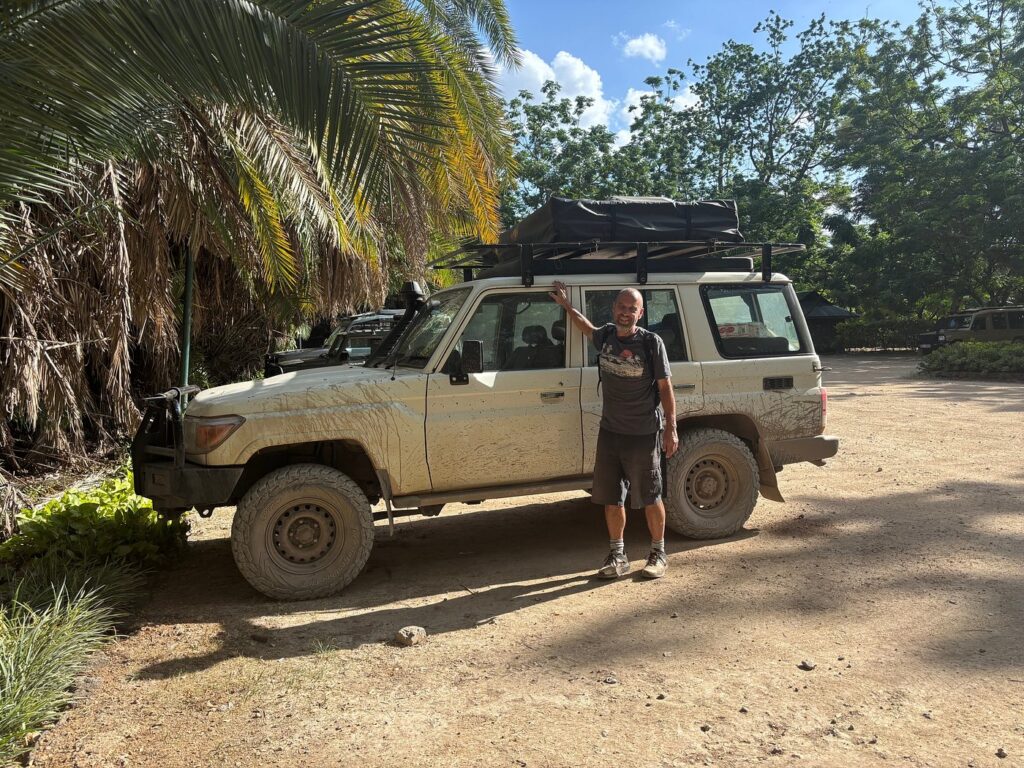
Required Documents and Permits
Cross-border self-drive is legal throughout the East African Community, but every vehicle needs a specific paper trail at each boundary. Missing even one document is the single biggest cause of delays at the border.
Documents to carry (originals and copies)
- Valid passport(s) with at least 6 months’ validity and applicable East Africa Tourist Visa or individual country visas.
- International Driving Permit (IDP) alongside your national driving license.
- Vehicle logbook / registration certificate (original — rental companies must provide this, not a photocopy).
- Signed cross-border authorization letter from the rental company, naming the driver(s) and approved countries.
- COMESA Yellow Card — regional third-party motor insurance valid across most East and Southern African states.
- Temporary Vehicle Import Permit / carbon tax receipt, arranged at the border (fees vary by country and engine size).
- Local road/toll fees for the country being entered (e.g., Tanzania’s TANROADS fee for foreign-registered vehicles).
- Rental agreement and proof of full payment or deposit, in case of roadside or border checks.
| Important
• Not all rental fleets are licensed for cross-border movement. Confirm in writing before booking — some companies charge a separate cross-border fee (commonly USD 100–300) and require 48–72 hours’ notice to prepare the authorization letter and Yellow Card. • Never attempt to cross with a vehicle registered to a private individual rather than a licensed rental company — border officials frequently reject these. |
Typical Cross-Border Costs (2026 Estimates)
Costs vary by vehicle class, season, and rental company, but the table below gives a realistic planning range for a two-country self-drive trip in a Land Cruiser or RAV4 with rooftop tent.
| Item | Typical Cost (USD) | Notes |
| 4×4 Land Cruiser rental (per day) | 120 – 220 | Includes rooftop tent, camping gear, unlimited km on most fleets |
| RAV4 4WD rental (per day) | 60 – 100 | Best for tarmac-heavy, lighter routes |
| Cross-border authorization fee | 100 – 300 | One-off, charged by rental company |
| COMESA Yellow Card (per crossing) | 20 – 60 | Depends on vehicle engine capacity |
| Temporary import permit / carbon tax | 20 – 50 | Charged per country entered |
| Road toll / TANROADS-type fee | 10 – 25 per day | Applies to foreign-registered vehicles |
| East Africa Tourist Visa | 100 | Single visa covers Kenya, Uganda, Rwanda |
| Fuel (diesel, approx. per litre) | 1.30 – 1.60 | Prices fluctuate; carry cash for remote stations |
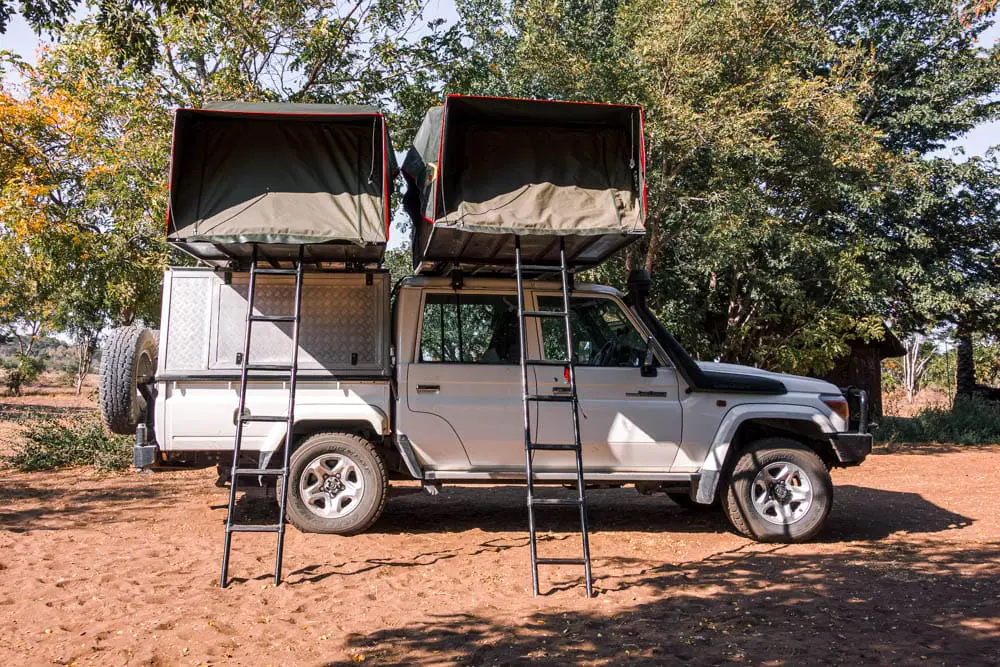
Step-by-Step: What Happens at the Border
- Park at the exit-country immigration office and stamp passports out; carry the vehicle logbook and rental authorization letter.
- Visit vehicle/customs control to log the temporary export of the rental vehicle — an officer notes the chassis and registration number.
- Walk or drive across to the entry-country side (crossings vary — some are a short walk, others a short drive between checkpoints).
- Clear entry-country immigration and pay for or present your visa/East Africa Tourist Visa.
- Clear customs for the vehicle: purchase the COMESA Yellow Card extension (if not pre-arranged), pay the temporary import permit and any carbon/road tax.
- Keep every receipt — you will need them again when exiting that country later in the trip.
- Continue to the first police or weighbridge checkpoint on the new side, where officers may re-check the same documents.
| Time Planning
• Budget 45–90 minutes for a well-prepared crossing at quieter posts like Cyanika or Namanga. • Busier truck corridors such as Malaba, Busia, or Tunduma can take 2–4 hours, especially in the morning when freight traffic peaks. • Aim to cross before mid-afternoon so you are not navigating an unfamiliar border town, or the road beyond it, after dark. |
Tips for a Smooth Cross-Border Self-Drive
Before you travel
- Book your cross-border 4×4 at least 2–3 weeks ahead — Yellow Card and authorization paperwork takes time to process.
- Photograph and email yourself copies of every document before departure.
- Confirm which currencies each border post accepts — USD cash (2013 series or newer, no marks or tears) is still the safest bet at most posts.
- Ask your rental company for a 24-hour emergency contact number valid across all countries on your route.
At the border
- Dress neatly and keep all documents in one folder — a calm, organized presentation speeds up processing.
- Do not accept offers of unofficial ‘assistance’ from freelance fixers unless your rental company has specifically arranged them.
- Double-check every stamp and receipt before driving off; a missing customs stamp can cause problems at the next checkpoint or on exit.
On the road
- Carry small denominations of both local currencies for tolls, weighbridges, and roadside purchases.
- Fill the tank fully before and immediately after crossing — fuel prices and availability can differ sharply between neighboring countries.
- Keep printed (not just digital) copies of your logbook and authorization letter — rural checkpoints do not always have signal to verify digital documents.
Common Challenges (and How to Avoid Them)
| Challenge | How to Avoid It |
| Rental company refuses cross-border permission | Disclose your full route when booking, not just after signing — confirm allowed countries in writing |
| Missing or expired Yellow Card | Arrange it through the rental company at least a week before departure, and verify it lists every country you’ll enter |
| Vehicle registered to an individual, not a company | Book only through licensed, VAT-registered rental operators for cross-border trips |
| Unofficial ‘facilitation fees’ demanded at the border | Politely ask for an official receipt; delay tactics usually ease once you do |
| Confusion over carbon tax / import permit costs | Get an itemized quote from your rental company before departure so you recognize fair charges |
| Running out of daylight at an unfamiliar border town | Plan crossings for the morning and build in a buffer of at least 3 hours before dark |
Sample Cross-Border Itinerary: Nairobi to Serengeti (7 Days)
- Day 1–2: Nairobi → Amboseli National Park (self-drive, RAV4 or Land Cruiser)
- Day 3: Amboseli → Namanga border crossing → Arusha (overnight, prepare Yellow Card/permits)
- Day 4–5: Arusha → Ngorongoro Crater → Serengeti National Park (rooftop tent camping)
- Day 6: Serengeti → Isebania/Sirari border crossing → Maasai Mara
- Day 7: Maasai Mara game drives → return drive to Nairobi
| Budget Snapshot (2 travelers, Land Cruiser + rooftop tent)
• Vehicle rental (7 days): approx. USD 980 – 1,540 • Two border crossings (permits, Yellow Card, tolls): approx. USD 260 – 500 • Fuel: approx. USD 180 – 250 • Park entrance fees (Amboseli, Ngorongoro, Serengeti, Maasai Mara): approx. USD 600 – 900 for two travelers • Total estimated ground-transport and park budget: USD 2,000 – 3,200 |

Frequently Asked Questions
Can I rent a 4×4 in one country and drop it off in another?
Some operators allow one-way cross-border drop-offs for an additional relocation fee, but most cross-border rentals are round-trip, returning to the country of origin. Confirm one-way options directly with the rental company before booking.
Do I need a separate insurance policy for each country?
No — a COMESA Yellow Card is a single regional policy recognized across most East and Southern African states, though you should confirm your specific route countries are listed on the card.
Is it cheaper to rent locally in each country instead of crossing borders?
Usually not, once you factor in repacking, new paperwork, and the loss of a familiar, well-maintained vehicle. A single well-prepared cross-border rental is typically more cost-effective and far less stressful than multiple separate in-country rentals.
What happens if the vehicle breaks down in another country?
Reputable cross-border rental companies maintain partner mechanics or breakdown contacts in each country on your approved route. Confirm this support exists before departure, and keep the 24-hour emergency number saved offline.
Can I self-drive to gorilla trekking in both Uganda and Rwanda on one rental?
Yes — this is one of the most popular cross-border 4×4 routes, typically crossing at Cyanika between Kisoro (Uganda) and Musanze (Rwanda). Confirm your rental company covers both countries and that your Yellow Card lists Rwanda.
Final Thoughts
A well-planned cross-border 4×4 rental unlocks some of East Africa’s finest overland routes — from the Mara-Serengeti ecosystem to the volcano-and-gorilla circuit linking Uganda and Rwanda. The paperwork is more involved than a single-country rental, but none of it is difficult once you book with a company experienced in cross-border logistics, confirm every document in writing, and build a realistic time and cost buffer into your itinerary. With the right 4×4, a signed authorization letter, and a valid COMESA Yellow Card, the border post becomes a routine stop on the journey rather than an obstacle to it.
| Ready to Plan Your Route?
• Talk to Us a cross-border-licensed 4×4 rental specialist before you book to confirm vehicle availability, permitted countries, and an itemized quote covering every border fee. |