
10 Must-See Destinations on a Road Trip in Uganda
10 Must-See Destinations on a Road Trip in Uganda, From the thundering Nile at Murchison Falls to mountain gorillas in Bwindi’s ancient forests — a route-by-route guide to Uganda’s best self-drive stops.
Why a Uganda Road Trip Belongs on Your Bucket List
Uganda earns its nickname, the Pearl of Africa, on the strength of sheer geographic variety packed into one manageable-sized country. In a single self-drive loop, you can move from savannah plains grazed by elephant and lion, through misty mountain rainforest sheltering half the world’s mountain gorillas, past the source of the world’s longest river, and down to palm-lined beaches on Lake Victoria.
A road trip is, for most travellers, the best way to experience this range. Uganda’s national road network connects its major parks with a mix of tarmac highways and well-graded murram roads, self-drive car rental is affordable and widely available in Kampala and Entebbe, and distances between highlights are short enough that a two-to-three-week loop can realistically cover the ten destinations below without feeling rushed.
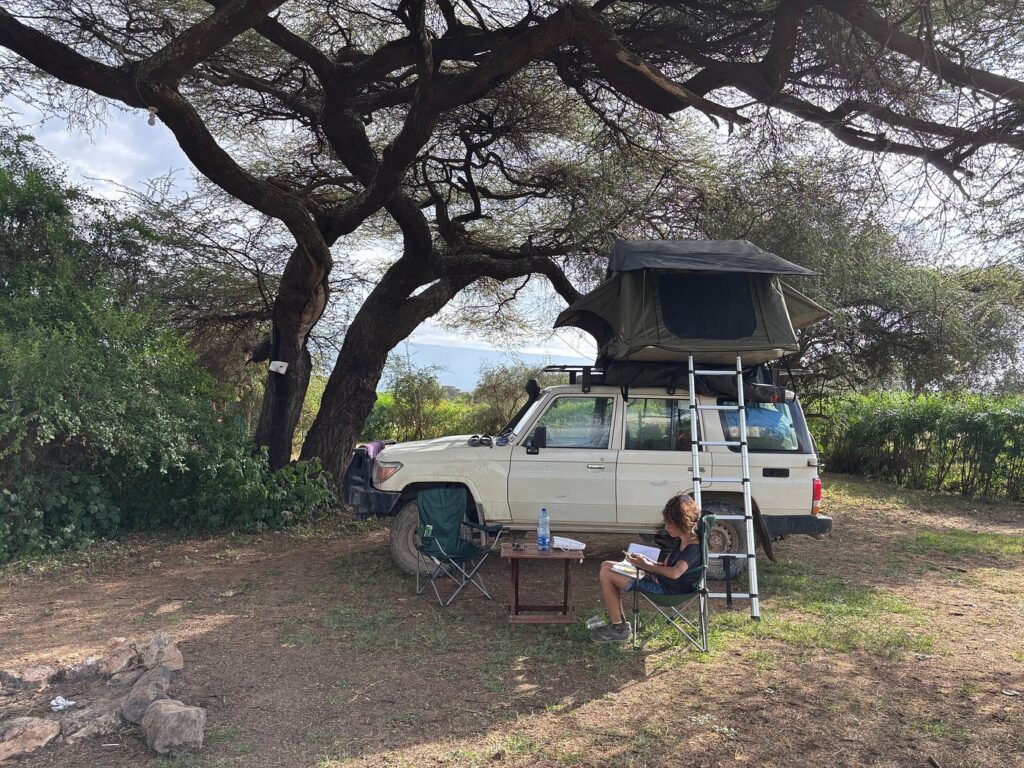
This guide walks through those ten stops in a logical road-trip order — roughly a loop through the west and southwest, with Jinja and the Ssese Islands as flexible add-ons and Kidepo as an optional northern extension — along with distances from Kampala, what makes each stop worth the drive, and practical tips for tackling the roads in between.
| Destination | Distance from Kampala | Why Visit |
| Murchison Falls National Park | ~305 km / 5–6 hrs | The Nile explosively squeezed through a 7m gorge |
| Kibale National Park | ~300 km / 5 hrs | Highest primate density in East Africa, chimp trekking |
| Queen Elizabeth National Park | ~420 km / 6–7 hrs | Tree-climbing lions and the Kazinga Channel |
| Bwindi Impenetrable National Park | ~520 km / 8–9 hrs | Mountain gorilla trekking in ancient rainforest |
| Lake Bunyonyi | ~460 km / 7–8 hrs | Scenic terraced hills and one of Africa’s deepest lakes |
| Lake Mburo National Park | ~230 km / 3.5–4 hrs | Easiest park for a self-drive game viewing loop |
| Ssese Islands | ~140 km + ferry | Laid-back beaches on Lake Victoria |
| Jinja & the Source of the Nile | ~80 km / 1.5–2 hrs | White-water rafting and the birthplace of the Nile |
| Rwenzori Mountains National Park | ~390 km / 6–7 hrs | Africa’s legendary ‘Mountains of the Moon’ |
| Kidepo Valley National Park | ~570 km / 9–10 hrs | Uganda’s wildest, most remote savannah wilderness |
1. Murchison Falls National Park
Distance from Kampala: Roughly 305 km (5–6 hours) north of Kampala via Masindi
Uganda’s largest national park is also its most dramatic road trip reward. The Victoria Nile narrows to a violent 7-metre gorge before thundering 43 metres down into the Albertine Rift, throwing up a permanent curtain of mist that gives the falls their name. Self-drivers typically enter through the Kichumbanyobo or Bugungu gates and spend two to three days exploring the park’s northern game-viewing circuit before crossing the river by ferry to reach the top of the falls.
Game drives along the delta track regularly turn up elephants, giraffes, buffalo, and Uganda kob, while a boat cruise to the base of the falls is the best way to spot hippos, crocodiles, and — with luck — shoebill storks in the papyrus swamps near the delta.
Self-Drive Tips
- The Paraa ferry crossing has fixed departure times; plan your route around the schedule to avoid a long wait.
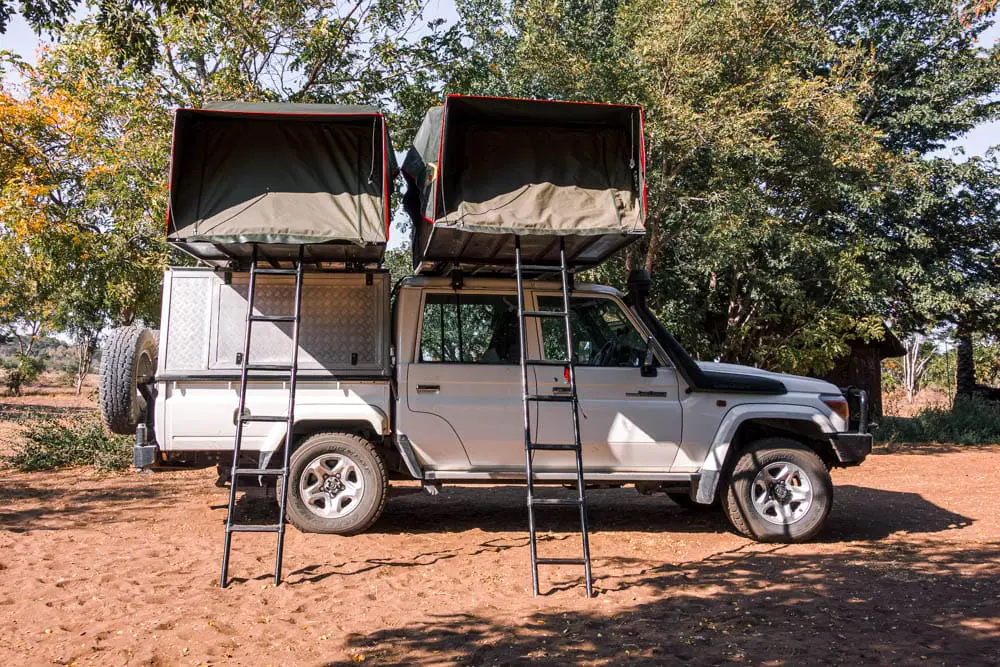
- Roads inside the park are manageable in a high-clearance 4×4 in dry season; a rooftop tent camp at Red Chilli Rest Camp puts you close to the action.
- Combine with a half-day chimp trek in the Budongo Forest en route for an easy primate add-on.
| Good to Know
A 4×4 with good ground clearance is strongly recommended for the delta and Buligi tracks, especially in the rainy months of April–May and October–November. |
2. Kibale National Park
Distance from Kampala: About 300 km (5 hours) west of Kampala via Fort Portal
Kibale holds the title of primate capital of East Africa, with 13 species crammed into its lush mid-altitude forest, including over 1,500 chimpanzees. A pre-dawn drive from Fort Portal gets self-drivers to the Kanyanchu trailhead in time for the classic chimp trekking permit slot, and sightings are reliably excellent given the habituated troops researchers have followed for decades.
Beyond the chimps, the park borders the Bigodi Wetland Sanctuary, a community-run reserve where guided walks reveal eight further primate species and prolific birdlife, making it an easy, affordable half-day stop for anyone road-tripping through the western circuit.
Self-Drive Tips
- Book chimp trekking permits through the Uganda Wildlife Authority well ahead of your trip; slots fill quickly in peak season.
- The tarmac road from Kampala to Fort Portal is in good condition, so a 2WD saloon can comfortably make the drive.
- Stay in Fort Portal town or one of the forest-edge lodges to shave time off the early trekking start.
| Good to Know
Chimp trekking permits often sell out weeks in advance during the July–September and December–February dry seasons — reserve early if this stop anchors your itinerary. |

3. Queen Elizabeth National Park
Distance from Kampala: Around 420 km (6–7 hours) southwest of Kampala
Queen Elizabeth is arguably Uganda’s most complete safari destination and a natural centrepiece for any self-drive route through the west. The park’s Kasenyi plains deliver classic savannah game drives, while the Kazinga Channel — a natural waterway linking Lakes Edward and George — hosts one of Africa’s densest concentrations of hippos and Nile crocodiles, best seen on a launch cruise.
The park’s real showstopper is the Ishasha sector in the south, where tree-climbing lions drape themselves across the branches of fig trees, a behaviour rarely seen anywhere else on the continent.
Self-Drive Tips
- Budget a full two to three days to cover both the northern Kasenyi/Mweya circuit and the more remote Ishasha sector.
- Fuel up in Kasese or Katunguru before heading into Ishasha, as stations become scarce further south.
- The Kazinga Channel boat cruise departs from Mweya at set times — pre-booking secures a spot on busy days.
| Good to Know
The murram roads to Ishasha can turn slick and slow after heavy rain; check conditions locally before committing to that leg of the loop. |

4. Bwindi Impenetrable National Park
Distance from Kampala: Roughly 520 km (8–9 hours) from Kampala, often broken into two driving days
Bwindi is the reason many travellers plan a Uganda road trip in the first place: it shelters roughly half of the world’s remaining mountain gorillas within a tangle of ancient, mist-draped rainforest in the far southwest. Trekking to a habituated gorilla family is physically demanding — trails climb steeply through dense vegetation — but the encounter with a wild gorilla troop is consistently rated among Africa’s most powerful wildlife experiences.
The park is split into four trailhead sectors — Buhoma, Ruhija, Rushaga, and Nkuringo — each with its own access road and lodges, so it’s worth choosing a base that matches the sector where your permit is allocated.
Self-Drive Tips
- Break the long drive from Kampala with an overnight in Kabale or at Lake Mburo to avoid arriving exhausted before a trek.
- Buhoma and Ruhija are reached via decent murram roads from Kabale/Butogota; Rushaga and Nkuringo involve steeper, rougher approaches best suited to a 4×4.
- Gorilla permits are allocated to a specific sector — confirm which trailhead you’re assigned before choosing overnight accommodation.
| Good to Know
Only eight visitors are permitted per gorilla family per day, so permits should be secured through the Uganda Wildlife Authority months in advance of your road trip dates. |
5. Lake Bunyonyi
Distance from Kampala: Around 460 km (7–8 hours) from Kampala, a short hop from Bwindi
After the intensity of gorilla trekking, Lake Bunyonyi offers one of Uganda’s most photogenic stretches of road-trip downtime. Terraced hillsides plunge into a lake so deep and free of bilharzia that it’s genuinely safe to swim in, dotted with 29 small islands, several with their own quirky backstories.
Dugout canoe paddling, birdwatching, and short hikes along the ridge lines fill a relaxed day or two, and the cooler highland climate is a welcome contrast to the savannah heat further north.
Self-Drive Tips
- The road from Kabale up to Bunyonyi is steep and winding but paved for much of the way — take it slowly, especially in mist.
- This is a good spot to rest vehicle and driver alike before or after the rougher tracks around Bwindi.
- Book lakeside accommodation with secure parking, as many properties sit on narrow peninsula roads.
6. Lake Mburo National Park
Distance from Kampala: About 230 km (3.5–4 hours) southwest of Kampala
Compact, uncrowded, and easy to navigate, Lake Mburo is the most self-drive-friendly park in Uganda and a natural first or last stop on a western circuit. It’s also the only park in the country where zebra roam freely alongside impala, eland, and buffalo, and one of the few where a guided walking safari or horseback ride is possible thanks to the low predator density.
A sunset boat trip on the lake itself is a highlight, bringing you close to hippo pods, fish eagles, and, on the shoreline, elusive leopard tracks.
Self-Drive Tips
- The park’s compact game-viewing loop is drivable in half a day, making it ideal for travellers on a tighter schedule.
- Roads inside the park are generally passable to a standard saloon car in dry conditions, unlike most other Ugandan parks.
- It sits directly on the Kampala–Bwindi highway, making it a natural overnight break for longer road trips south.
7. Ssese Islands
Distance from Kampala: About 140 km to the Bukakata or Nakiwogo ferry point, plus a lake crossing
For a total change of pace, the Ssese archipelago on Lake Victoria delivers sandy beaches, fishing villages, and thick forest patches largely spared from Uganda’s mainland deforestation. Kalangala, the main island, is reachable by vehicle ferry, after which quiet dirt roads loop past palm-fringed bays that feel worlds away from savannah safari circuits.
It’s a favourite weekend add-on for Kampala-based road trippers wanting a beach-and-boat interlude, with kayaking, sport fishing, and simply doing nothing on the agenda.
Self-Drive Tips
- Vehicle ferries run on a fixed timetable from Nakiwogo (Entebbe) or Bukakata (Masaka) — arrive early, as space is limited.
- Island roads are sandy dirt tracks; a 4×4 makes exploring beyond the main village far easier.
- Fuel is limited and pricier on the islands, so top up the tank on the mainland before crossing.
8. Jinja and the Source of the Nile
Distance from Kampala: Roughly 80 km (1.5–2 hours) east of Kampala
Jinja makes an easy, energetic first or last stop on a Uganda road trip. The town sits where the Nile begins its 6,600-km journey to the Mediterranean, and the surrounding stretch of river has become East Africa’s adventure sports hub, with white-water rafting, kayaking, bungee jumping, and quad biking all on offer alongside calmer sunset boat cruises to the source itself.
A short detour to the nearby Mabira Forest adds a canopy walk and birdwatching stop for travellers heading further east or wanting to break up the drive from Kampala.
Self-Drive Tips
- The Kampala–Jinja highway is fully tarmacked and one of the easiest legs of any Uganda itinerary.
- Book rafting trips a day ahead in peak season; grade five rapids run year-round but water levels shift seasonally.
- Jinja town has reliable fuel stations and vehicle services, making it a sensible place to service or check over a rental before heading further afield.
9. Rwenzori Mountains National Park
Distance from Kampala: Around 390 km (6–7 hours) from Kampala via Fort Portal or Kasese
Nicknamed the ‘Mountains of the Moon’, the Rwenzori range holds Africa’s third-highest peak and some of its strangest high-altitude vegetation — giant lobelias and groundsel rising out of glacier-fed valleys. Multi-day treks to the higher peaks require serious preparation, but day hikes from Kilembe or Nyakalengija into the foothills are within reach of any road-tripping visitor with a few spare hours.
The base towns of Kasese and Kilembe also serve as convenient staging points between Queen Elizabeth National Park and Kibale, so the Rwenzoris slot naturally into a western Uganda loop without a major detour.

Self-Drive Tips
- Multi-day summit treks require advance booking with a licensed operator and porters — arrange this well before your road trip dates.
- Even a short foothill walk rewards with views over the western Rift Valley on clear mornings.
- The access roads from Kasese to the trailheads are rough murram; a 4×4 is recommended after rain.
10. Kidepo Valley National Park
Distance from Kampala: Around 570 km (9–10 hours) from Kampala, Uganda’s most remote major park
Kidepo rewards travellers willing to commit real driving time with landscapes and wildlife found nowhere else in the country. Wedged against the South Sudan and Kenya borders, its wide-open savannah and the dramatic Narus and Kidepo valleys hold species absent from Uganda’s other parks, including cheetah, bat-eared fox, and striped hyena, alongside large herds of buffalo and elephant.
Because of the distance, most self-drivers either fly in or treat Kidepo as the highlight of a dedicated northern circuit combined with Murchison Falls, rather than bolting it onto a western loop.
Self-Drive Tips
- Plan for two full driving days from Kampala, typically overnighting around Gulu or Kitgum en route.
- Carry extra fuel and supplies — services are sparse in Karamoja, and the nearest reliable fuel stations thin out well before the park gates.
- The dry months of September to March offer the best road conditions and the most reliable wildlife viewing around the Narus Valley waterholes.
| Good to Know
Given the distance, allow at least four to five days for a Kidepo add-on so the driving doesn’t crowd out time in the park itself. |
Planning Your Uganda Road Trip: Practical Essentials
Best Time to Go
Uganda’s two dry seasons — December to February and June to September — offer the firmest roads and the easiest driving conditions, particularly on the murram tracks inside national parks. The wetter months bring lush scenery and fewer crowds but can turn some park roads slippery, so a higher-clearance 4×4 becomes more important if you’re travelling in April, May, October, or November.
Choosing Your Vehicle
A 4×4 with a rooftop tent is the classic choice for a multi-park Uganda itinerary, giving you both the ground clearance for murram roads and flexible camping options inside the parks. Travellers sticking mainly to tarmac routes — Kampala to Jinja, or Kampala to Fort Portal for Kibale — can comfortably manage in a standard saloon or crossover, but any route including Ishasha, Kidepo, or the Rwenzori foothills calls for a proper 4×4.

Permits and Bookings to Sort in Advance
- Gorilla trekking permits (Bwindi) — book through the Uganda Wildlife Authority months ahead.
- Chimp trekking permits (Kibale, Budongo) — reserve early for peak season slots.
- Park entry fees — payable at UWA gates in USD or local currency; check current rates before departure.
- Vehicle ferries (Paraa, Ssese Islands) — check timetables in advance, as departures are limited.
| Route Planning Tip
Group destinations by region rather than driving back to Kampala between stops. A western loop through Lake Mburo, Queen Elizabeth, Kibale, Bwindi, and Lake Bunyonyi keeps daily drive times reasonable, while Jinja, the Ssese Islands, and Kidepo work best as separate add-on legs. |
Final Thoughts
Few countries pack this much landscape, wildlife, and adventure into a road-trippable radius. Whether you have ten days for a western highlights loop or three weeks to also reach Kidepo in the far north, these ten destinations form a reliable backbone for planning a Uganda self-drive itinerary — and each one rewards the extra hours on the road with something genuinely unlike the rest.