
Akagera National Park: Complete Travel Guide: Car Rental & Self-Drive Safari
Akagera National Park is Rwanda’s largest protected area and the only savannah park in the country, covering approximately 1,122 square kilometres in the eastern province along the border with Tanzania. Named after the Akagera River that flows along its eastern boundary and feeds a labyrinth of lakes and papyrus swamps, the park offers a classic Big Five African safari experience within just a few hours’ drive from Kigali.
Once poached nearly to extinction following the 1994 genocide, Akagera has undergone one of Africa’s most remarkable conservation turnarounds. Since 2010, when African Parks partnered with the Rwanda Development Board (RDB) to manage the park, lions were reintroduced in 2015, black rhinos were reintroduced in 2017, and cheetahs followed in 2022. Today, Akagera is a thriving ecosystem home to elephants, buffaloes, hippos, leopards, zebras, giraffes, and over 500 bird species.
| 📍 Key Fact: Akagera National Park is the only place in Rwanda where you can see the Big Five — lion, leopard, elephant, buffalo, and black rhino — making it an unmissable stop on any Rwanda safari itinerary. |
Whether you are planning a day trip from Kigali, a weekend safari, or a multi-day self-drive adventure, this comprehensive guide covers everything you need to know about Akagera National Park — including car rental options, self-drive tips, wildlife hotspots, entrance fees, accommodation, and the best time to visit.
Akagera National Park: Overview & Location
Where Is Akagera National Park?
Akagera National Park is located in the Eastern Province of Rwanda, approximately 100 kilometres from Kigali. The main South Gate entrance is about a 2-hour drive from Kigali city centre, while the North Gate is approximately 3 hours away. The park borders Tanzania to the east, with the Akagera River and a series of interconnected lakes forming a natural boundary.
| Park Detail | Information |
| Total Area | 1,122 km² (433 sq miles) |
| Location | Eastern Province, Rwanda |
| Distance from Kigali | ≈100 km (South Gate) / ≈150 km (North Gate) |
| Governing Body | Rwanda Development Board (RDB) & African Parks |
| Established | 1934 (gazetted), Rehabilitated from 2010 |
| Ecosystem | Savannah, wetlands, lakes, woodland |
| Big Five Status | Yes — Lion, Leopard, Elephant, Buffalo, Black Rhino |
| Bird Species | 500+ recorded species |
The Akagera Ecosystem
The park encompasses a diverse range of habitats, from open savannah grasslands in the north to dense woodland, acacia forests, and the vast wetland systems of the Akagera River valley in the east and south. The lakes — including Lake Ihema, Lake Shakani, Lake Hago, and Lake Rwanyakizinga — are integral to the park’s biodiversity, supporting large hippo and crocodile populations, as well as exceptional birdlife.
The northern part of the park features rolling hills and open plains — ideal for tracking lions and spotting herds of zebra and topi antelope. The southern area is more densely vegetated and home to shy leopards, forest elephants, and a rich array of primates.
Wildlife in Akagera National Park
The Big Five
Akagera is Rwanda’s only Big Five park, and tracking these iconic species is the primary draw for most visitors:
- 🦁 Lions: Reintroduced in 2015 from South Africa and Zambia, the lion population has grown steadily and is most often spotted in the northern savannah plains around Mutumba Hills.
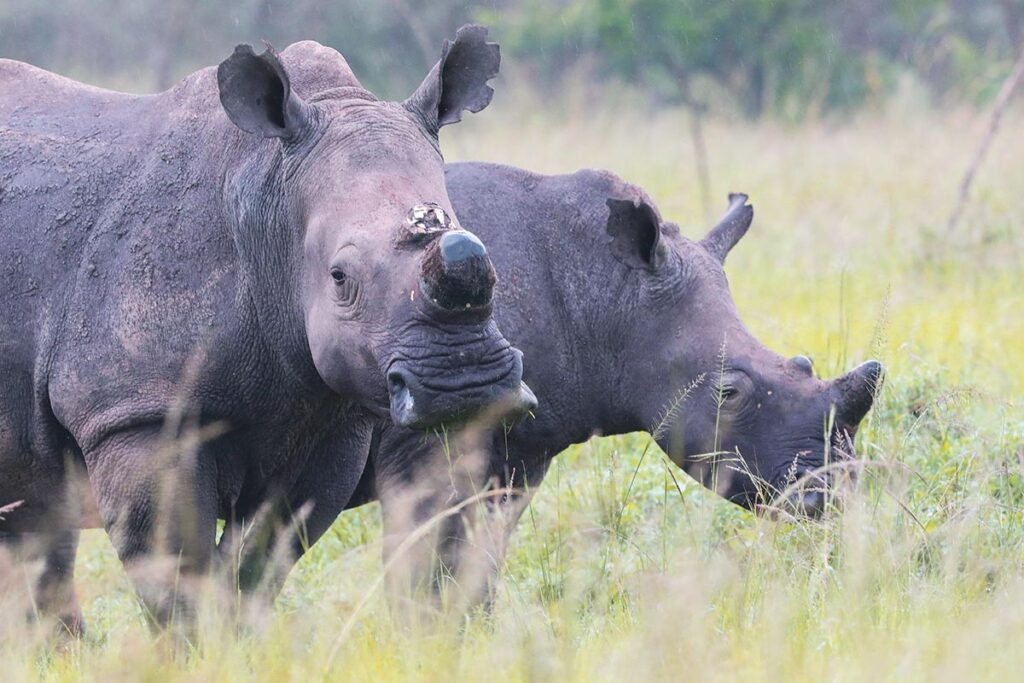
- 🦏 Black Rhinos: Reintroduced in 2017 and again in 2021, the critically endangered eastern black rhino now has a breeding population within Akagera. They are rarely seen and are often accompanied by armed rangers.
- 🐘 Elephants: A thriving population of African savannah elephants roams the park, often seen in the central and southern areas near waterholes.
- 🐆 Leopards: Shy and solitary, leopards are present throughout the park but are easiest to spot early morning or at dusk near rocky outcrops and tree lines.
- 🐃 Cape Buffalo: Found in large herds — sometimes numbering several hundred — particularly around the lake shores and open grasslands.
Other Wildlife Highlights
Beyond the Big Five, Akagera offers exceptional wildlife encounters across a wide variety of species:
- Hippopotamus: Lake Ihema has one of the highest hippo densities in Africa — over 1,000 individuals.
- Nile Crocodile: Abundant in all major lakes and along the Akagera River.
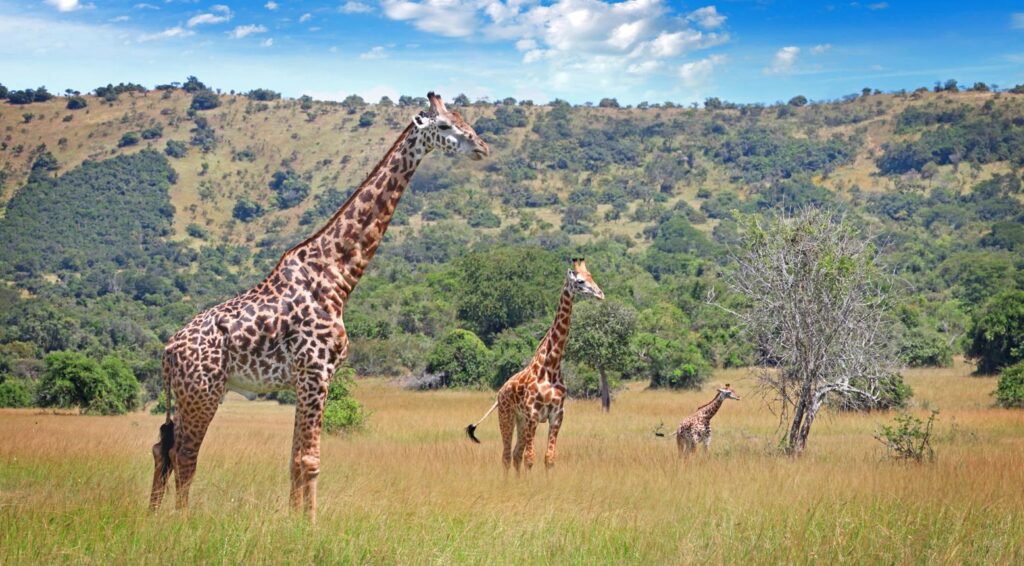
- Masai Giraffe: Akagera has a healthy giraffe population, particularly around the northern plains.
- Plains Zebra: Large herds are common and one of the park’s most photogenic sights.
- Topi & Roan Antelope: Both species are rare in Rwanda and found almost exclusively in Akagera.
- Side-Striped Jackal: Frequently spotted near campsites and at dusk along roadsides.
- Spotted Hyena: A recovering pack in the north; most active after dark.
- Olive Baboon, Vervet Monkey: Common throughout the woodland zones.
Birdwatching in Akagera
Akagera is a world-class birding destination with over 500 recorded species, including many that are difficult to find elsewhere in Rwanda. The wetland systems attract spectacular waterbirds, while the savannah hosts an array of raptors, rollers, and bee-eaters.
| 🦅 Top Birding Species: Shoebill Stork (rare), African Fish Eagle, Grey Crowned Crane (Rwanda’s national bird), Saddle-Billed Stork, Papyrus Gonolek, Ross’s Turaco, Carmine Bee-Eater, Martial Eagle, Secretary Bird, Malachite Kingfisher. |
Akagera National Park Entrance Fees & Permits (2026/2027)
All entrance fees are managed by the Rwanda Development Board (RDB) and are payable in USD or Rwandan Francs (RWF) at the park gates or via the RDB online portal.
| Category | Fee (USD) | Notes |
| Foreign Non-Resident Adult | $40 per day | Standard park entry |
| Foreign Non-Resident Child (5–15) | $20 per day | Under 5 free |
| East African Resident Adult | $20 per day | Valid EAC passport/ID required |
| Rwanda Citizen Adult | RWF 5,000/day | National ID required |
| Vehicle Entry (Foreign Reg.) | $10 per vehicle | Per entry |
| Vehicle Entry (Rwanda Reg.) | RWF 5,000 | Per entry |
| Boat Safari (Lake Ihema) | $35 per person | 2-hour guided boat trip |
| Night Game Drive | $45 per person | Minimum 2 people |
| Bush Walk (guided) | $35 per person | With armed ranger |
| Sport Fishing Permit | $15 per rod/day | Catch and release |
| Camping (Karenge Bush Camp) | $30 per person/night | Basic facilities |
| Camping (Shakani Camp) | $30 per person/night | Lakeside setting |
| 💡 Pro Tip: Book park entry and activities in advance through the RDB online portal (www.rdb.rw) especially during peak season (June–September). Last-minute gate bookings are possible but not guaranteed for popular activities like night drives. |
Car Rental to Akagera National Park
Renting a car is the most flexible and popular way to reach and explore Akagera National Park. Whether you want the freedom of a self-drive experience or prefer a vehicle with a professional driver-guide, car rental companies in Kigali offer a range of options to suit every budget and travel style.
Best Vehicles for Akagera National Park
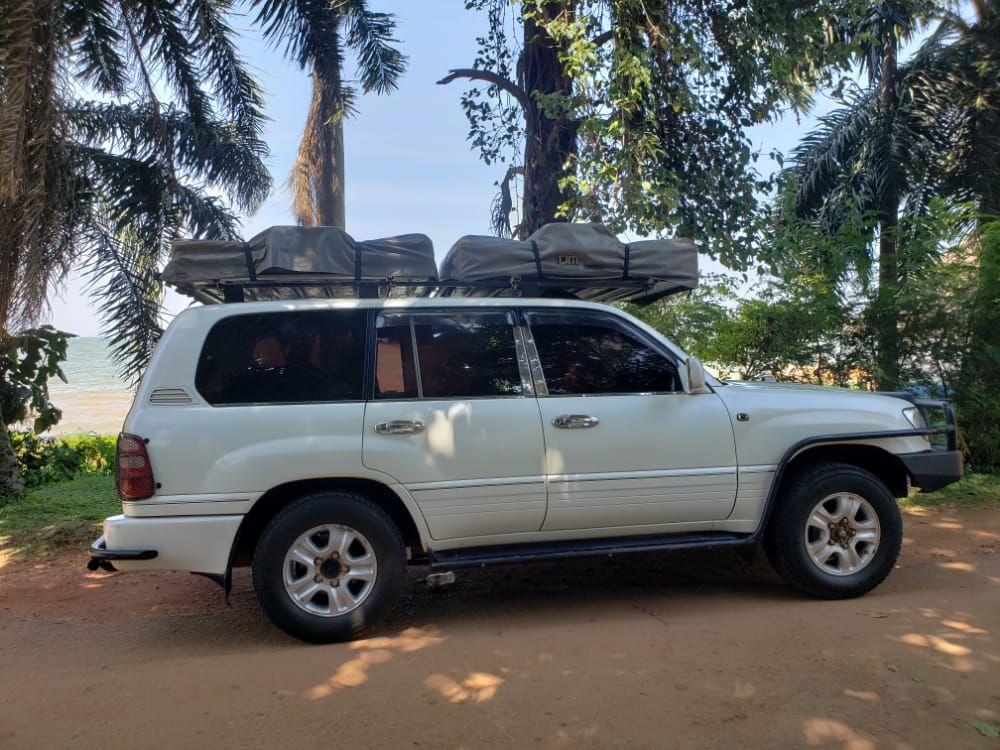
Not all cars are suitable for Akagera’s terrain. While the park’s main roads are graded murram (gravel), they become muddy and slippery during the wet season. Choosing the right vehicle significantly affects your game drive experience:
| Vehicle Type | Road Suitability | Ideal For | Est. Daily Rate (USD) |
| Toyota Land Cruiser V8 (4×4) | Excellent — all terrain | Full safari, wet season, off-road | $150–$220 |
| Toyota Land Cruiser Prado (4×4) | Very Good — all terrain | Small groups, bush camping | $120–$180 |
| Toyota RAV4 (4×4/AWD) | Good — main park roads | Dry season, day trips | $70–$110 |
| Toyota Hilux Double Cab (4×4) | Very Good — rugged terrain | Overlanding, rooftop tent camping | $110–$160 |
| Safari Pop-Up Roof Land Cruiser | Excellent — all terrain | Photography, wildlife spotting | $180–$250 |
| Toyota Rav4 (2WD) | Fair — paved & graded roads only | Short visits, dry season only | $50–$80 |
| ⚠️ Important: A minimum ground clearance of 20 cm and 4WD capability is strongly recommended for Akagera, especially if visiting between March–May or October–November (long and short rains). Standard saloon cars are not permitted inside the park. |
Car Rental Rates from Kigali to Akagera (2026/2027)
The following rental rates are indicative and cover vehicle hire from Kigali with unlimited mileage within Rwanda. Rates vary by company, vehicle age, insurance package, and season:
| Rental Type | Vehicle | Daily Rate (USD) | Includes |
| Self-Drive (with driver) | Land Cruiser V8 | $180–$250 | Driver, fuel not included |
| Self-Drive (no driver) | Land Cruiser V8 | $120–$180 | Comprehensive insurance |
| Self-Drive (no driver) | Toyota RAV4 4×4 | $70–$100 | Comprehensive insurance |
| Self-Drive (no driver) | Toyota Hilux 4×4 | $100–$140 | Comprehensive insurance |
| Self-Drive (pop-up roof) | Land Cruiser Safari | $150–$220 | Roof hatch, binoculars |
| Rooftop Tent Package | Hilux / Land Cruiser | $130–$200 | Tent, bedding, kitchen kit |
| Driver-Guide Safari | Land Cruiser V8 | $200–$280 | Driver, guide services, fuel |
| 💡 Pro Tip: Book your rental at least 2–3 weeks in advance for peak season (June–September). Demand for safari-ready 4×4 vehicles is high during gorilla trekking season and most cars are booked across multiple national park circuits simultaneously. |

Documents Required for Car Rental in Rwanda
When hiring a car for your Akagera self-drive safari, the following documents are typically required:
- Valid passport (international visitors) or national ID (EAC residents)
- Valid driving licence from your home country (International Driving Permit recommended)
- Credit or debit card for security deposit (usually $200–$500)
- Proof of travel insurance (some companies require this)
- Completed rental agreement / signed terms and conditions
| 📌 Note: Rwanda drives on the right-hand side of the road. A foreign driving licence is accepted for up to 3 months. After 3 months, you must apply for a Rwandan driving licence. Most rental companies require drivers to be at least 23 years old with 2+ years of driving experience. |
Car Rental Companies Serving Akagera National Park
Numerous car rental companies in Kigali offer vehicles suitable for Akagera National Park. When choosing a provider, look for:
- 24/7 roadside assistance (mechanical breakdown support inside the park)
- Comprehensive insurance including off-road cover
- Rooftop or pop-up roof vehicle options for game drives
- GPS unit or mobile data SIM for navigation
- Optional camping equipment rental (rooftop tent, sleeping bags, cooking gear)
- Clear fuel policy — most are self-fill (no pre-paid fuel option)
How to Get to Akagera National Park
Route from Kigali to Akagera South Gate
The most commonly used route from Kigali follows the well-maintained RN3 highway northeast through Kayonza, then branches southeast toward the South Gate of the park:
- Kigali → Remera → Kayonza (RN3 highway, fully paved) — approximately 80 km, 1 hour
- Kayonza → Akagera South Gate (paved road to Rusumo, turn at Kabarondo) — approximately 25 km, 30 minutes
- Total: approximately 105 km, 1.5–2 hours from Kigali city centre
Route from Kigali to Akagera North Gate
The North Gate is accessed via Rwamagana and Nyagatare, and is the better entry point for accessing the northern savannah plains, the lion zone, and the park’s more remote areas:
- Kigali → Rwamagana → Nyagatare (fully paved highway) — approximately 130 km, 1.5 to 2 hours
- Nyagatare → Akagera North Gate (murram/gravel road) — approximately 25 km, 30–45 minutes
- Total: approximately 155 km, 2.5–3 hours from Kigali
Fuel & Road Conditions
Fill your fuel tank completely in Kayonza (South Gate route) or Nyagatare (North Gate route) — there are no fuel stations inside the park. Petrol (gasoline) and diesel are both available. Roads inside Akagera are unpaved murram tracks maintained by the park management, generally passable in a good 4×4 but can be slippery in wet conditions.
Self-Drive in Akagera National Park: Complete Guide
Self-driving in Akagera National Park is legal, straightforward, and increasingly popular among independent travellers. Unlike some East African parks that require mandatory guides, Akagera allows fully independent self-drive game drives with just a park entry permit. This makes it one of the most accessible and affordable self-drive safari destinations in the region.
Is Self-Driving Allowed in Akagera?
Yes — self-drive is fully permitted in Akagera National Park. There is no requirement to hire a guide for standard game drives on the park’s designated roads. However, for specific activities such as rhino tracking, bush walks, and night game drives, a mandatory park ranger or guide must accompany you (at an additional fee). You can combine self-drive game drives with these guided add-on activities.
| ✅ Self-Drive Rules: Stay on designated park tracks at all times. Do not exit your vehicle except at designated viewpoints and picnic sites. Switch off your engine near wildlife. Maintain a respectful distance of at least 20 metres from animals. Speed limit inside the park: 40 km/h. |
Park Road Network & Self-Drive Circuits
Akagera has approximately 400 kilometres of game drive tracks, though not all are accessible year-round. The main circuits are:
| Circuit | Area | Distance | Highlights | Difficulty |
| Southern Lake Circuit | South & Central | ~80 km | Lake Ihema, hippos, crocodiles, waterbirds | Easy |
| Northern Plains Circuit | North | ~120 km | Lions, rhinos, zebra, giraffe, open plains | Moderate |
| Mutumba Hills Loop | North-Central | ~60 km | Lion territory, panoramic views, roan antelope | Moderate |
| Akagera River Track | Eastern boundary | ~50 km | Buffalo herds, elephants, riverine forest | Moderate–Hard |
| Kageyo Sector (North) | Far North | ~40 km | Wild dogs (seasonal), topi, open grasslands | Hard — 4×4 only |
Self-Drive Game Drive Itineraries
Half-Day Game Drive (4–5 hours)
Best for day-trippers from Kigali or visitors with limited time. Enter via the South Gate and focus on the lake circuit:
- 6:00 AM — Enter South Gate (arrive before gate opens at 6:00 AM)
- 6:00–8:00 AM — Drive the Lake Ihema shore road (hippos active at dawn)
- 8:00–10:00 AM — Head north to the central track for zebra, giraffe, buffalo
- 10:00–11:00 AM — Stop at Kamuganguzi Viewpoint for panoramic views
- 11:00 AM — Return to South Gate
| ⏰ Dawn Advantage: Animals are most active in the first 2 hours after sunrise. Arriving at the gate just before opening (6:00 AM) gives you the best lion and elephant sightings before midday heat drives wildlife to shade. |
Full-Day Self-Drive (8–10 hours)
- 5:30 AM — Depart Kigali
- 7:30 AM — Enter South Gate; begin Lake Ihema circuit
- 9:00 AM — Boat safari on Lake Ihema (book in advance — 2 hours)
- 11:00 AM — Drive north through central game area
- 12:00 PM — Picnic lunch at a designated viewpoint (bring your own food)
- 1:00–3:00 PM — Northern plains circuit (lions, rhinos with ranger escort)
- 3:30–5:00 PM — Return south, afternoon game drive
- 5:30 PM — Exit before gates close at 6:00 PM
2-Day / Overnight Self-Drive Safari
Spending two days in Akagera dramatically increases your wildlife encounter rate and allows for a night game drive, which is when leopards, hyenas, civets, and nocturnal species are active.
- Day 1 Morning: Enter via North Gate, drive Kageyo northern plains
- Day 1 Afternoon: Mutumba Hills circuit — prime lion territory
- Day 1 Evening: Night game drive with park ranger ($45/person)
- Day 1 Night: Camp at Karenge Bush Camp or Shakani Camp ($30/person)
- Day 2 Dawn: Boat safari on Lake Ihema
- Day 2 Morning: Southern lake circuit — hippos, crocodiles, elephants
- Day 2 Midday: Exit via South Gate
Best Time to Visit Akagera National Park
Dry Season: June to September (Peak Season)
The long dry season is widely considered the best time to visit Akagera. Vegetation thins out as grasses dry, making wildlife easier to spot. Animals congregate around permanent water sources, roads are in their best condition, and the weather is generally sunny and comfortable.
- Wildlife visibility: Excellent — sparse vegetation, animals near waterholes
- Road conditions: Very good — firm murram tracks, all circuits accessible
- Weather: Dry, warm (20–30°C), minimal rain
- Crowds: Higher — book accommodation and car rental in advance
- Best activities: Game drives, boat safaris, night drives, rhino tracking
Short Dry Season: December to February
A shorter dry period between the two rainy seasons, offering very good game viewing conditions and fewer visitors than the main peak season. This is an excellent time for birdwatching as migratory species are present.
Wet Season: March–May & October–November
The two rainy seasons bring lush green landscapes and excellent photographic light, but also challenging road conditions and reduced wildlife visibility. Self-drive visitors should have a capable 4×4 vehicle and expect some tracks to be closed.
- Wildlife: Still present but harder to spot in dense green vegetation
- Roads: Some tracks impassable — check with park staff on arrival
- Rates: Lower season — car rental and lodge rates may be reduced
- Birdlife: Exceptional — migrants present, breeding plumage on display
- Recommended vehicle: Land Cruiser V8 or Hilux 4×4 — not RAV4 2WD
| Month | Season | Wildlife | Roads | Recommendation |
| Jan–Feb | Short Dry | ★★★★☆ | ★★★★☆ | Very Good |
| Mar–May | Long Rains | ★★★☆☆ | ★★☆☆☆ | Fair — 4×4 essential |
| Jun–Sep | Long Dry | ★★★★★ | ★★★★★ | Best — Peak Season |
| Oct–Nov | Short Rains | ★★★☆☆ | ★★★☆☆ | Good — fewer crowds |
| December | Transitional | ★★★★☆ | ★★★★☆ | Very Good |
Where to Stay in Akagera National Park
Accommodation inside the park ranges from luxury lodges to self-catering tented camps and bush campsites. There are also options in Kayonza town (nearest to South Gate) for budget travellers who prefer not to camp.
Inside the Park — Lodges & Camps
| Property | Type | Location | Rate Range (USD/night) | Notes |
| Ruzizi Tented Lodge | Luxury tented camp | Lake Ihema shore | $500–$800 per person | Full board, boat safaris included |
| Akagera Game Lodge | Mid-range lodge | Central park, hill view | $200–$350 per room | Restaurant, pool, guided drives |
| Karenge Bush Camp | Self-catering camp | Northern savannah | $30–$60 per person | Basic facilities, communal kitchen |
| Shakani Camp | Self-catering camp | Lake Shakani shore | $30–$60 per person | Peaceful lakeside setting |
| Mutumba Campsite | Public campsite | North — lion zone | $20–$30 per person | Bring all supplies — very basic |
| 🏕️ Rooftop Tent Camping Tip: If you have rented a vehicle with a rooftop tent, you can camp at any of the designated campsites inside Akagera for $20–$30 per person per night. Rooftop tent camping is an incredible way to experience the park — waking up to lion roars and birdsong at dawn is unforgettable. |
Activities in Akagera National Park
-
Game Drives (Self-Drive & Guided)
Game drives are the core activity in Akagera, whether self-drive in your rental vehicle or guided in a park safari vehicle. Morning drives (6:00–10:00 AM) and late afternoon drives (3:30–6:00 PM) offer the best wildlife activity. Mid-day drives are less productive but the light is still good for photography.
-
Night Game Drives
Night game drives are mandatory guided activities with an armed park ranger and are available to both self-drive and fully guided visitors. Departing at dusk, these drives offer the chance to spot leopards, spotted hyena, civets, genets, bushbabies, spring hares, and numerous owl species. Night drives run approximately 2 hours and cost $45 per person.
-
Boat Safari on Lake Ihema
A 2-hour guided boat excursion on Lake Ihema is one of the highlights of any Akagera visit. The lake supports over 1,000 hippos, large Nile crocodiles, and spectacular waterbirds including the rare shoebill stork. Boats depart from the Akagera Game Lodge jetty. Cost: $35 per person; minimum 2 passengers.
-
Rhino Tracking
Tracking Akagera’s critically endangered eastern black rhinos on foot with an armed ranger is an extraordinary experience. Rhino tracking is strictly controlled — groups are small (maximum 8 people) and locations are not disclosed in advance. The permit ($35 per person) includes a ranger escort and can be combined with a vehicle game drive.
-
Guided Bush Walks
Walking safaris with armed park rangers offer a completely different perspective on the African bush — tracking animal prints, identifying plants, birds, and insects, and experiencing the ecosystem at a human pace. Bush walks are available in designated safe areas and cost $35 per person.
-
Sport Fishing
Lake Ihema and the Akagera River system support excellent sport fishing for Nile tilapia, Nile perch, catfish, and yellowfish. Fishing is catch-and-release and requires a $15/rod/day permit from the park headquarters. Fishing rods can be rented from the Akagera Game Lodge.
-
Birding Walks & Boat Birding
Dedicated birding walks and boat birding excursions can be arranged with specialist birding guides who know the park’s key species and habitats. The papyrus swamps around Lake Hago are particularly rewarding for endemic and near-endemic species including the papyrus gonolek.
Self-Drive Packing List for Akagera National Park
Vehicle Essentials
- Full spare tyre (checked before departure) and tyre repair kit
- High-lift jack and sand tracks or traction boards
- Jump-start cables and basic tool kit
- Extra fuel (minimum 20 litres in a proper fuel jerry can)
- Extra engine oil and coolant
- GPS unit / offline maps downloaded (Google Maps, Maps.me)
- Printed park map (available at the gate)
Safari Essentials
- Binoculars (8×42 or 10×42 minimum) — critical for wildlife spotting
- Camera with zoom lens (200mm minimum, 400mm+ for birds and distant animals)
- Neutral-coloured clothing (khaki, olive, tan — avoid bright colours and white)
- Wide-brimmed hat, sunglasses, high-SPF sunscreen
- Insect repellent (DEET-based or Picaridin) — mosquitoes active at dusk
- Headlamp/torch and spare batteries
- Field guide to East African mammals and birds (Kingdon or Stevenson)
Food & Water
- Minimum 3 litres of water per person per day — no shops inside the park
- Packed lunch, snacks, and breakfast supplies for full-day drives
- Portable cooler box / cool bag for perishables
- Portable camp stove and cooking equipment if camping
- Reusable plates, cutlery, cups — plastic bags are banned in Rwanda
| 🇷🇼 Rwanda Tip: Rwanda has a comprehensive single-use plastic bag ban. Bring reusable shopping bags and avoid packing food in plastic bags. Park rangers may inspect vehicles at entry points for prohibited plastics. |
Practical Travel Tips for Akagera National Park
Gate Opening Hours
- South Gate & North Gate: Open 6:00 AM — 6:00 PM daily
- All vehicles must exit the park by 6:00 PM (gates close promptly)
- Night game drives begin at 6:30 PM and are pre-arranged with the park
Health & Safety
- Malaria prophylaxis: Akagera is a malaria zone — consult your doctor before travel
- Yellow fever vaccination is required for entry into Rwanda from many countries
- COVID-19: Check current Rwanda entry requirements before travel
- Emergency contacts: RDB Akagera (+250 784 770 914), Kigali hospitals 2–3 hours away
- Medical kit: carry basic first aid, anti-diarrhoea tablets, rehydration salts
- Wildlife safety: never exit your vehicle near dangerous animals — lions, elephants, buffalo, hippos, and crocodiles are all capable of causing serious injury
Mobile Connectivity
Mobile network coverage (MTN and Airtel Rwanda) is generally available at park gates and in some parts of the park, particularly elevated areas. Coverage is patchy in valleys and remote northern circuits. Download offline maps before entering and save emergency contacts.
Money & Payments
Park entrance fees can be paid in USD cash or by card (Visa/Mastercard) at both gates. Some lodges prefer payment in USD or via bank transfer. ATMs are available in Kayonza (nearest town to South Gate) and Nyagatare (nearest to North Gate). Rwandan Francs (RWF) are accepted everywhere. The USD:RWF rate fluctuates — use RDB’s current rates at entry.
| 💡 Budget Planning Tip: A couple on a 2-day self-drive Akagera safari can budget approximately $300–$500 total (excluding accommodation) for: park entry fees ($80), boat safari ($70), night drive ($90), vehicle fuel (~$40), and food/water ($30–$50). Renting a 4×4 from Kigali adds $100–$200/day depending on vehicle choice. |
Combining Akagera with Other Rwanda Destinations
Akagera National Park pairs perfectly with Rwanda’s other famous attractions to create a well-rounded East Africa itinerary:
| Combination | Duration | Route | Highlights |
| Akagera + Volcanoes NP (Gorillas) | 5–7 days | Kigali → Akagera → Kigali → Musanze | Big Five savannah + gorilla trekking |
| Akagera + Nyungwe Forest | 5–6 days | Kigali → Akagera → Huye → Nyungwe | Safari + chimp trekking + canopy walk |
| Akagera + Uganda (Bwindi) | 8–10 days | Kigali → Akagera → Kigali → Bwindi | Big Five + mountain gorillas Uganda |
| Akagera + Tanzania (Serengeti) | 10–14 days | Kigali → Akagera → Rusumo → Serengeti | Rwanda Big Five + Great Migration |
| Full Rwanda Circuit | 7–9 days | Kigali → Akagera → Nyungwe → Volcanoes | Complete Rwanda wildlife experience |
Frequently Asked Questions: Akagera National Park
Is Akagera National Park worth visiting?
Absolutely. Akagera is one of Africa’s great conservation success stories and offers an authentic Big Five safari experience without the crowds of Kenya or Tanzania. The combination of savannah, lakes, and wetlands creates exceptional biodiversity, and the park is small enough to explore meaningfully in 1–2 days. For travellers already visiting Rwanda for gorilla trekking, Akagera is a perfect complementary safari experience.
Can I see the Big Five in Akagera?
Yes — Akagera is the only place in Rwanda where all Big Five (lion, leopard, elephant, buffalo, black rhino) can be seen. Lions and rhinos are the most prized sightings; rhinos in particular require a guided tracking experience with an armed ranger as their exact location is kept confidential for conservation security reasons. Elephants and buffaloes are reliably spotted; leopards are more elusive but regularly photographed by self-drive visitors.
Do I need a guide for self-drive in Akagera?
No — self-driving is fully permitted in Akagera on standard game drive tracks. A guide is only mandatory for specific activities: rhino tracking, bush walks, and night game drives. Many self-drive visitors hire a park ranger guide for at least one session to maximize wildlife encounters; rangers know the current location of lion prides and rhino territories.
How long should I spend in Akagera?
A minimum of 2 days is recommended to adequately cover the park’s diverse circuits and have a good chance of seeing lions, rhinos, and elephants. A single day is possible for day-trippers from Kigali and covers the lake circuit and central zone, but you’ll miss the northern plains where lions are most commonly found. Three days allows for a leisurely experience with boat safari, night drive, and thorough exploration of all circuits.
Is Akagera safe to visit?
Akagera is very safe for visitors. Rwanda is consistently ranked among Africa’s safest countries, and the park is professionally managed by African Parks with excellent ranger infrastructure. The main safety considerations are wildlife-related — stay in your vehicle around dangerous animals, follow ranger instructions during guided activities, and use mosquito protection as the park is in a malaria zone.
What is the park like compared to Serengeti or Masai Mara?
Akagera is smaller and less crowded than either the Serengeti or Masai Mara, which many visitors consider an advantage. Wildlife density is lower but encounters feel more personal and uncrowded. The unique combination of savannah and extensive wetlands (uncommon in East African parks) gives Akagera a distinctive character. For a relaxed, intimate safari experience with the chance of seeing all Big Five, Akagera is outstanding value.
Conclusion: Your Akagera National Park Safari Awaits
Akagera National Park is a jewel in Rwanda’s tourism crown — a park reborn from near-oblivion into one of Africa’s most compelling safari destinations. The return of lions, black rhinos, and cheetahs, combined with the spectacular wetland ecosystems of the Akagera River, make this a destination that richly rewards every visitor, whether arriving for a single day or multiple nights.
Self-driving in Akagera is one of the most accessible and rewarding safari experiences in East Africa. With a reliable 4×4 rental, the right preparation, and an early morning start, you are virtually guaranteed extraordinary wildlife encounters — from dawn hippos surfacing on misty Lake Ihema to lions stalking the northern plains at golden hour.
Plan your trip carefully — choose the right vehicle for the season, book your park activities in advance, bring plenty of water and supplies, and allow at least two days to explore the park’s full diversity. Akagera rewards patience, and those who stay the night almost always leave with their most memorable African wildlife memories.