
Self Drive In Akagera National Park
Self Drive In Akagera National Park , Your Complete 2027 Guide to Independent Safari Game Drives, Routes, Wildlife & Practical Tips
Akagera National Park is Rwanda’s only savannah park and one of the most rewarding self-drive safari destinations in East Africa. Covering approximately 1,122 square kilometers of diverse ecosystems — including lakes, swamps, savannah, and woodland — Akagera offers visitors the rare opportunity to explore Africa’s iconic Big Five at their own pace, in their own vehicle.
Unlike many East African parks that restrict independent driving, Akagera actively welcomes self-drive visitors. The park’s well-maintained murram (gravel) roads, clear signage, and manageable size make it one of the most accessible parks in the region for self-driving travelers. Whether you arrive in a 4WD Land Cruiser, a standard 4×4, or even a capable saloon car, you can experience Akagera’s wildlife in a deeply personal and unhurried way.
Located in eastern Rwanda along the Tanzania border, the park was originally gazetted in 1934 and is managed today through a partnership between the Rwanda Development Board (RDB) and African Parks, which took over management in 2010. Since then, the park has undergone a dramatic transformation — lions were reintroduced in 2015, and black rhinos followed in 2017 and 2019, completing the Big Five.
| 🦁 Why Self-Drive? Self-driving in Akagera puts you in full control of your schedule, stops, and pacing. You can linger at a leopard sighting, chase the golden hour on Lake Ihema, or revisit a promising road without being tied to a guide’s itinerary. |

Key Facts at a Glance
| Location | Eastern Rwanda, along the Tanzania border (Kayonza & Ngoma Districts) |
| Park Size | Approximately 1,122 km² |
| Managed By | Rwanda Development Board (RDB) & African Parks |
| Main Gate | South Gate (closest to Kigali) & North Gate |
| Distance from Kigali | Approx. 100 km (2–2.5 hours drive) |
| Self-Drive Allowed | Yes — fully permitted for independent visitors |
| Best Time to Visit | June–September (dry season) and January–February |
| Accommodation | Ruzizi Tented Lodge, Akagera Game Lodge, Karenge Bush Camp |
| Big Five Present | Lion, Leopard, Elephant, Buffalo, Black Rhino |
Getting to Akagera National Park: Route & Road Conditions
From Kigali to Akagera South Gate
The most common entry point for self-drive visitors is the South Gate (also called the Main Gate), located approximately 100 km from Kigali. The drive typically takes 2 to 2.5 hours depending on traffic and your pace.
Follow the Route Nationale 3 (RN3) east from Kigali toward Kayonza. At Kayonza, take the turning north toward Rwamagana/Rusumo, following signs to Akagera National Park. The road from Kigali to the park gate is fully tarmac and in excellent condition — one of the best road networks in East Africa.
From Kigali to Akagera North Gate
The North Gate is accessible via a longer route (approximately 170 km, 3–3.5 hours). Take the RN3 east toward Kayonza, then head north to Rwinkwavu, continuing through Nyagatare. The North Gate gives access to the remote northern sector of the park, which sees far fewer visitors and offers a more exclusive experience.
Road Conditions Inside the Park
Inside Akagera, the roads are a mix of murram (red gravel/dirt), rocky tracks, and occasional sandy sections. Road quality varies significantly by season:
- Dry Season (June–September): Most roads are firm, well-graded and accessible to standard 4×4 vehicles and even some capable 2WDs.
- Wet Season (October–December, March–May): Some interior tracks become slippery or impassable. A high-clearance 4WD is strongly recommended.
- The main circuit roads near Lake Ihema are generally accessible year-round.

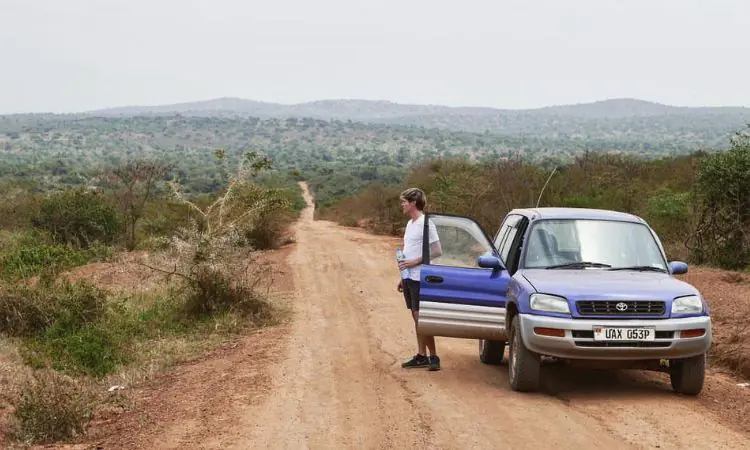
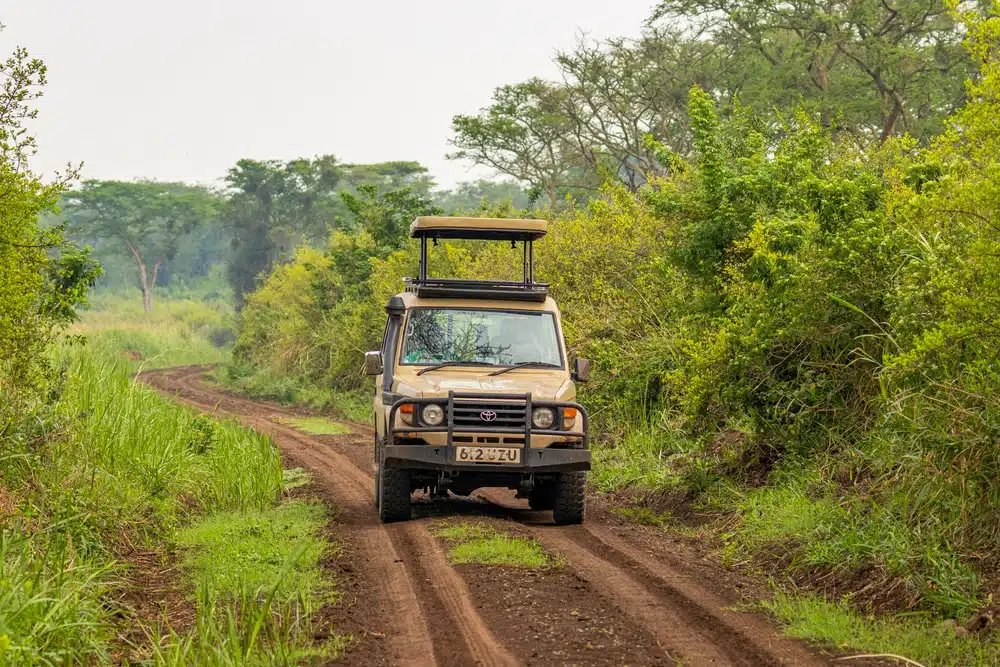
| 🚗 Vehicle Recommendation A 4WD vehicle with high clearance is strongly recommended for all seasons. During the wet season, a high-clearance 4WD is essential. Popular choices include the Toyota Land Cruiser, Toyota Prado, Mitsubishi Pajero, or Toyota Hilux double cab. |
Park Entry Requirements & Fees for Self-Drive Visitors
What You Need at the Gate
When arriving at the South or North Gate for a self-drive safari, have the following ready:
- Valid passport or national ID (for EAC citizens)
- Proof of payment or readiness to pay entry fees
- Vehicle registration papers (especially if driving a rental vehicle)
- Confirmation of accommodation if staying overnight
Entry fees are paid at the gate or online via the Rwanda Development Board platform. Fees are quoted in US Dollars but can be paid in Rwandan Francs at the prevailing exchange rate.
Park Entry Fee Structure (2026/2027)
| Non-EAC Residents (Adult) | USD 50 per person per day |
| EAC Citizens (Adult) | USD 30 per person per day |
| Children (under 16) | Reduced rate — confirm at gate |
| Vehicle Entry Fee | Approx. USD 5–10 per vehicle (confirm at gate) |
| Night Game Drive | Bookable separately at the lodge or gate — USD 35+ per person |
| Boat Safari (Lake Ihema) | USD 35–40 per person (bookable at South Gate) |
| 💡 Pro Tip Arrive at the gate as early as possible — ideally by 6:30 AM for the South Gate opening at 7:00 AM. The first two hours of light (06:00–08:00) and the last two hours before gate closing (typically 6:00 PM) are when wildlife is most active. |
Operating Hours
| Park Opening | 6:00 AM (gates open) |
| Last Entry Time | No entry after 4:00 PM |
| Gate Closing Time | 6:00 PM (all vehicles must exit or be at lodge) |
| Night Drives | Available through lodge — separate booking required |
Self-Drive Safari Routes in Akagera National Park
Akagera’s road network covers the park in a way that rewards methodical exploration. The park is broadly divided into a Southern Sector (most popular, higher wildlife density, lakes) and a Northern Sector (remote, fewer visitors, rolling savannah and woodland). Below are the key routes for self-drive visitors.
Route 1: The Lake Circuit (South Gate – Lake Ihema Loop)
Duration: Half day (3–4 hours) | Difficulty: Easy | Best for: First-time visitors, birding, hippo and crocodile sightings
This is the most popular self-drive loop and the best introduction to Akagera. Starting from the South Gate, follow the main road north along the eastern shore of Lake Ihema. This route passes through classic savannah and woodland, with frequent sightings of:
- Hippos basking at the lake edges and in shallow water
- Nile crocodiles on sandy banks
- African buffalo herds in the open grasslands
- Topi, zebra, impala, and oribi
- An exceptional variety of waterbirds including African fish eagle, saddle-billed stork, malachite kingfisher, and papyrus gonolek
The road is well-maintained and suitable for most 4×4 vehicles. Do not miss the short detour to the hippo pool viewpoint — one of the most spectacular wildlife viewing spots in Rwanda.

Route 2: The Savannah Loop (Central Grasslands)
Duration: Half to full day (4–6 hours) | Difficulty: Moderate | Best for: Lion, leopard, cheetah, elephant
Branching off from the Lake Circuit into the central savannah, this route crosses open grassland and woodland patches — the preferred habitat for Akagera’s lion prides and solitary leopards. Since the lion reintroduction in 2015, sightings have become increasingly regular, particularly in the early morning.
Key stops and areas along this route include:
- Mutumba Hills area — elevated vantage point with panoramic views; excellent for scanning with binoculars
- The central plains — prime lion and elephant territory, especially at dawn
- Acacia woodland edges — watch for leopard resting in branches or scanning from rocky outcrops
- Lugenda and connecting tracks — regular buffalo and elephant movement
Route 3: Northern Wilderness Track
Duration: Full day (6–8 hours, or overnight) | Difficulty: Challenging | Best for: Solitude, roan antelope, eland, remote wilderness
The northern sector of Akagera sees far fewer visitors and offers a true wilderness experience. The roads here are rougher and less maintained, making a capable high-clearance 4WD essential. Highlights include:
- Roan antelope — one of Africa’s rarest antelope species, found primarily in Akagera’s northern sector
- Eland — the largest African antelope, frequently encountered in open northern grasslands
- Oribi, reedbuck, and Bohor reedbuck in open plains
- Far fewer tourist vehicles — sometimes you will have the entire area to yourself
- Spectacular savannah landscapes extending to the Tanzanian border
Many visitors combine the northern track with an overnight stay at Karenge Bush Camp, the park’s most remote accommodation option.
Route 4: The Rhino Tracking Sector
Duration: 2–4 hours (dedicated session) | Difficulty: Easy–Moderate | Special permit: May be required
Black rhinos were reintroduced to Akagera in 2017 (18 from the Czech Republic) and 2019 (further individuals from European zoos). The population has been growing steadily. While rhinos can occasionally be encountered on regular game drives, the park offers dedicated rhino tracking sessions in specific zones of the park.
For self-drive visitors, inquire at the gate or lodge about current rhino tracking protocols. In some periods, tracking requires a ranger escort (additional fee applies). The rhino’s territory shifts seasonally, and rangers have current telemetry data on individual animals.
Wildlife of Akagera: What to Expect on a Self-Drive Safari
The Big Five
All Big Five are present in Akagera National Park:
- Lion: Population of approximately 60+ individuals; sightings are increasingly frequent, especially on the central savannah at dawn.
- Leopard: Present throughout the park; solitary and mostly crepuscular. Look in acacia trees and rocky koppies.
- Elephant: Herds of 20–100+ individuals. Encountered throughout but most reliably in the north and around water sources.
- African Buffalo: Very common; large herds (sometimes 500+) on the central plains and near lake shores.
- Black Rhino: Successfully reintroduced; population growing. Dedicated tracking sessions increase sighting probability.
Other Mammals
Akagera hosts an impressive diversity of mammals beyond the Big Five:
- Hippo: Extremely common in Lake Ihema and surrounding lakes — one of Africa’s densest hippo populations
- Nile Crocodile: Large numbers in all lakes and the Akagera River
- Zebra: Common on open grasslands, often in mixed herds with topi and impala
- Giraffe: Absent (never historically present; no reintroduction plans as of 2024)
- Topi: Widespread on open plains — one of the most numerous antelopes
- Impala: Abundant throughout woodland and savannah edges
- Oribi: Small antelope in open grassland — a favorite sighting
- Roan Antelope: Rare; found primarily in northern sector — a prized sighting
- Eland: Africa’s largest antelope; present in northern grasslands
- Waterbuck: Common near lake shores and wetland edges
- Olive Baboon: Widespread; frequently seen along roadsides
- Vervet Monkey: Common, especially near camp and lodge areas
- Side-Striped Jackal: Frequently seen at dawn and dusk
- African Wild Cat: Occasional nocturnal sighting near lodges
Birding in Akagera
With over 525 recorded bird species, Akagera is a world-class birding destination. The combination of Lake Ihema’s wetlands, open savannah, and dense woodland creates exceptional habitat diversity. Notable species include:
- Shoebill Stork (rare; associated with papyrus swamps — Lake Rwanyakazinga area)
- African Fish Eagle (abundant on all lakes)
- Saddle-Billed Stork
- Papyrus Gonolek (endemic to papyrus swamps)
- African Pygmy Kingfisher
- Malachite Kingfisher
- Grey Crowned Crane (national bird of Uganda; also present in Rwanda)
- Red-Faced Barbet (Akagera specialty)
- White-Headed Lapwing
- Greater and Lesser Flamingo (seasonal visitors)
| 🦅 Birding Hotspot The boat safari on Lake Ihema is the single best birding experience in Akagera. Book through the South Gate desk or your lodge the evening before. Morning departures offer the best light and bird activity. |
Best Time to Visit Akagera for a Self-Drive Safari
Dry Season: June – September (Peak Season)
The long dry season is the most popular and generally best time for a self-drive safari in Akagera. Reduced vegetation makes wildlife easier to spot, roads are in their best condition, and animals concentrate around permanent water sources.
- Vegetation: Shorter grasses and leafless trees improve visibility dramatically
- Wildlife: Animals cluster around Lake Ihema and the few remaining water points
- Roads: Firm and largely passable even for standard 4×4 vehicles
- Temperatures: Warm days (25–30°C), cool nights (15–20°C)
- Crowds: Peak season — book accommodation well in advance
Short Dry Season: January – February
A shorter but equally productive game-viewing window. Vegetation is less dense than the wet season, wildlife is active, and visitor numbers are lower than the June–September peak. An excellent option for those seeking a balance of good conditions and fewer crowds.
Wet Season: March–May & October–December
The wet season brings lush, green landscapes, newborn animals, and extraordinary birding as migrant species arrive. However, road conditions deteriorate significantly in some areas, and dense vegetation makes wildlife harder to spot.
- Advantages: Dramatic green landscapes, excellent birding, lower tourist numbers, lower accommodation rates
- Disadvantages: Some tracks impassable without serious 4WD, reduced visibility through thick vegetation, afternoon thunderstorms
| June–September | ★★★★★ — Best overall for wildlife and roads |
| January–February | ★★★★☆ — Excellent, fewer crowds |
| March–May | ★★★☆☆ — Good birding, challenging roads |
| October–December | ★★★☆☆ — Lush but wettest period |
Practical Tips for Self-Drive Visitors
Essential Items to Bring
- Binoculars — absolutely essential for wildlife viewing and birding; minimum 8×42 or 10×42
- Detailed park map (available at the gate or from your accommodation)
- Fully charged mobile phone (signal is patchy inside the park; download offline maps)
- Sunscreen, sunglasses, and a hat — the savannah sun is intense
- Insect repellent containing DEET — mosquitoes are present, especially near water
- Drinking water — bring at least 2 litres per person per day
- Snacks and a packed lunch — no food outlets inside the park
- Camera with a good zoom lens (200mm minimum; 400mm+ ideal)
- Field guide to East African mammals and birds
- Khaki or neutral-colored clothing — bright colors disturb wildlife and are uncomfortable in heat
Driving Rules Inside the Park
- Maximum speed limit: 40 km/h on main roads; 20 km/h on tracks
- Stay on designated roads and tracks at all times — off-road driving is strictly prohibited
- Never exit your vehicle except at designated viewpoints and picnic sites
- Do not honk your horn or make sudden loud noises near wildlife
- Maintain a respectful distance from all animals — minimum 30 metres from predators
- Do not feed any animals under any circumstances
- Overtaking other vehicles near wildlife concentrations is discouraged
- Report any vehicle breakdowns immediately to the gate — keep the gate phone number saved
| ⚠️ Important Safety Rule Never exit your vehicle inside the park unless you are at an officially designated spot. Akagera has lions, buffalo, hippos, and crocodiles — all of which can be dangerous. Your vehicle is your safety cage. |
Fuel & Mechanical Preparation
There is no fuel station inside Akagera National Park. Fill up completely in Kigali or at the nearest town before arrival:
- Kayonza town (approx. 30 km from South Gate) — fuel stations available
- Rwamagana (approx. 60 km from South Gate)
Carry a spare tyre in good condition. The murram roads are rough on tyres. A basic tool kit, tow rope, and portable tyre inflator are advisable for the northern sector.
Navigation Inside the Park
The park has signposted junctions, but the network of tracks can be confusing without a good map. Recommended navigation tools:
- Physical park map (purchase or collect at the gate — free for guests in some periods)
- me app with offline Rwanda maps downloaded — works without internet signal
- Google Maps (partially covers park tracks, but coverage is inconsistent)
- Some lodges provide detailed GPS routes — ask when booking
The South Gate staff can advise on current road conditions and recent wildlife sighting locations — always worth asking before heading out.
Where to Stay: Accommodation Options in Akagera
Inside the Park
Ruzizi Tented Lodge
The most popular and atmospheric accommodation option, Ruzizi Tented Lodge sits on the shore of Lake Ihema. It offers 7 en-suite tented chalets with lake views, a restaurant, and a bar. The lodge is ideally positioned for early morning drives and evening sundowners over the lake. Self-drive visitors who stay here benefit from being inside the park at dawn — giving them a significant advantage over day visitors driving in from Kigali.
Akagera Game Lodge
The largest accommodation option inside the park, Akagera Game Lodge offers hotel-style rooms, a swimming pool, restaurant, and conference facilities. Located in the southern sector, it is convenient for the Lake Ihema circuit and main game-viewing areas. A good base for families or those preferring more conventional hotel comfort.
Karenge Bush Camp
A more remote and rustic camp in the northern sector, Karenge Bush Camp consists of simple tented accommodation. This is the best option for those prioritising solitude and access to the park’s quieter northern zones. Facilities are basic but the experience of spending the night in the northern wilderness is unmatched.
Outside the Park
Several guesthouses and lodges in Kayonza and Rwinkwavu town offer budget-friendly alternatives for self-drive visitors on a tighter budget. The trade-off is a 30–60 minute drive to the gate each morning, meaning you miss the crucial first hour of golden light.
| 🏕️ Insider Advice Staying inside the park, even for just one night, transforms the self-drive experience. Being on the roads at first light — before day visitors arrive — dramatically increases your wildlife sighting success. |
Lake Ihema Boat Safari: The Perfect Complement to Your Self-Drive
No visit to Akagera is complete without a morning or afternoon boat safari on Lake Ihema. Operated by the park, these 2-hour guided boat trips depart from the South Gate jetty and are one of the most rewarding wildlife experiences in Rwanda.
From the water, you gain an entirely different perspective of the park — watching hippos from close range as they display, yawn, and defend territory; observing crocodiles basking on sand banks; and spotting extraordinary concentrations of waterbirds that are impossible to see well from a vehicle.
Boat Safari Highlights
- Close-up hippo viewing — the lake holds one of Africa’s densest hippo concentrations
- Large Nile crocodiles on sandy shores
- African fish eagles calling from lakeside trees
- Abundant herons, egrets, storks, and kingfishers
- Breathtaking sunrise or sunset scenery over the lake
| Duration | Approximately 2 hours |
| Departures | Morning (6:00–7:00 AM) and afternoon (around 3:00 PM) |
| Booking | At the South Gate desk or through your lodge the evening before |
| Cost | USD 35–40 per person (2024/2025 rates — confirm at gate) |
| Minimum Numbers | Some departures require a minimum of 2 guests |
Suggested Self-Drive Itineraries
1-Day Self-Drive Itinerary (Day Trip from Kigali)
| 5:00 AM | Depart Kigali |
| 7:00 AM | Arrive South Gate — pay entry fees, collect map, get wildlife update from rangers |
| 7:15–10:30 AM | Morning game drive: Lake Ihema circuit — hippos, buffalo, topi, impala, birds |
| 10:30 AM | Rest at designated picnic spot — packed breakfast/snacks |
| 11:00 AM–1:00 PM | Drive central savannah tracks — lion and elephant search |
| 1:00–2:00 PM | Lunch break at Akagera Game Lodge or picnic area |
| 2:30–4:30 PM | Afternoon game drive — repeat lake circuit or explore new tracks |
| 4:45 PM | Begin exit toward South Gate |
| 5:30 PM | Exit gate before 6:00 PM closing |
| 7:30–8:00 PM | Return to Kigali |
2-Day Self-Drive Itinerary (Overnight Stay)
| Day 1 Morning | Depart Kigali 5:00 AM; arrive South Gate by 7:00 AM |
| Day 1 AM | Lake Ihema circuit game drive — hippos, crocs, waterbirds, buffalo |
| Day 1 Midday | Check in to Ruzizi Tented Lodge or Akagera Game Lodge |
| Day 1 Afternoon | Boat safari on Lake Ihema (pre-booked) |
| Day 1 Evening | Sundowner at lodge, dinner, early rest |
| Day 2, 6:00 AM | Depart lodge at first light — central savannah lion drive |
| Day 2 AM | Northern sector drive (if time permits) — roan antelope, eland |
| Day 2 Midday | Return to lodge for late checkout and lunch |
| Day 2 PM | Final afternoon drive — exit South Gate by 5:30 PM |
| Day 2 Evening | Return to Kigali |
3-Day Self-Drive Itinerary (Comprehensive)
A 3-day itinerary allows you to explore every sector of the park thoroughly and significantly increases your chances of seeing all Big Five.
| Day 1 | Kigali → South Gate → Lake Ihema circuit → boat safari → overnight lodge |
| Day 2 | Full-day northern sector drive → Karenge Bush Camp overnight |
| Day 3 | Early morning central savannah drive → rhino tracking session → exit South Gate |
Renting a Vehicle for Self-Drive in Akagera
If you do not have your own vehicle, Rwanda has a well-developed car rental market. Most visitors self-driving Akagera rent a 4WD vehicle in Kigali. Several reputable rental companies operate from Kigali International Airport and the city centre.
Recommended Vehicle Types for Akagera
| Toyota Land Cruiser V8 (GX/VX) | Best choice — excellent clearance, reliability, comfortable for long drives |
| Toyota Land Cruiser Prado | Great option — slightly smaller, very capable on Akagera roads |
| Toyota RAV4 (older models) | Acceptable in dry season; NOT recommended for wet season or northern tracks |
| Mitsubishi Pajero / Shogun | Good clearance, reliable — suitable for most park conditions |
| Toyota Hilux Double Cab | Excellent for northern tracks; practical if camping |
| Saloon cars (sedans) | Not recommended — risk of grounding out on rough tracks |
Self-Drive Rental Tips
- Book rental vehicles at least 2–3 weeks in advance, especially for June–September peak season
- Confirm the rental includes unlimited mileage — some providers charge per km
- Ensure comprehensive insurance is included or purchase a full waiver
- Inspect the vehicle thoroughly before signing — check spare tyre, jack, warning triangles
- Confirm the vehicle has a valid road licence and insurance documents
- International driving licence required for non-Rwandan visitors
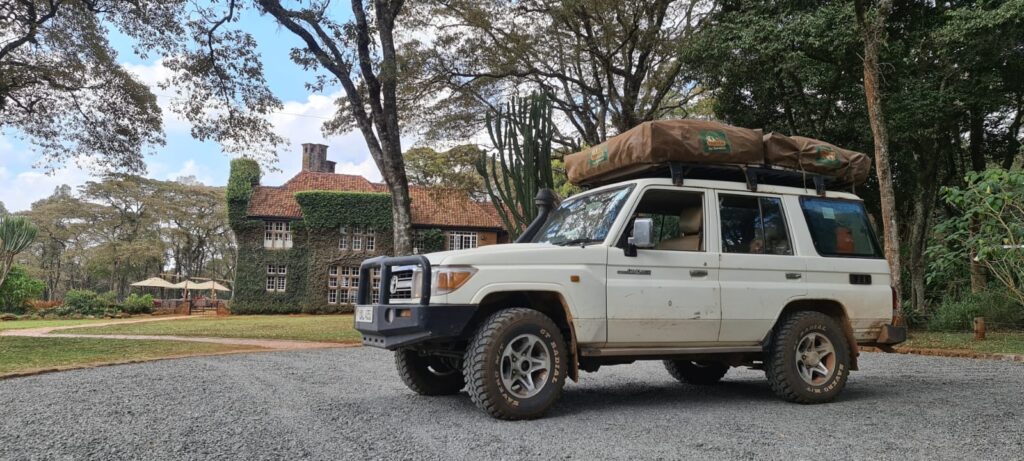
- Some rental companies can pre-install roof racks or rooftop tents for overlanding visitors
| 🚙 Vehicle Rental Note For visitors specifically combining Rwanda with Tanzania or Uganda in a cross-border self-drive, ensure your rental company explicitly permits and documents cross-border travel — not all do. |
Health, Safety & Travel Essentials
Malaria
Akagera National Park is a malaria zone. Visitors should take appropriate prophylactics (consult your doctor well before travel) and use DEET-based insect repellent, especially at dawn and dusk near water. Sleep under a mosquito net if your accommodation does not have adequate screening. Wear long sleeves and trousers in the evenings.
Wildlife Safety
Akagera contains genuinely dangerous wildlife. Adhere strictly to the rules:
- Never exit your vehicle except at designated stopping points
- Do not approach animals on foot under any circumstances
- If a large animal approaches your vehicle, remain still, do not rev the engine, and wait for it to move away
- Buffalo are considered particularly unpredictable — maintain a respectful distance at all times
- Hippos are lethal on land — never position yourself between a hippo and water

Emergency Contacts
| Akagera Park HQ (South Gate) | Inquire at gate for current number — save before entering park |
| Rwanda Emergency Services | 112 |
| Kigali International Airport | +250 788 177 017 |
| Rwanda Development Board | www.rdb.rw |
Currency & Payments
Rwanda uses the Rwandan Franc (RWF). US Dollars are widely accepted for park fees and lodge bills. Credit cards are accepted at most lodges, but carry cash for gate fees and smaller transactions. ATMs are available in Kayonza and Kigali.
Frequently Asked Questions: Self-Drive Akagera National Park
Can I self-drive in Akagera National Park without a guide?
Yes. Akagera fully permits independent self-drive safaris. You are not required to hire a guide, though rangers are available for specialist activities like rhino tracking. The park roads are well-signposted and navigable with a good map.
What is the best time of day for game drives in Akagera?
Early morning (6:00–9:00 AM) and late afternoon (3:30–6:00 PM) are the most productive times. Animals are most active when temperatures are cool. Avoid midday drives from 11 AM to 2 PM when heat sends most wildlife into shade.
Can I do a day trip to Akagera from Kigali?
Yes, a day trip from Kigali is feasible. The drive is approximately 2–2.5 hours each way. Depart Kigali no later than 5:00 AM to reach the gate at opening and maximize your time inside the park.
Is Akagera safe for self-drive visitors?
Akagera is one of the safer parks in East Africa for self-drive visitors. Follow all park rules, stay in your vehicle, and inform the gate if you experience any difficulties. Wildlife incidents involving self-drive visitors are extremely rare when basic safety rules are observed.
Can I see the Big Five on a self-drive in Akagera?
Yes, all Big Five are present. Lions, elephants, and buffalo are the most reliably spotted. Leopards require patience and luck. Black rhinos can be seen on regular drives, though dedicated rhino tracking with a ranger gives the best chance.
Do I need a high-clearance 4WD to self-drive Akagera?
In the dry season, the main Lake Ihema circuit roads are manageable in a standard 4×4. For the northern sector and wet season driving, a high-clearance 4WD is essential. Never attempt muddy tracks without appropriate ground clearance.
Conclusion: Plan Your Self-Drive Safari in Akagera
Akagera National Park offers one of Africa’s most rewarding self-drive safari experiences — combining genuine Big Five game viewing with spectacular lake landscapes, world-class birding, and the freedom to explore entirely at your own pace. Since African Parks took over management in 2010, the park has been transformed into a conservation success story, with recovering wildlife populations, improved infrastructure, and a growing reputation as a must-visit destination on the East Africa safari circuit.
Whether you are planning a single-day excursion from Kigali, a 2-night immersive stay, or incorporating Akagera into a longer cross-border Rwanda and Uganda itinerary, the park rewards every level of investment with extraordinary wildlife encounters and unforgettable landscapes.
Plan carefully, follow the rules, arrive early, and take your time — Akagera will not disappoint.