
Which car has the best fuel consumption in Uganda?
Which car has the best fuel consumption in Uganda?, If you drive in Uganda, fuel is probably your single biggest running cost after the car itself. With pump prices in Kampala regularly sitting between UGX 6,000 and 6,900 per litre in 2026 — and upcountry prices running 15-25% higher — the difference between a thirsty SUV and a genuinely fuel-efficient car can add up to millions of shillings a year. This guide breaks down exactly which cars deliver the best fuel consumption on Ugandan roads, what real-world km/L figures to expect, and how to choose between petrol, diesel and hybrid depending on how and where you drive.

| Quick Answer
For pure fuel economy in mixed Kampala traffic, the Toyota Vitz (Yaris) 1.0L and Toyota Ractis 1.3L lead the pack at roughly 18-22 km/L. For hybrid efficiency and long-distance comfort, the Toyota Aqua, Toyota RAV4 Hybrid and Toyota Corolla Hybrid deliver 20-25+ km/L with far more space and power. For upcountry and safari routes, diesel Land Cruisers and Hiluxes trade fuel economy for range, torque and reliability on murram roads. |
Why Fuel Consumption Matters So Much in Uganda
Uganda’s fuel market is deregulated, which means prices vary station to station and swing sharply with global crude prices, the shilling’s exchange rate, and supply disruptions along the Mombasa-Kampala corridor. Kampala and Entebbe are consistently the cheapest places to fill up, while remote districts such as Kasese, Kisoro and parts of the north can see prices spike well above the national average during supply shortages. Because of this volatility, the fuel economy of the car you choose has a much bigger impact on your monthly budget in Uganda than it might in a market with stable, subsidised pricing.
Real-world consumption in Uganda also tends to run higher than the manufacturer’s rated figures. Stop-and-go Kampala traffic, murram and pothole-heavy rural roads, steep terrain in the west and southwest, high ambient temperatures, and the common practice of loading up with luggage or roof-rack cargo for safari trips all push actual km/L below the showroom number. A car rated at 20 km/L on paper might realistically deliver 15-17 km/L once you factor in Kampala gridlock and hilly upcountry routes.
Top Fuel-Efficient Cars in Uganda (2026)
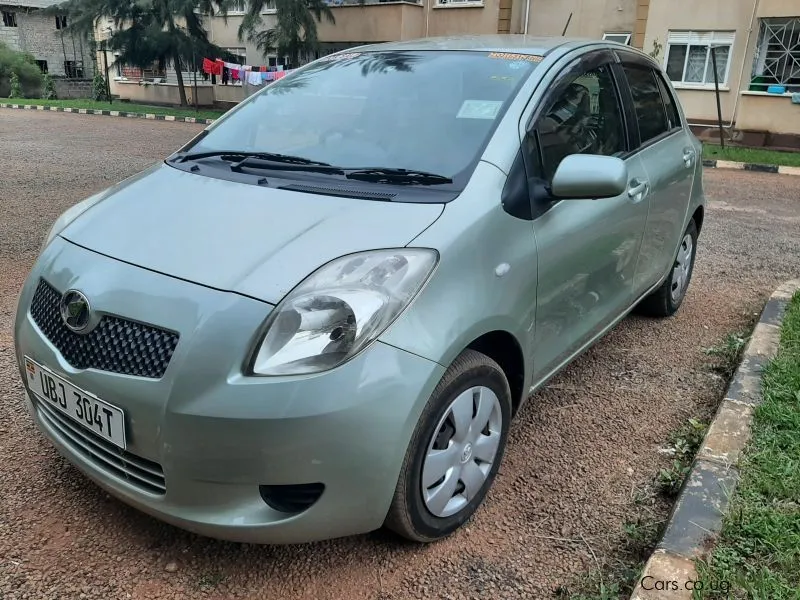
1. Toyota Vitz / Yaris — Best for City Driving
The Toyota Vitz is arguably Uganda’s most popular compact car, and fuel economy is its main selling point. The common 1.0-litre 1KR-FE engine achieves roughly 18-21.8 km/L, making it a strong performer in Kampala’s stop-and-go traffic. Larger 1.3-litre variants trade a little economy for more highway power. Parts are widely available, servicing is cheap, and resale value is strong — all of which make the Vitz the default recommendation for buyers who mainly drive in town.
- Typical consumption: 18-21.8 km/L (1.0L), slightly less on 1.3L models
- Best for: city commuting, ride-hailing, first-time car owners
- Trade-off: limited ground clearance and power for upcountry or off-road routes
2. Toyota Ractis — Best Compact for Families
The Ractis pairs a roomy cabin with genuinely efficient engines. The 1.3-litre version averages around 18.2 km/L, while the 1.5-litre version manages roughly 15.2 km/L, both with a 42-litre tank that keeps refuelling stops infrequent. Its automatic 5-speed transmission and front-wheel-drive layout make it an easy, economical daily driver for small families who don’t need SUV clearance.
- Typical consumption: 15.2 km/L (1.5L) to 18.2 km/L (1.3L)
- Best for: small families, school runs, mixed city and tarmac driving
3. Toyota Corolla — Best All-Round Sedan
The Corolla remains a Ugandan staple for good reason: dependable 1.8-litre engines, low maintenance costs, and fuel economy around 18 km/L in everyday use. It handles moderate rough roads acceptably despite modest ground clearance, and its reputation for reliability keeps resale values healthy. For buyers who want a proven sedan rather than a hatchback, the Corolla is the safest fuel-efficient bet.
- Typical consumption: around 18 km/L
- Best for: city and highway commuting, ride-hailing fleets, budget-conscious buyers
4. Toyota Aqua / Prius (Hybrid) — Best for Long-Distance Economy
Hybrids are increasingly common on Kampala roads, and for good reason: the Toyota Aqua and Prius combine a small petrol engine with an electric motor to deliver some of the best real-world fuel economy available in Uganda, often exceeding 20-25 km/L. The trade-off is a battery pack that eventually needs replacing, and hybrid-specific servicing knowledge is still concentrated among a smaller pool of Kampala garages compared to conventional Toyota mechanics.
- Typical consumption: 20-25+ km/L
- Best for: drivers covering high mileage who want to minimise fuel spend
- Trade-off: battery replacement cost and fewer specialist mechanics upcountry
5. Toyota Fielder / Succeed — Best for Cargo and Family Trips
The Toyota Succeed offers roomy front seats, adjustable rear seating, and useful cargo space, with the 1.5-litre engine returning about 15 km/L — respectable for a wagon that can double as a light cargo hauler. The related Fielder wagon shares much of the same efficient drivetrain lineage and is a common choice for families who need boot space without stepping up to a full SUV.
- Typical consumption: around 15 km/L
- Best for: small business owners, families needing cargo space
6. Toyota Wish / Sienta — Best Efficient People-Carriers
For buyers who need six or seven seats without the fuel bill of a full-size SUV, the Toyota Wish delivers 12.8-14.4 km/L depending on the 1.8L or 2.0L engine and drivetrain, while the newer Sienta has built a strong reputation among Ugandan buyers for combining minivan practicality with efficient four-cylinder engines.
- Typical consumption: 12.8-14.4 km/L (Wish); Sienta trends higher with its smaller engine
- Best for: larger families, school-run vehicles, church and group transport
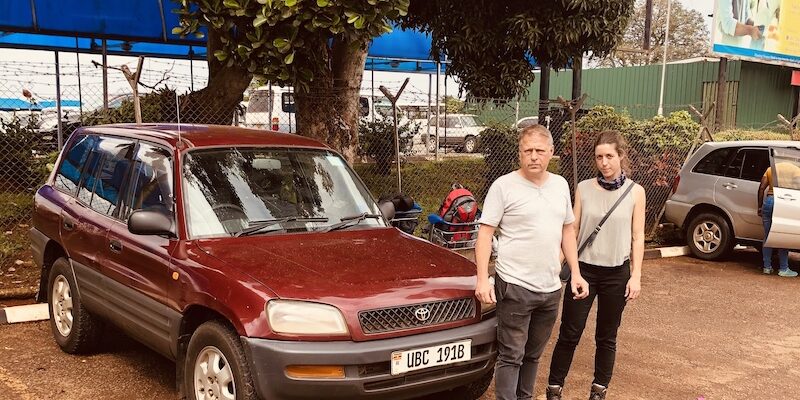
7. Toyota RAV4 (including Hybrid) — Best Efficient SUV
The RAV4 strikes a rare balance for Uganda: enough ground clearance and drivetrain strength for moderately rough roads, but still efficient enough for daily driving. Standard 2.0L/2.5L petrol models are respectably economical for their class, while hybrid RAV4 variants push fuel economy up to an impressive 22-25 km/L — remarkable for a mid-size SUV, and a big reason the hybrid RAV4 has become a favourite among NGO fleets and tour operators who need both range and reasonable running costs.
- Typical consumption: 22-25 km/L (hybrid); lower on standard petrol variants
- Best for: mixed terrain, safari-adjacent routes, buyers who want SUV practicality without diesel
8. Diesel Workhorses: Toyota Hilux and Land Cruiser
For upcountry safari routes, murram roads and heavy loads, diesel remains the practical choice even though litre-for-litre diesel consumption figures look less impressive than a hatchback’s. The Hilux typically returns 10-13 km/L, while the Land Cruiser (including newer hybrid diesel variants) can reach 22-25 km/L in its most efficient form. What diesel loses in raw km/L it often makes up for in torque, towing capacity, and the ability to keep moving through terrain that would punish a smaller petrol engine — a genuine consideration for anyone planning long self-drive safari itineraries through Murchison Falls, Queen Elizabeth or the gorilla-trekking parks.
- Hilux: 10-13 km/L, best for rugged terrain and load-carrying
- Land Cruiser: 22-25 km/L on efficient hybrid diesel models, strong resale value
Fuel Consumption at a Glance
| Car Model | Engine | Typical Fuel Economy | Best Use Case |
| Toyota Vitz / Yaris | 1.0L petrol | 18 – 21.8 km/L | City driving |
| Toyota Ractis | 1.3L / 1.5L petrol | 15.2 – 18.2 km/L | Small families |
| Toyota Corolla | 1.8L petrol | ~18 km/L | All-round commuting |
| Toyota Aqua / Prius | Hybrid | 20 – 25+ km/L | High-mileage drivers |
| Toyota Succeed / Fielder | 1.5L petrol | ~15 km/L | Cargo & family trips |
| Toyota Wish | 1.8L / 2.0L petrol | 12.8 – 14.4 km/L | 7-seater group transport |
| Toyota RAV4 Hybrid | Hybrid | 22 – 25 km/L | Efficient SUV / mixed terrain |
| Toyota Hilux | Diesel | 10 – 13 km/L | Rugged upcountry routes |
| Toyota Land Cruiser (Hybrid) | Diesel / Hybrid diesel | 22 – 25 km/L | Safari & long-distance travel |
Petrol vs Diesel vs Hybrid in Uganda
Petrol
Petrol engines dominate Uganda’s compact and mid-size car market and are the easiest to service, with parts and mechanics available almost everywhere. They’re the right choice for city driving and light upcountry use, but smaller petrol engines can feel underpowered when climbing steep terrain in the west or southwest, or when heavily loaded for a safari trip.
Diesel
Diesel delivers noticeably better range and torque, which matters on long safari routes and rough murram roads. Pump prices for diesel and petrol are closely matched in Uganda, so diesel’s advantage comes from consumption per kilometre rather than a cheaper price at the pump. This is why diesel Land Cruisers and Hiluxes remain the standard choice for tour operators and self-drive rental fleets covering national parks.
Hybrid
Hybrid models (Aqua, Prius, RAV4 Hybrid, and hybrid Land Cruisers) offer the best fuel economy on the market and are increasingly common as more used imports arrive from Japan. The main considerations are eventual battery replacement cost and making sure your mechanic is genuinely experienced with hybrid systems — not every garage in Uganda is.
Factors That Affect Real-World Fuel Consumption in Uganda
- Traffic conditions: Kampala’s stop-and-go congestion can cut a car’s rated fuel economy by 15-25%.
- Road surface: Murram, potholes and unpaved rural roads increase fuel use regardless of engine size.
- Altitude and terrain: Hilly regions such as Kabale, Kisoro and the Rwenzori foothills demand more from the engine.
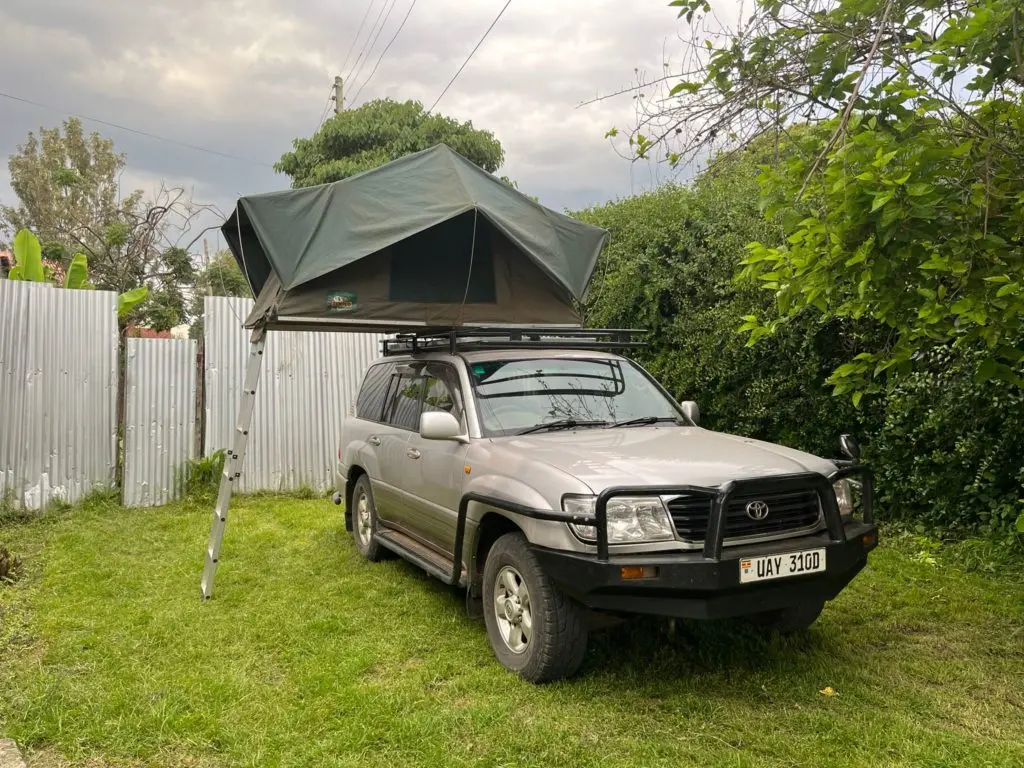
- Load and roof cargo: Luggage, roof tents and roof racks common on safari self-drives add drag and weight.
- Driving style: Aggressive acceleration and braking can raise consumption by 20% or more.
- Maintenance: Under-inflated tyres, dirty air filters and overdue servicing all quietly increase fuel bills.
Tips to Maximise Fuel Economy on Ugandan Roads
- Keep tyres properly inflated — under-inflation is one of the most common causes of excess fuel use.
- Service your car on schedule, especially air filters, spark plugs and oil changes.
- Avoid unnecessary roof-rack loads and remove roof tents when not travelling upcountry.
- Fill up in Kampala or Entebbe before heading upcountry, where prices can run 15-25% higher.
- Budget a fuel contingency of 15% for most upcountry trips, and 25% for remote routes like Kisoro or Kasese.
- Use gentle acceleration and anticipate braking, particularly in heavy Kampala traffic.
| Planning a Self-Drive Trip?
If you’re renting rather than buying, matching the right vehicle to your route matters as much as the car’s rated fuel economy. A Vitz saves money in Kampala traffic but won’t cope with Murchison Falls’ murram tracks; a diesel Land Cruiser costs more at the pump but is the safer, more comfortable choice for multi-day safari self-drives. |
Frequently Asked Questions
Which car has the best fuel consumption in Uganda overall?
For pure km/L, hybrid models like the Toyota Aqua and Prius lead the market at 20-25+ km/L, with the Toyota Vitz close behind among conventional petrol cars at 18-21.8 km/L.
Is diesel or petrol more fuel-efficient in Uganda?
Diesel engines generally travel further per litre than comparable petrol engines, especially in larger vehicles, but Uganda’s pump prices for the two fuels are closely matched, so the savings come from consumption rather than price per litre.
Are hybrid cars worth it for fuel savings in Uganda?
Yes, for high-mileage drivers. Hybrids offer some of the best fuel economy available, though buyers should budget for eventual battery replacement and confirm their mechanic has genuine hybrid experience.
What is the most fuel-efficient SUV available in Uganda?
The Toyota RAV4 Hybrid is widely regarded as the most fuel-efficient SUV on Ugandan roads, reaching 22-25 km/L while retaining enough ground clearance for moderately rough terrain.
Final Word
There’s no single “best” fuel-efficient car for every Ugandan driver — the right answer depends on where you drive. For Kampala commuting, the Toyota Vitz and Ractis are hard to beat. For families needing more space, the Corolla, Succeed or Sienta offer a good balance. For long-distance comfort and the best headline economy, hybrids like the Aqua, Prius and RAV4 Hybrid lead the pack. And for upcountry safari routes where terrain and reliability matter more than raw km/L, a diesel Land Cruiser or Hilux remains the sensible choice. Matching the car to the route — not just chasing the highest km/L figure — is what actually keeps your fuel budget under control on Ugandan roads.