
Serengeti National Park – 4×4 Self drive in Serengeti National Park
Tanzania’s Serengeti National Park is the crown jewel of African safari destinations — 14,750 square kilometres of endless grassland plains, acacia woodland, and rolling kopjes that host the greatest wildlife spectacle on Earth. For travellers who want the freedom to chase the Great Migration at their own pace, stop wherever the light is perfect, and camp under a sky thick with stars, a self-drive 4×4 safari through the Serengeti is one of the most rewarding ways to experience it. This guide covers everything you need to plan, book, and execute a safe and unforgettable self-drive adventure through the Serengeti ecosystem.

| QUICK FACTS: SERENGETI NATIONAL PARK
• Size: 14,750 km² (5,700 sq mi) — part of the larger 30,000 km² Serengeti ecosystem • Location: Northern Tanzania, bordering Kenya’s Maasai Mara • Established: 1951 — UNESCO World Heritage Site since 1981 • Famous for: The Great Migration of 1.5+ million wildebeest and 250,000 zebra • Main gates: Naabi Hill, Ndabaka, Klein’s, Ikoma, Bologonya • Best self-drive vehicle: 4×4 with high clearance — Land Cruiser, Land Rover, or RAV4/Prado for shorter trips |
Why Self-Drive the Serengeti in a 4×4?
A guided safari has its merits, but a self-drive 4×4 trip through the Serengeti offers something no group tour can — total control over your itinerary. You decide how long to linger at a lion kill, which track to follow toward a distant dust cloud on the horizon, and where to make camp for the night. Self-driving is also significantly more affordable over a multi-day trip once you factor in guide fees, and it appeals strongly to overlanders, photographers, and repeat visitors who already know the terrain.
That said, the Serengeti is not a place to underestimate. Distances between gates and camps can exceed 100 km on unpaved roads, mobile signal is patchy to non-existent across most of the park, and wildlife encounters demand calm, experienced driving. A well-equipped 4×4, careful trip planning, and respect for park rules are non-negotiable.
Benefits of Self-Driving Over a Guided Safari
- Full flexibility to set your own pace and route each day
- Lower overall cost on trips of 4+ days once guide fees are removed
- Better for photographers who need to wait for the right light or moment
- Freedom to combine the Serengeti with Ngorongoro, Tarangire, and the Northern Circuit on your own schedule
- A genuine sense of adventure and independence that guided convoys can’t replicate
Choosing the Right 4×4 for a Serengeti Self-Drive
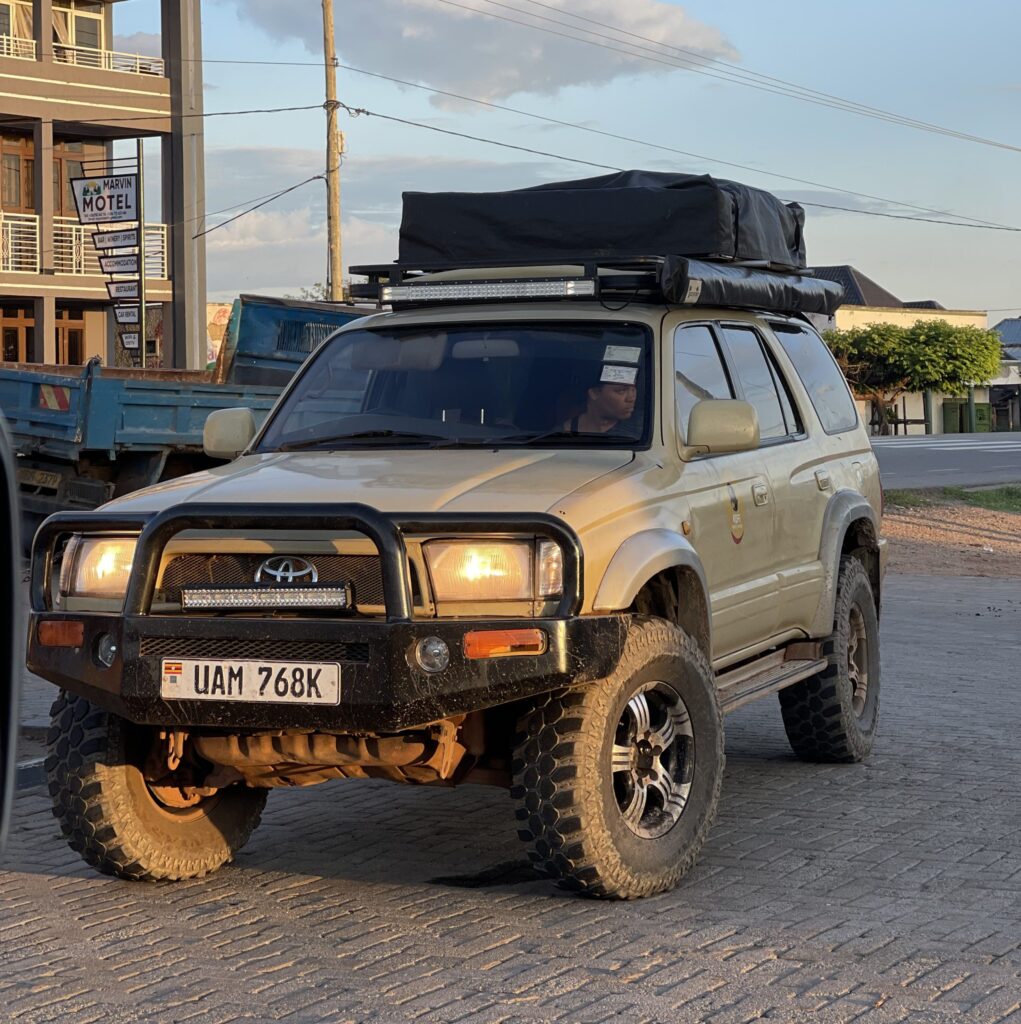
Vehicle choice makes or breaks a Serengeti self-drive trip. Roads inside the park range from graded murram tracks to deep sand, black-cotton mud after rain, and rutted game-viewing trails through tall grass. A 2WD vehicle is not permitted and will not survive the terrain — you need a genuine 4×4 with good ground clearance, a reliable low-range gearbox, and enough fuel range for long stretches between fuel stations.

| Vehicle | Best For | Fuel Range | Notes |
| Toyota Land Cruiser 78/79 Series | Full expedition & rooftop tent camping | 700–900 km | The industry standard — rugged, spacious, dual fuel tanks common |
| Toyota Land Cruiser Prado | Comfort-focused family self-drive | 550–650 km | Strong 4×4 performance with more on-road comfort |
| Toyota RAV4 (4WD) | Budget short trips, park perimeter routes | 500–550 km | Capable on graded roads; less ideal in deep mud or sand |
| Toyota Hilux Double Cab 4×4 | Overlanding with rooftop tent | 700–800 km | Excellent payload for camping gear and long-range fuel |
| Land Rover Defender | Rugged self-drive with character | 500–600 km | Strong off-road capability; parts less common locally |
VEHICLE CHECKLIST BEFORE YOU DRIVE IN
|
Park Gates, Entry Fees & Permits
The Serengeti has several entry gates depending on your approach route. Most self-drivers entering from Arusha or Ngorongoro use Naabi Hill Gate in the south-east, while those coming from Mwanza and Lake Victoria enter via Ndabaka Gate in the west. Travellers crossing from the Maasai Mara in Kenya typically use Bologonya or Isebania. All permits and TANAPA fees must be paid before entry — most gates now accept card payment or Wildlife Pass, though carrying some cash as backup is wise.
| Gate | Approach From | Best For |
| Naabi Hill Gate | Ngorongoro / Arusha (south) | Most common entry for southern & central Serengeti |
| Ndabaka Gate | Mwanza / Lake Victoria (west) | Western Corridor & Grumeti River crossings |
| Klein’s Gate | Loliondo (north-east) | Northern Serengeti & Lamai Wedge access |
| Ikoma Gate | Musoma / Serengeti District | Western/northern combined routes |
| Bologonya Gate | Kenya border (Maasai Mara) | Cross-border Mara–Serengeti migration routes |
| Fee Category | Non-Resident Adult (24hrs) | Non-Resident Child (5-15) |
| Park Entry Fee | US$ 70 | US$ 20 |
| Vehicle Fee (up to 6 seats) | US$ 40 | — |
| Camping Fee (public campsite) | US$ 35 / night | US$ 10 / night |
| Concession/Special Campsite | US$ 60+ / night | Varies by site |
Fees are indicative for 2026 and are set by the Tanzania National Parks Authority (TANAPA); always confirm current rates before travel, as they are periodically revised. Payments are processed through TANAPA’s cashless system, so pre-loading a Wildlife Pass Tanzania card or confirming card payment options at your entry gate in advance will save time.
Road Conditions & Self-Drive Routes
Serengeti roads are almost entirely unpaved outside a handful of graded arteries. Conditions shift dramatically with the seasons — dry-season murram roads are firm and dusty, while the short and long rains (November and March–May) turn black-cotton soil sections into slick, axle-deep mud that can strand even experienced drivers. Always check current road conditions with your lodge, ranger post, or a local self-drive operator before setting out on lesser-used tracks.
Popular Self-Drive Routes
- Naabi Hill → Seronera Valley (approx. 75 km) — reliable game viewing year-round, good graded road
- Seronera → Western Corridor / Grumeti River (approx. 100 km) — famous for Mara River-style crossings, best June–July
- Seronera → Northern Serengeti / Kogatende (approx. 145 km) — prime Migration river-crossing territory, July–October
- Ndabaka Gate → Seronera (approx. 145 km) — western approach through the Grumeti Reserve
- Naabi Hill → Ngorongoro Crater Rim (approx. 145 km) — popular add-on combining both parks
ROAD SAFETY REMINDERS FOR SELF-DRIVERS
|
Best Time for a Self-Drive Migration Safari
Timing your self-drive around the Great Migration’s circular movement through the ecosystem dramatically improves your wildlife-viewing odds. The herds move in a broadly predictable clockwise loop each year, though exact timing shifts with rainfall patterns.
| Months | Migration Location | Highlights |
| December – March | Southern Serengeti / Ndutu plains | Calving season — over 8,000 wildebeest calves born daily during peak |
| April – May | Central & Western Serengeti | Long rains; herds moving north-west; fewer visitors, lush scenery |
| June – July | Western Corridor | Grumeti River crossings; dramatic Nile crocodile encounters |
| August – October | Northern Serengeti / Mara River | Iconic Mara River crossings; peak dry-season game viewing |
| November | Eastern & Central Serengeti | Short rains begin; herds return south; excellent predator action |
Sample 4×4 Self-Drive Itineraries
3-Day Central Serengeti Introduction
- Day 1: Arrive via Naabi Hill Gate, game drive to Seronera Valley, overnight camping or lodge
- Day 2: Full-day exploring Seronera’s rivers and kopjes — prime leopard and lion territory
- Day 3: Morning game drive, exit via Naabi Hill toward Ngorongoro or Arusha
7-Day Southern to Northern Migration Circuit (Dry Season)
- Days 1–2: Naabi Hill Gate to Seronera, exploring central plains and rivers
- Days 3–4: Drive north to Kogatende / Mara River region for river-crossing viewing
- Days 5–6: Explore the Lamai Wedge and northern kopjes, camp at a public or special campsite
- Day 7: Return south via Seronera and exit through Naabi Hill or continue to Ngorongoro
14-Day Full Northern Circuit Self-Drive (with Serengeti core)
- Combine Tarangire, Lake Manyara, Ngorongoro Crater, and the Serengeti’s southern, central, and northern sectors
- Allow buffer days for road conditions, especially during the rainy seasons
- Build in rest days at Seronera or Ndutu to avoid fatigue from long driving stretches
Camping & Accommodation for Self-Drivers
The Serengeti offers a strong network of public and special campsites well suited to rooftop-tent and ground-tent self-drive travellers, alongside a full range of lodges and tented camps for those who prefer a bed each night. Public campsites are unfenced and shared with resident wildlife, so proper camp discipline is essential.
- Public campsites: Basic facilities (long-drop toilets, sometimes cold showers), first-come or booked via TANAPA, budget-friendly
- Special campsites: Exclusive-use for your group, booked in advance, higher fee but far more private
- Seronera, Ndutu, Kogatende, and Lobo areas all have public or special campsite options close to prime game-viewing zones
- Lodges and tented camps: Available near Seronera, Ndutu, and the Northern Serengeti for travellers combining driving days with comfort stops
| CAMPING SAFETY IN AN UNFENCED PARK
• Never leave food or scented items accessible outside your vehicle or tent • Use a rooftop tent where possible — it keeps you off the ground and away from nocturnal wildlife • Keep a torch and bear spray-equivalent deterrent within reach at night • Do not walk around camp after dark without an armed ranger escort where provided • Keep your campsite clean and pack out all rubbish — no exceptions |
Estimated Self-Drive 4×4 Rental Costs
Rental rates vary by vehicle type, rental duration, season, and whether camping equipment and a rooftop tent are included. The table below gives indicative daily rates for a fully-equipped self-drive rental suitable for the Serengeti.

| Vehicle Type | Daily Rate (Self-Drive) | Rooftop Tent Add-On |
| Land Cruiser 78/79 (fully equipped) | US$ 150 – 220 / day | Included in most packages |
| Land Cruiser Prado | US$ 130 – 190 / day | US$ 15 – 25 / day |
| Toyota Hilux Double Cab 4×4 | US$ 110 – 170 / day | US$ 15 – 25 / day |
| Toyota RAV4 (4WD) | US$ 70 – 110 / day | Not typically compatible |
Rates typically decrease for rentals of 10+ days and increase during the peak July–October and December–February seasons. Always confirm whether park fees, unlimited mileage, camping gear, a second spare tyre, and 24-hour roadside recovery support are included in your quoted rate.
Essential Packing List for a Serengeti Self-Drive
- Valid international driving permit and vehicle rental documents
- Printed TANAPA park map and offline GPS maps (maps.me or similar)
- Binoculars and a good zoom camera lens for distant wildlife
- First-aid kit, malaria prophylaxis, and a basic medical kit
- Warm layers for early-morning game drives — Serengeti nights can drop below 15°C
- Reusable water containers — carry at least 5 litres per person per day
- Cash (Tanzanian shillings and US dollars) for gate fees and small purchases
- Power bank and 12V charging adapters — mains power is unreliable at campsites
Frequently Asked Questions
Is self-driving in the Serengeti safe for first-time visitors?
Yes, provided you have prior 4×4 driving experience, a well-equipped vehicle, and a realistic itinerary. First-time self-drivers are strongly encouraged to start with the more accessible Central Serengeti (Seronera) before attempting remote northern or western routes.
Do I need a guide even if I’m self-driving?
A guide is not mandatory for self-drivers, but hiring a local guide for one or two days — especially for tricky river-crossing areas in the north — is a popular hybrid approach that adds local knowledge without sacrificing full-trip flexibility.
Can I drive between the Serengeti and Ngorongoro Crater myself?
Yes. The Naabi Hill–Ngorongoro road is a well-established, commonly self-driven route, though the Ngorongoro Conservation Area has its own separate permit and crater descent rules that differ from Serengeti park regulations.
What’s the biggest mistake self-drivers make in the Serengeti?
Underestimating driving distances and road conditions. What looks like a short hop on a map can take three or four hours on rough terrain — always build in generous buffer time and never plan to arrive at a gate or camp after dark.
Final Thoughts
A 4×4 self-drive through the Serengeti is a bucket-list adventure that rewards careful preparation with unmatched freedom. Choose the right vehicle, respect the park’s rules and its wildlife, plan your route around the Great Migration’s seasonal movements, and you’ll come away with a safari experience shaped entirely by your own pace and curiosity — exactly the way the Serengeti is best explored.