
Toyota HiAce drone Fuel Tank Capacity
Toyota HiAce drone Fuel Tank Capacity, The Toyota HiAce Drone is one of East Africa’s most iconic and trusted vehicles — a boxy, dependable minivan that has become the backbone of public transport, safari group transfers, and long-distance road travel across Uganda, Kenya, Tanzania, and Rwanda. Known as the “Drone” due to the distinctive sound of its powerful diesel engine, this vehicle is celebrated for its spaciousness, rugged reliability, and — crucially — its efficient fuel system.
Whether you are a traveler planning a self-drive safari, a fleet operator calculating operational costs, or a motorist considering purchasing a HiAce Drone, understanding its fuel tank capacity and fuel efficiency is essential. This comprehensive guide covers everything you need to know about the Toyota HiAce Drone fuel tank — from official specifications and engine variants to real-world driving range and tips for maximising fuel economy on East African roads.
What is the Toyota HiAce Drone?
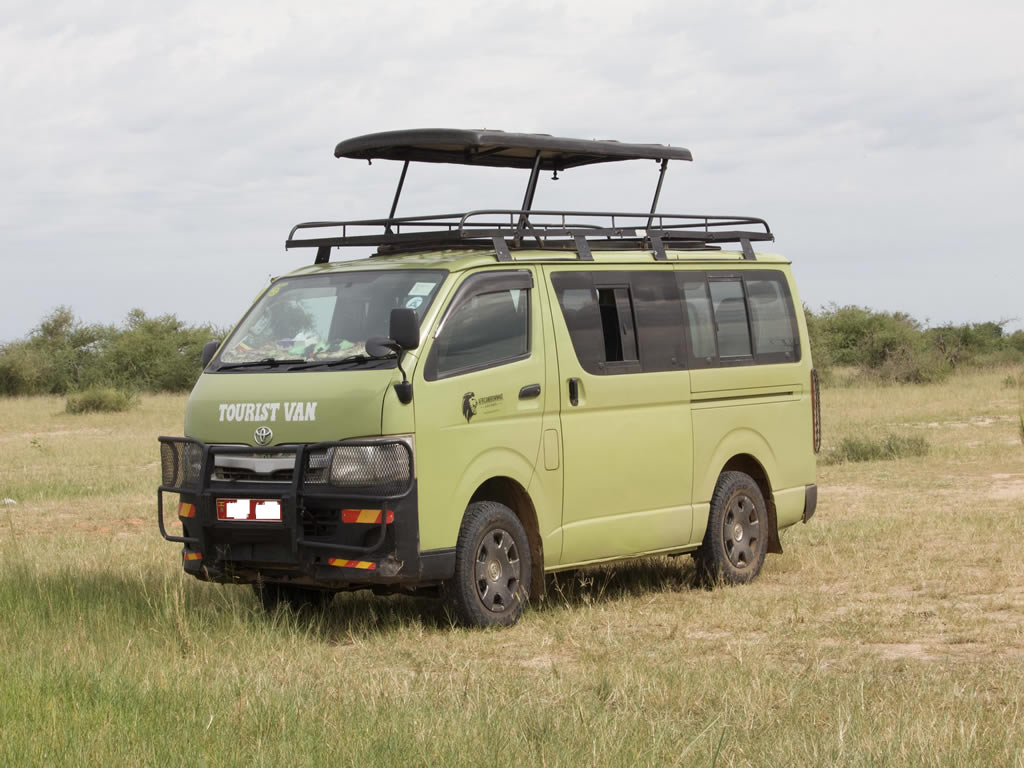
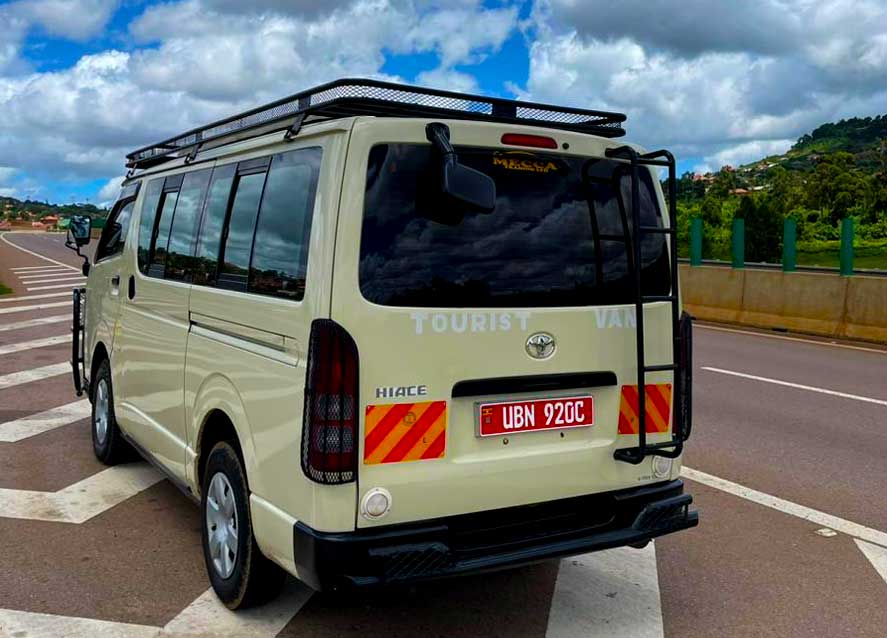
The term “Drone” is the colloquial East African name given to the standard-roof Toyota HiAce van, distinguishing it from the taller “High Roof” commuter variant. Locally in Uganda, the name is universally recognized — from Kampala’s taxi parks to upcountry routes to Mbale, Mbarara, and Gulu. The vehicle is typically a 5th or 6th generation Toyota HiAce (200 series, produced from 2004 to present), available in both diesel and petrol engine configurations.
In Uganda, the most commonly found Drone runs on a 3.0L diesel engine (1KD-FTV) — a powerhouse known for its raw torque, pulling power, and ability to withstand demanding East African roads. More recent imports feature the newer 2.8L diesel (1GD-FTV), Toyota’s modern gold-standard engine introduced in 2017. A petrol variant with a 2.0L engine is also available, though far less common on East African roads.
| 🚐 The “Drone” at a Glance
Local name: Drone (standard roof) | High Roof (tall commuter variant) Primary market: Uganda, Kenya, Tanzania, Rwanda, East Africa Most common engine: 3.0L diesel (1KD-FTV) | 2.8L diesel (1GD-FTV) Typical use: Public transport, safari transfers, cargo, group travel Seating capacity: 7–13 passengers depending on configuration Drive train: 2WD (rear-wheel drive) or 4WD |
Toyota HiAce Drone Fuel Tank Capacity — Official Specifications
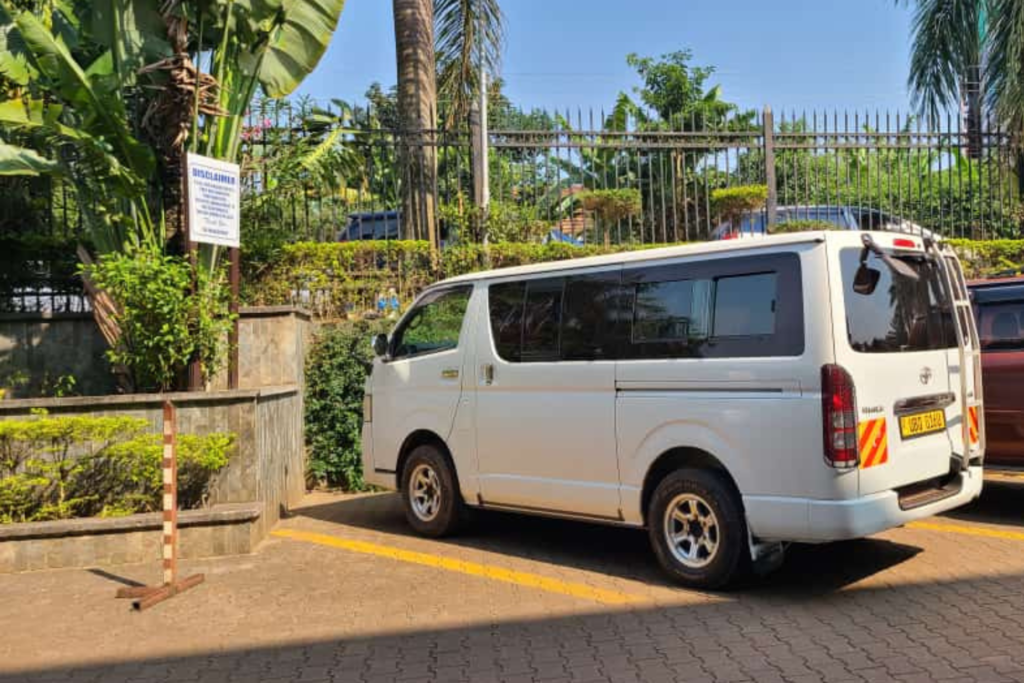
The standard Toyota HiAce Drone fuel tank capacity is 70 litres (approximately 18.5 US gallons). This is the factory-fitted tank size across the majority of HiAce 200 series models — standard wheelbase diesel and petrol variants alike. Long-wheelbase (LWB) and extra-long-wheelbase (ELWB) variants may come with a slightly larger 75-litre tank for extended range.
The 70-litre tank has been deliberately designed to balance operational range with vehicle weight, cargo space, and ground clearance — making it ideal for both urban commutes and long-distance inter-city routes common in East Africa. The fuel type (diesel vs petrol) does not alter the tank size; both engine families share the same 70-litre capacity on standard-wheelbase models.
| Model / Variant | Engine | Fuel Type | Tank Capacity | Wheelbase |
| HiAce Drone (Standard) | 3.0L 1KD-FTV | Diesel | 70 Litres | Standard |
| HiAce Drone (Standard) | 2.8L 1GD-FTV | Diesel | 70 Litres | Standard |
| HiAce Drone (Petrol) | 2.0L 1TR-FE / 2TR-FE | Petrol | 70 Litres | Standard |
| HiAce LWB Commuter | 3.5L 2GR-FKS V6 | Petrol | 70–75 Litres | Long |
| HiAce ELWB (High Roof) | 2.8L 1GD-FTV | Diesel | 75 Litres | Extra Long |
Note: Tank capacities are based on manufacturer specifications. Always verify with the vehicle’s owner’s manual or a Toyota-authorised dealer for your specific model year and market configuration.
Toyota HiAce Drone Engine Variants & Fuel Economy
The Toyota HiAce Drone is available in several engine configurations in the East African market, each with distinct fuel consumption characteristics. Understanding which engine your Drone has is key to accurately planning fuel stops and calculating your driving range.
The 3.0L Diesel (1KD-FTV) — The Classic Drone Engine
The most iconic Drone engine in Uganda and across East Africa, the 3.0L 1KD-FTV turbo diesel is the engine that gave the vehicle its legendary reputation. Displacement: 2,982cc. Maximum output: approximately 102–130 PS (75–96 kW). Torque: 260–300 Nm at 1,200–3,400 rpm.
Fuel economy in urban Kampala traffic: approximately 8–9 km per litre. On highways (e.g. Kampala–Mbarara or Kampala–Mbale routes): approximately 12–14 km per litre. This engine is deeply understood by mechanics across East Africa, from Kampala’s Kisekka Market to garages in upcountry towns, making parts availability and maintenance costs highly favourable.
The 2.8L Diesel (1GD-FTV) — The Modern Gold Standard
Introduced in late 2017, the 1GD-FTV is Toyota’s next-generation diesel for the HiAce and shares components with the modern Hilux and Land Cruiser Prado. Displacement: 2,755cc. Maximum output: approximately 150 HP (110 kW). Torque: 300–500 Nm (depending on automatic/manual specification).
This engine offers superior fuel economy compared to the older 1KD, with improved emissions control and a quieter, more refined drive. Real-world fuel consumption: approximately 8–10 km per litre city, 13–15 km per litre highway. The 1GD is rapidly becoming the preferred engine for new Drone imports in Uganda and Kenya.
The 2.0L / 2.7L Petrol — The Less Common Option
Some HiAce Drone variants use the 2.0L 1TR-FE or 2.7L 2TR-FE petrol engine. While petrol cars carry a perception of reliability and minimal maintenance among some motorists, the petrol Drone consumes significantly more fuel per kilometre compared to the diesel variants, making it less economical for long-distance East African routes. Fuel consumption: approximately 9–12 km per litre on highways.
| Engine | Displacement | Fuel | City Economy | Highway Economy | Max Torque |
| 1KD-FTV | 3.0L | Diesel | 8–9 km/L | 12–14 km/L | 260–300 Nm |
| 1GD-FTV | 2.8L | Diesel | 8–10 km/L | 13–15 km/L | 300–500 Nm |
| 2KD-FTV | 2.5L | Diesel | 7–9 km/L | 11–13 km/L | 260 Nm |
| 1TR-FE | 2.0L | Petrol | 7–9 km/L | 10–12 km/L | 184 Nm |
| 2TR-FE | 2.7L | Petrol | 6–8 km/L | 9–11 km/L | 241 Nm |
Toyota HiAce Drone Driving Range — What Can You Expect?
With a 70-litre fuel tank, the Toyota HiAce Drone offers an impressive driving range suitable for Uganda’s long inter-city distances and East Africa’s national park safari circuits. The actual range depends heavily on your engine type, road conditions, vehicle load, AC usage, and driving style.
| 📐 Range Formula
Maximum Range (km) = (Tank Capacity ÷ Fuel Consumption Rate) × 100
Example: 70L tank ÷ 9.5 L/100km = ~736 km theoretical maximum range For East African conditions, always plan fuel stops every 400–550 km for safety. |
| Driving Condition | Consumption Rate | 70L Tank Range | Recommended Fuel Stop |
| Kampala City (heavy traffic) | ~11–12 L/100km | 580–636 km | Every 350 km |
| Highway (Kampala–Mbarara) | ~7–8 L/100km | 875–1,000 km | Every 500 km |
| Highway (Kampala–Mbale) | ~7–8 L/100km | 875–1,000 km | Every 500 km |
| Mixed (city + highway) | ~9–10 L/100km | 700–778 km | Every 400–450 km |
| Safari off-road (rough terrain) | ~12–15 L/100km | 467–583 km | Every 300 km |
| Loaded (max passengers + luggage) | ~12–13 L/100km | 538–583 km | Every 350 km |
Factors Affecting Fuel Efficiency on East African Roads
East Africa’s diverse road network — from Kampala’s congested streets to the sweeping tarmac of the Kampala–Masaka highway and the challenging murram (gravel) tracks leading to national parks — means fuel consumption for the HiAce Drone can vary significantly. Here are the key factors every Drone owner and operator should understand:
Road Conditions
✦ Tarmac highways: Best fuel economy. The Drone excels on routes like Kampala–Mbarara and Kampala–Gulu, achieving 12–14 km/L with the 3KD engine.
✦ Murram/gravel roads (e.g. to national parks): Significantly higher fuel consumption due to resistance, gear changes, and lower speeds.
✦ Steep mountain terrain: Routes like Fort Portal to Queen Elizabeth NP or Bwindi approaches increase fuel use by 20–30%.
Vehicle Load
✦ A fully loaded Drone (13 passengers + luggage) will consume considerably more fuel than a half-loaded vehicle.
✦ Safari configurations with rooftop tents, roof racks, and camping gear add aerodynamic drag and weight, reducing efficiency.
Fuel Quality
Fuel quality is critical for the HiAce Drone, especially the modern 1GD-FTV engine which features a Diesel Particulate Filter (DPF) and high-pressure common-rail injection system. Poor-quality diesel can cause incomplete combustion, exhaust smoke, and DPF clogging. Always refuel at reputable stations with certified fuel quality. In Uganda, quality fuel is available at Total Energies, Shell, Stabex, and Oryx service stations.
Driving Style
✦ Heavy-footed acceleration is the biggest killer of fuel efficiency. Gradual acceleration and maintaining steady cruising speeds (80–100 km/h) on highways maximises range.
✦ Excessive idling in Kampala traffic is unavoidable but can be managed by switching off the engine during prolonged stops.
| ⚠️ The Diesel Particulate Filter (DPF) — What Every Drone Owner Must Know
Modern HiAce Drones (especially the 1GD-FTV) are equipped with a Diesel Particulate Filter (DPF) — a critical emissions component. The DPF periodically self-cleans through a process called “regeneration” which burns off accumulated soot. During this process, the engine may appear to rev slightly higher or use more fuel — this is normal. Bad-quality diesel and too many short urban trips without highway driving can cause the DPF to clog, triggering warning lights. Solution: Regularly take the Drone on longer highway runs to allow full DPF regeneration. Use only quality diesel from reputable stations. |
Auxiliary & Upgraded Fuel Tanks for Extended Range
For operators running the Toyota HiAce Drone on very long routes — such as multi-day safari circuits across Uganda, Rwanda, and Tanzania — or in remote areas where fuel stations are sparse, auxiliary fuel tank options exist to extend the vehicle’s range beyond the standard 70-litre capacity.
Options for Increased Fuel Capacity
✦ Auxiliary Tank (add-on): A secondary 40–60 litre auxiliary tank can be installed, bringing total capacity to 110–130 litres. This is popular with safari operators running remote circuits.
✦ Replacement Oversized Tank (90L): Some aftermarket suppliers offer 90-litre replacement tanks for standard-wheelbase models, increasing range by approximately 28%.
✦ Jerry Cans (portable backup): Carrying a 20-litre certified fuel jerry can is a common practice among self-drive safari travellers in East Africa as a range buffer.
Important: Any fuel system modification must meet your country’s vehicle safety and environmental regulations. In Uganda, consult with a certified Toyota service centre or approved auto shop before undertaking any fuel tank modification to avoid voiding vehicle warranty or insurance.
Estimated Fuel Costs for Toyota HiAce Drone in Uganda (2025)
Understanding the real cost of fuelling your Toyota HiAce Drone is important for trip budgeting, fleet management, and route planning across Uganda and East Africa. The following estimates are based on 2025 diesel fuel prices in Uganda (approximately UGX 4,800–5,200 per litre).
| Route | Distance | Est. Fuel Used | Fuel Cost (UGX) | Fuel Cost (USD) |
| Kampala → Mbarara | ~270 km | ~22–27 litres | ~106,000–140,000 | ~$29–$38 |
| Kampala → Gulu | ~340 km | ~28–35 litres | ~134,000–182,000 | ~$36–$50 |
| Kampala → Mbale | ~235 km | ~19–24 litres | ~91,000–125,000 | ~$25–$34 |
| Kampala → Kasese | ~400 km | ~33–40 litres | ~158,000–208,000 | ~$43–$57 |
| Kampala → Kabale | ~430 km | ~35–44 litres | ~168,000–229,000 | ~$46–$63 |
| Full tank top-up (70L) | — | 70 litres | ~336,000–364,000 | ~$91–$99 |
Estimates based on diesel consumption of ~8–10 L/100km on tarmac highways. Actual consumption varies with load, terrain, and driving style. Fuel prices fluctuate — check current rates before departure.
Toyota HiAce Drone vs Other Popular Vehicles — Fuel Tank Comparison
How does the Toyota HiAce Drone’s 70-litre fuel tank compare to other popular vehicles used for tourism, group travel, and safaris across Uganda and East Africa?
| Vehicle | Fuel Tank | Engine | Economy (Hwy) | Range (Hwy) |
| Toyota HiAce Drone | 70 litres | 3.0L / 2.8L Diesel | 12–14 km/L | 840–980 km |
| Toyota Land Cruiser 70 | 87 litres | 4.2L Diesel | 8–10 km/L | 700–870 km |
| Toyota Land Cruiser Prado | 87 litres | 2.8L Diesel | 9–11 km/L | 780–957 km |
| Toyota Land Cruiser V8 | 93 litres | 4.5L Diesel | 7–9 km/L | 651–837 km |
| Toyota RAV4 (2.5L) | 55 litres | 2.5L Petrol | 10–12 km/L | 550–660 km |
| Toyota Coaster Bus | 100 litres | 4.2L Diesel | 6–8 km/L | 600–800 km |
The HiAce Drone offers a compelling balance: while its 70-litre tank is smaller than the Land Cruiser family’s 87–93 litres, its superior fuel efficiency means comparable or better real-world range on Uganda’s highway network — at significantly lower per-kilometre fuel cost.
Fuel System Maintenance Tips for the Toyota HiAce Drone
Proper fuel system maintenance is critical for maximising the life of your HiAce Drone’s engine and ensuring consistent fuel efficiency across Uganda’s demanding road conditions.
✦ Change the fuel filter every 10,000–15,000 km. A clogged filter restricts fuel flow and causes power loss and increased consumption.
✦ Use genuine Toyota fuel filters from authorised dealers — counterfeit parts are common in East African markets and can damage injectors.
✦ Check for fuel leaks regularly, especially around the tank, fuel lines, and injector connections after driving rough terrain.
✦ Keep the fuel cap tight and in good condition. A faulty cap allows fuel vapour to escape and can trigger evaporative emission system warnings.
✦ For the 1GD-FTV engine: allow the DPF to regenerate regularly by taking highway drives. Avoid continuous short-trip city driving without occasional highway runs.
✦ Service the Drone every 5,000 km or as per the manufacturer’s service manual. Budget approximately UGX 150,000–250,000 per service depending on parts required.
Toyota HiAce Drone for Safari & Group Travel in Uganda
For Uganda’s thriving tourism and safari industry, the Toyota HiAce Drone is a preferred group transfer vehicle. Its 9–13 seat capacity, generous luggage space, large panoramic windows for wildlife viewing, and reliable diesel range make it ideal for circuits covering Murchison Falls, Queen Elizabeth, Bwindi, and Kidepo Valley National Parks.
Safari Configurations Available
✦ Standard 9-seater Drone with roof rack: Perfect for airport transfers and national park game drives on tarmac roads.
✦ 4WD HiAce Drone with popup rooftop: Increasingly popular for game drives, allowing passengers to stand and photograph wildlife through the roof hatch.
✦ HiAce Drone with auxiliary tank: Extended-range safari tours covering multiple parks in a single loop without fuel anxiety.
| 🦁 Fuel Planning for Uganda Safari Routes
Murchison Falls Circuit: ~450 km from Kampala. Fuel up in Kampala + Masindi. 70L tank comfortably covers the route. Queen Elizabeth NP: ~420 km from Kampala. Fuel available in Kasese town. No fuel anxiety with 70L tank. Bwindi (Gorilla Trekking): ~490 km from Kampala. Fuel in Kabale before proceeding. Top-up recommended. Kidepo Valley NP: ~750 km from Kampala. Fuel in Gulu + Kitgum. Auxiliary tank or jerry can strongly advised. |
Buying a Toyota HiAce Drone in Uganda — Fuel Tank Checklist
Whether purchasing a used HiAce Drone from a dealership or importing from Japan, inspecting the fuel system is a crucial part of the pre-purchase inspection. Use this checklist:
✦ Check the fuel tank for rust, leaks, or dents — especially the underside. Tanks on older models can corrode from road debris and moisture.
✦ Request recent service records showing fuel filter replacement history.
✦ Test the fuel gauge accuracy — some older Drones have gauges that stop reading at full capacity, indicating a clogged vapour vent line.
✦ Check for black or white smoke from the exhaust — a sign of fuel system issues, injector wear, or DPF problems.
✦ Confirm the engine code via VIN lookup: 1KD (3.0L diesel), 1GD (2.8L diesel), 1TR/2TR (petrol). Match to official specifications.
✦ For 2018+ models: ensure the DPF is functioning and has not been illegally removed. Removal is common but damages engine long-term and may affect import eligibility.
Frequently Asked Questions (FAQ)
Q: What is the fuel tank capacity of the Toyota HiAce Drone?
A: The standard Toyota HiAce Drone has a fuel tank capacity of 70 litres. Long-wheelbase and extra-long-wheelbase models may have a 75-litre tank. This applies to both diesel and petrol variants.
Q: How many kilometres can a Toyota HiAce Drone travel on a full tank?
A: On a full 70-litre tank, the HiAce Drone with a 3.0L diesel engine can travel approximately 840–980 km on the highway under ideal conditions. In mixed city/highway driving, expect 600–750 km. Always plan fuel stops based on conservative estimates.
Q: Which is better — the 3KD or 1GD engine for fuel economy?
A: The 2.8L 1GD-FTV is generally more fuel-efficient and cleaner than the older 3.0L 1KD-FTV. However, the 1KD remains popular in East Africa due to its widespread parts availability and the fact that virtually every mechanic from Kampala to upcountry knows how to repair it.
Q: Is the Toyota HiAce Drone available in 4WD?
A: Yes. While the most common Drone on Ugandan roads is 2WD (rear-wheel drive), 4WD variants are available and popular among safari operators needing to navigate national park tracks and rough terrain. The 4WD Drone is available for rental through many Uganda safari and car hire companies.
Q: How much does it cost to fill a Toyota HiAce Drone tank in Uganda?
A: At 2025 diesel prices in Uganda (approximately UGX 4,800–5,200 per litre), filling a 70-litre tank costs approximately UGX 336,000–364,000 (roughly USD 91–99). Fuel prices vary by location — urban Kampala stations are competitive; remote upcountry stations may charge higher.
Q: Can I upgrade the fuel tank on my HiAce Drone?
A: Yes, auxiliary tanks (40–60L) can be professionally installed to extend range. 90-litre replacement tanks are also available from some aftermarket suppliers. Always ensure modifications are done by a certified auto workshop and meet local regulations.
Conclusion
The Toyota HiAce Drone is more than a minivan — it is the heartbeat of East African road transport. Its 70-litre fuel tank strikes an intelligent balance between operational range, vehicle weight, and practicality for Uganda’s diverse road conditions. With the right engine — particularly the dependable 1KD-FTV or the modern 1GD-FTV — and good fuel management practices, the Drone delivers hundreds of kilometres of reliable, economical travel on a single tank.
Whether you are navigating Kampala’s traffic, cruising the Kampala–Mbarara highway at 100 km/h, or threading through the tracks of Murchison Falls or Queen Elizabeth National Park, the Toyota HiAce Drone’s fuel system is designed for the demands of East African roads. Plan your fuel stops wisely, use quality diesel, and maintain your fuel system diligently — and the Drone will rarely let you down.
| 📌 Key Takeaways
✦ Standard HiAce Drone fuel tank capacity: 70 litres ✦ LWB / ELWB commuter models: 75 litres ✦ Best engine for fuel economy: 2.8L 1GD-FTV diesel ✦ Highway range (diesel): 840–1,000 km on a full tank ✦ City fuel economy: 8–9 km per litre (3KD diesel) ✦ Auxiliary tanks available for extended remote safari range ✦ Always use quality certified diesel — especially for DPF-equipped engines |