
Are There Any Restrictions on Where I Can Drive the Rental Vehicle in Uganda?
A complete guide to geographic, border, park, and road-condition limits on Uganda car rentals — and how to stay fully covered.
| QUICK ANSWER
• Yes. Most Uganda rental agreements restrict driving to Uganda’s borders only, exclude certain DRC and South Sudan border zones, limit off-road/bush driving to 4×4 vehicles, and require written permission for cross-border travel into Kenya, Rwanda, or Tanzania. • Driving outside these terms can void your insurance and collision damage waiver (CDW), leaving you personally liable for damage, towing, and recovery costs.
|
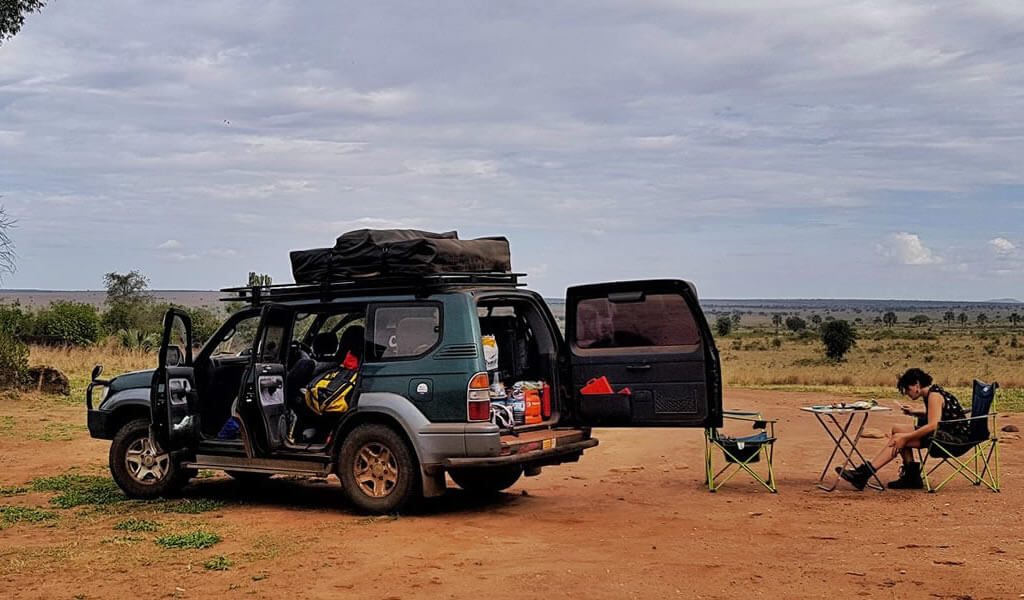
Uganda’s mix of tarmac highways, red-dirt park tracks, mountain switchbacks, and remote border regions makes it one of East Africa’s most rewarding self-drive destinations — but also one where knowing your rental agreement’s geographic limits matters. Rental companies do not hand you a vehicle and let you drive anywhere in the country without conditions. There are real restrictions, and they exist for good reason: insurance liability, vehicle recovery logistics, security in border areas, and the physical limits of certain vehicle types on Uganda’s more demanding roads.
This guide breaks down exactly where you can and cannot drive a rental vehicle in Uganda, what triggers a restriction, which areas require special permission or a 4×4, and how to avoid the most common (and costly) mistakes self-drive travelers make.
1. National Boundaries: The Core Restriction
The single biggest restriction on any standard Uganda rental agreement is the national border itself. Nearly all rental contracts state clearly that the vehicle may only be driven within Uganda’s territory unless cross-border travel has been arranged in advance, in writing, with the rental company.
Why the border matters
- Insurance policies underwriting Uganda rentals are typically registered for domestic use only.
- Comprehensive cover and CDW protection usually stop the moment you cross an international boundary without pre-approval.
- Recovery and roadside assistance networks that rental companies rely on are built around Uganda’s road network — support outside the country may be unavailable or extremely delayed.
- Vehicles taken across borders without correct customs and temporary import documentation can be seized or heavily fined.
2. Cross-Border Driving: Kenya, Rwanda, Tanzania, and Beyond
Many self-drive itineraries combine Uganda with neighboring countries — a Rwanda gorilla-trekking extension, a Kenya coastal add-on, or a wider East Africa loop. This is possible, but only through explicit arrangement.

What’s typically required
- Written pre-approval from the rental company, often 1–2 weeks before travel.
- A COMESA Yellow Card (regional third-party insurance) or equivalent cross-border cover.
- A cross-border permit and vehicle logbook copy authorizing the specific route and countries.
- An additional cross-border fee, which varies by company and by country combination.
- Higher security deposits for multi-country trips, particularly those including DRC or South Sudan border approaches.
Rwanda and Kenya are the most commonly approved extensions, since both share established tourist border posts with Uganda (Katuna/Gatuna, Cyanika, Busia, Malaba). Tanzania is less commonly included in standard Uganda rental fleets and usually requires a dedicated regional package.
3. Restricted and High-Risk Border Regions
Even within Uganda, certain border-adjacent zones are excluded or flagged as restricted in rental agreements, independent of whether you’re planning to cross into the neighboring country.
| Border Region | Typical Restriction | Reason |
| DRC border areas (west of Queen Elizabeth NP, Semuliki) | Often excluded or requires special clearance | Security volatility, limited recovery access |
| South Sudan border (far north, beyond Kidepo) | Generally excluded from standard cover | Security advisories, remote infrastructure |
| Karamoja sub-region (parts) | Daytime travel only, escort sometimes advised | Historic insecurity, evolving safety status |
| Established tourist crossings (Kenya, Rwanda) | Allowed with pre-approval and Yellow Card | Stable infrastructure, established protocols |
Rental companies periodically review these zones based on current government travel advisories, so always confirm current status directly with your provider rather than relying on older itineraries or guides — including this one — as the final word.
4. Off-Road and Park-Track Driving
Uganda’s national parks are a major draw for self-drive travelers, but not every rental vehicle is cleared for park interior roads. This is less about permission and more about physical and contractual capability.
Sedan and standard vehicle limits
- Two-wheel-drive sedans and compact cars are generally restricted to tarmac and well-graded murram roads.
- Entering national park interior tracks, wetland margins, or river-crossing points in a 2WD vehicle is typically a breach of the rental agreement, not just inadvisable.
- Damage from grounding, submersion, or getting stuck off-track in an unauthorized vehicle class is usually excluded from CDW cover.
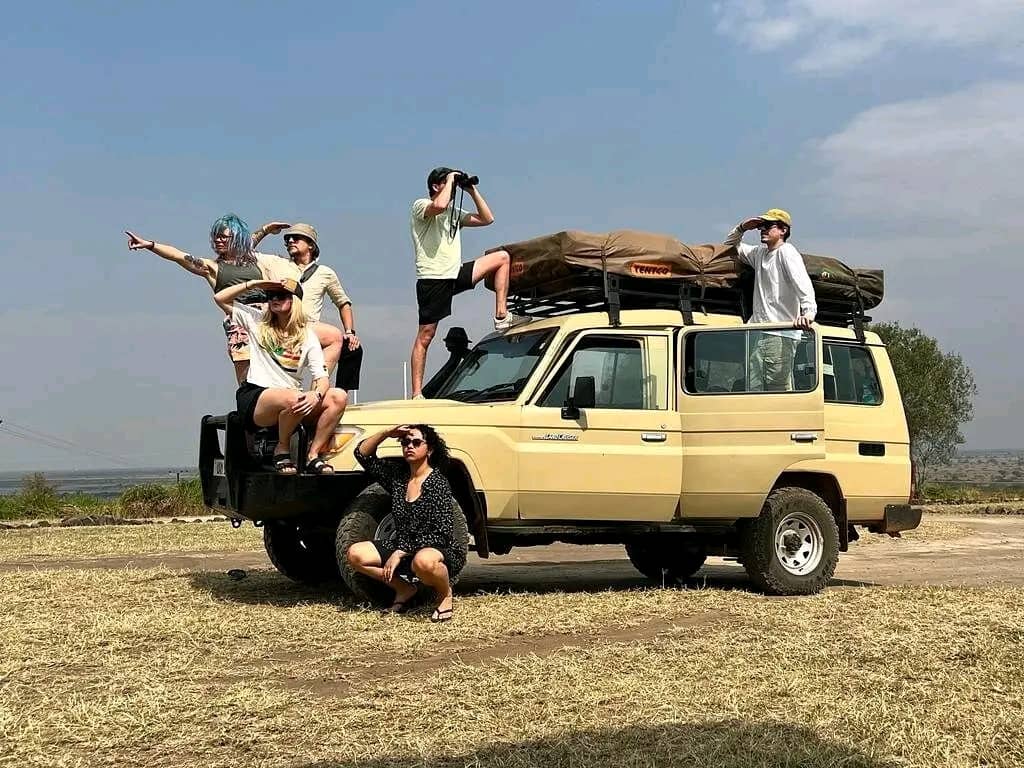
4×4 vehicle allowances
- 4x4s such as the Toyota RAV4, Land Cruiser, and similar models are cleared for most park circuit roads within posted speed and track limits.
- Driving off marked tracks entirely — into the bush, off-piste for wildlife viewing, or through closed sections — remains prohibited even for 4x4s, both by park regulations (Uganda Wildlife Authority) and rental terms.
- Seasonal closures during heavy rains apply regardless of vehicle type; some park roads become impassable and are gazette closed.
5. Protected Areas and National Park Rules
Beyond the rental agreement itself, the Uganda Wildlife Authority (UWA) sets its own driving rules inside gazette parks, and these apply on top of — not instead of — your rental contract.
- Vehicles must stay on designated tracks at all times; off-track driving is a punishable offense.
- Night driving inside most parks is prohibited for self-drive tourists outside of authorized night-game-drive activities.
- Speed limits inside parks (commonly 40 km/h on main tracks, lower near animal sightings) are strictly enforced.
- Some park sections, particularly around ranger patrol zones, research areas, or community land boundaries, are closed to general tourist traffic.
6. Road Conditions That Effectively Restrict Access
Not every restriction is written into the contract as a hard rule — some routes are conditionally restricted based on road surface, season, and vehicle class.
| Road Type | Recommended Vehicle | Notes |
| Paved highways (Kampala–Mbarara, Kampala–Gulu) | Any rental class | Well maintained, generally unrestricted |
| Murram/gravel feeder roads | 4×4 or high-clearance recommended | Passable in dry season; muddy and slow in rains |
| Park interior tracks | 4×4 required | Sedans typically barred by contract |
| Mountain routes (Rwenzori, Kigezi highlands) | 4×4 strongly recommended | Steep gradients, switchbacks, occasional landslides |
| Remote northern routes (Kidepo approach) | 4×4 required | Long distances between fuel and service points |
7. Night Driving Restrictions
Most Uganda rental companies restrict or discourage self-drive travel after dark, and this applies countrywide, not just inside parks.
- Many CDW policies exclude damage that occurs during night driving hours, commonly defined as 7:00 PM to 6:00 AM.
- Poor road lighting, unmarked speed bumps, pedestrians, and livestock on rural roads make night driving genuinely higher risk.
- Inside national parks, night driving is restricted to authorized guided night drives only.
| COMMON MISTAKES THAT VOID COVERAGE
• Crossing into a neighboring country without written pre-approval and a Yellow Card. • Taking a 2WD sedan onto an unauthorized park interior track. • Driving off marked tracks for a closer wildlife photo. • Continuing a route after dark without prior arrangement for night travel. • Entering a border region flagged as restricted without confirming current status. |
8. How to Confirm Your Specific Restrictions
Because restrictions vary by rental company, vehicle class, and current security advisories, the rental agreement itself is the authoritative source — not general guides. Before you sign, confirm the following in writing.
- Which countries, if any, the vehicle is cleared to enter, and what documentation is required.
- Whether your specific vehicle is rated for park interior tracks or off-tarmac routes.
- Any border sub-regions currently excluded from cover.
- The defined night-driving cut-off hours and whether any exceptions apply to your itinerary.
- What happens to your deposit and liability if you unknowingly breach a restriction.
Frequently Asked Questions
Can I drive a Uganda rental car into Kenya or Rwanda?
Generally yes, but only with prior written approval from the rental company, a COMESA Yellow Card, and often an additional cross-border fee. Arrange this well before your trip.
Are all national park roads open to self-drive tourists?
No. Some interior tracks, research zones, and community-boundary sections are closed to general tourist traffic, and seasonal closures apply during heavy rains.
Do I need a 4×4 to self-drive in Uganda?
For paved highways and main towns, a 2WD vehicle is fine. For national parks, mountain regions, and rural murram roads, a 4×4 is required by most rental contracts and strongly recommended for safety.
What happens if I break a driving restriction?
Typically, your collision damage waiver and insurance cover become void for that incident, making you personally liable for repair, towing, and recovery costs — which can be substantial in remote areas.
Final Thoughts
Uganda rewards self-drive travelers with extraordinary access to landscapes and wildlife most visitors never see up close — but that access comes with clearly defined limits. Understanding where you can and cannot drive, confirming your vehicle’s rating, and getting cross-border approval in writing before you leave will keep your trip both smooth and fully covered.
Always request your rental company’s current restriction list in writing at the time of booking, since border security status and park road closures can change with little notice.