
Self-Drive in Tarangire National Park
Self-Drive in Tarangire National Park, Tarangire National Park is Tanzania’s fourth-largest national park and one of the most rewarding — and most accessible — destinations for a self-drive safari. Famous for its towering baobab trees, the seasonal Tarangire River, and some of the largest elephant herds in Africa, the park sits only two to three hours from Arusha along a well-maintained tarmac and gravel route, making it a natural choice for travelers who want to explore Tanzania at their own pace behind the wheel of a rented 4×4.
Unlike the Serengeti or Ngorongoro Crater, Tarangire’s road network is compact, well-signposted, and forgiving for first-time self-drivers, while still delivering exceptional game viewing during the dry season. This guide covers everything you need to plan and execute a confident, safe, and unforgettable self-drive trip through Tarangire — from vehicle requirements and park fees to route planning, wildlife highlights, and practical safety tips.
| QUICK FACTS
Location: Northern Tanzania, ~118 km / 2-3 hours’ drive from Arusha Size: 2,850 km² (Tanzania’s 4th-largest national park) Best for self-drive: Yes — gravel roads are generally well-maintained and clearly signed Best time to visit: Dry season, June to October (peak elephant concentrations) Signature sightings: Elephants, baobab trees, tree-climbing pythons, breeding herds of wildlife along the Tarangire River |
Getting to Tarangire by Road
Most self-drive visitors approach Tarangire from Arusha, the safari capital of northern Tanzania. The drive follows the tarmac A104 highway south toward Dodoma, turning off at Kwa Kuchinja near the town of Makuyuni onto a signposted road that leads directly to Tarangire’s Sangaiwe (main) Gate.
| Route | Distance | Drive Time | Road Surface |
| Arusha → Tarangire (Sangaiwe Gate) | ~118 km | 2 – 2.5 hours | Tarmac (A104), then short gravel stretch |
| Kilimanjaro Airport (JRO) → Tarangire | ~145 km | 2.5 – 3 hours | Tarmac, then gravel |
| Lake Manyara → Tarangire | ~65 km | 1.5 hours | Tarmac |
| Tarangire → Ngorongoro Crater | ~135 km | 2.5 – 3 hours | Tarmac then gravel ascent |
The route from Arusha is straightforward and well-signed, passing through the towns of Makuyuni and Kwa Kuchinja. Fuel up fully in Arusha, as fuel stations become sparse once you leave the main highway — there is no reliable fuel station inside or immediately at the park gates.
Vehicle Requirements for a Tarangire Self-Drive
Recommended Vehicle Types
A 4×4 vehicle with high ground clearance is strongly recommended, even though the main circuit roads are generally graded and passable in 2WD during the dry season. Tarangire’s minor tracks, riverine routes, and the areas around Silale and Gursi Swamps can become muddy and rutted, particularly from November through May.
- Toyota Land Cruiser (Prado or 70/76 series) — the safari-industry standard, robust and reliable on rough tracks.
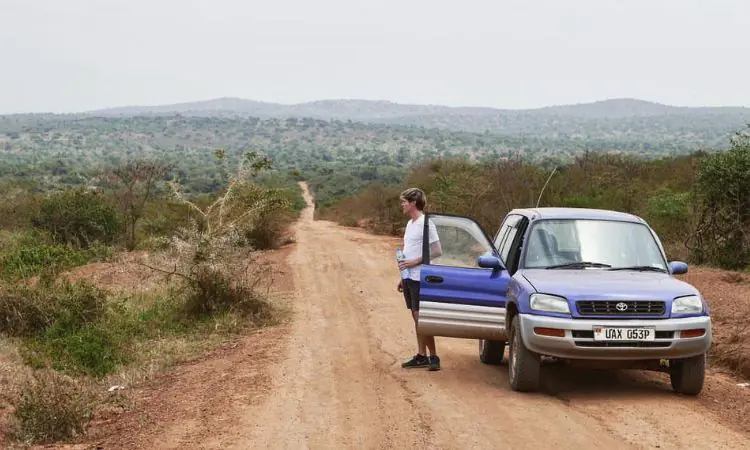
- Toyota RAV4 or similar compact SUV — a popular, fuel-efficient choice for dry-season self-drives on the main circuit.
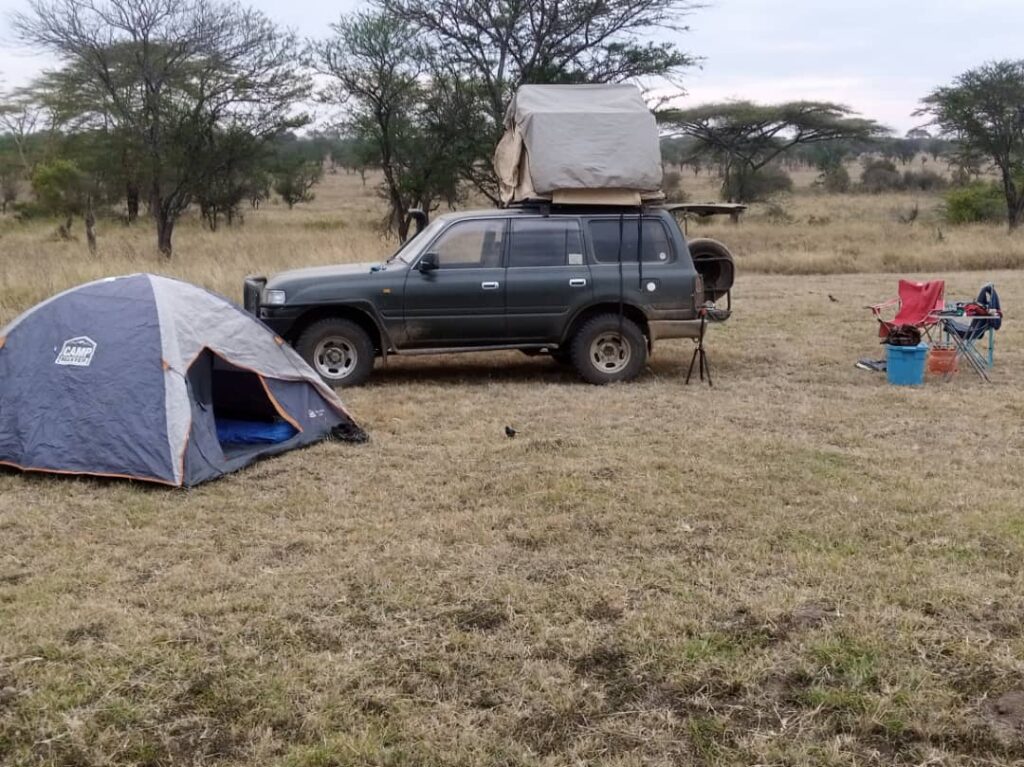
- Toyota Hilux or Land Cruiser double-cab with rooftop tent — ideal if combining Tarangire with a multi-park camping itinerary.
- Avoid low-clearance sedans or 2WD-only vehicles, especially in the wet season (November-May), when tracks near the river and swamps can become impassable.

Mandatory Documentation & Requirements
| Requirement | Details | ||
| Valid driving licence | International Driving Permit (IDP) recommended alongside your home licence | ||
| Passport | Required at all park gates for identity and residency verification | ||
| Rental agreement | Original agreement, insurance certificate, and vehicle logbook copy | ||
| TANAPA payment | Park fees paid electronically in advance or via card/mobile money at the gate | ||
| Spare tyre & tools | Full-size spare, jack, tow rope, and basic repair kit — mandatory for any self-drive | ||
| Comprehensive insurance | Confirm the policy explicitly covers off-road and national park driving | ||
| CAUTION — CASHLESS GATES
As of 2026, Tanzania’s national parks operate a fully cashless payment system (GePG). Cash is not accepted at Tarangire’s gates. Self-drivers must pay park fees via Visa/Mastercard, a pre-loaded TANAPA smart card, or an electronic control number obtained in advance through a registered operator or the TANAPA portal. Carry a card with sufficient limit and a backup card in case of network issues at the gate. |
|||
Tarangire National Park Fees (2026)
Park fees are set by the Tanzania National Parks Authority (TANAPA) and are charged per person, per 24-hour period, plus a separate vehicle fee for self-driven cars. Rates are quoted in USD and exclude the 18% VAT applied to park entrance fees.
| Category | Fee (per 24 hrs, excl. VAT) |
| Non-resident adult (16+ years) | ≈ $47 – $50 |
| Non-resident child (5-15 years) | ≈ $10 – $12 |
| East African Community citizen (adult) | TZS equivalent, heavily discounted rate |
| Camping fee (public campsite, non-resident) | $30 per adult, per night |
| Specialised/private campsite | From $50 per adult, per night |
| Self-drive vehicle fee (up to 6 seats) | Charged per vehicle, per entry — confirm current rate at booking |
Fees are revised periodically by TANAPA, so always confirm the current tariff with the park authority or your vehicle rental company before departure. Entrance permits are valid for a single continuous 24-hour period from the time of entry — if you exit the park, a fresh permit is required to re-enter.
Self-Drive Routes Inside Tarangire
Tarangire’s road network branches out from Sangaiwe Gate into a series of well-marked circuits. Most self-drivers can comfortably cover the northern loop in a single day, while a two-day visit allows time to explore the quieter southern sections around Silale and Gursi Swamps.
Northern Circuit (Half-Day to Full-Day)
- Follows the Tarangire River from the main gate south past Poachers Hideout and the Matete area.
- Best for elephant herds, baobab-studded ridgelines, and classic Tarangire scenery.
- Well-graded roads suitable for most 4x4s and high-clearance SUVs year-round.
Central & River Circuit (Full Day)
- Loops around Tarangire Safari Lodge and the Kitibong Hill area, with river crossings and dense riverine bush.
- Excellent for predators (lion, leopard) and dry-season concentrations of buffalo and zebra.

Southern Circuit — Silale & Gursi Swamps (Full Day, Dry Season Recommended)
- A longer, quieter route through the swamp basins, best explored during the dry season when tracks are firmer.
- Fewer vehicles, excellent for birding and larger mammal herds gathering near remaining water sources.
- Allow extra fuel and time — this circuit is remote, with limited phone signal.
| PLANNING TIP
Pick up a park map at Sangaiwe Gate and note the road numbers before setting off — junctions are signed but easy to miss. Aim to be back at the gate or your lodge/campsite by 6:30 PM; driving after dark inside the park is prohibited. GPS signal can be unreliable in the south of the park — carry a downloaded offline map (Maps.me or similar) as a backup. |
Wildlife & What to Expect
Tarangire is best known for its elephants — during the dry season, herds of several hundred congregate along the Tarangire River, one of the only permanent water sources in the ecosystem. The park’s iconic baobab trees, some over a thousand years old, provide a dramatic backdrop throughout every route.
| Wildlife | Best Viewing Area | Best Season |
| Elephant herds | Tarangire River, Central Circuit | June – October (dry season) |
| Lion & leopard | River Circuit, Kitibong Hill | Year-round, best June – February |
| Tree-climbing pythons | Riverine forest near the main river | Year-round |
| Migratory wildebeest & zebra | Southern plains toward Silale Swamp | November – May (wet season) |
| Over 550 bird species | Silale & Gursi Swamps | November – April (breeding/migrants) |
Self-Drive Safety Tips
- Stay on designated roads at all times — off-road driving is prohibited and heavily fined.
- Keep a safe distance from all wildlife, especially elephants; never drive between a cow and her calf.
- Do not exit the vehicle except at designated picnic sites, viewpoints, or the gate area.
- Carry more fuel than you think you need — there are no fuel stations within the park.
- Pack at least 3-4 litres of drinking water per person, plus snacks, as game drives can run long.
- Download an offline map before departure and carry a paper park map as backup.
- Inform your lodge or campsite of your planned route and expected return time.
- Carry a fully charged phone, a physical first-aid kit, and the contact number for park rangers/emergency services.
| SAFETY NOTE
Malaria is present in the Tarangire area year-round — prophylaxis, repellent, and covering up at dawn/dusk are strongly advised. Cell network coverage is patchy inside the park, especially in the southern swamps. Test your signal periodically and avoid relying solely on live navigation. |
Where to Stay: Camping vs. Lodges
Self-drivers have a choice between public campsites, special/private campsites, and a range of tented camps and lodges both inside and just outside the park boundary.
Public Campsites
- Basic facilities (long-drop toilets, sometimes cold showers); shared with other travelers.
- $30 per adult per night — the most budget-friendly option for self-drive campers.
Special / Private Campsites
- Exclusive-use sites booked in advance, offering privacy and often better views over the river valley.
- From $50 per adult per night, plus a separate booking fee through TANAPA.
Lodges & Tented Camps
- Options range from mid-range to luxury, typically $200-$800 per person per night, often including meals and game drives.
- Many lodges welcome self-drive guests and can arrange secure overnight parking.
Sample 2-Day Self-Drive Itinerary
| Day | Route / Activity |
| Day 1 | Depart Arusha early → Sangaiwe Gate → Northern Circuit game drive along the Tarangire River → check in to lodge/campsite near the river |
| Day 2 | Early morning game drive toward Silale & Gursi Swamps → return via Central/River Circuit → exit park by mid-afternoon → onward to Lake Manyara or Ngorongoro |
Final Thoughts
Tarangire offers one of Tanzania’s most rewarding self-drive experiences: manageable distances, well-marked circuits, and outstanding elephant and baobab scenery, all within easy reach of Arusha. With the right 4×4, valid documentation, and a little route planning, independent travelers can enjoy a safe and deeply memorable safari entirely on their own schedule — whether as a standalone trip or the opening leg of a longer Northern Circuit self-drive adventure.