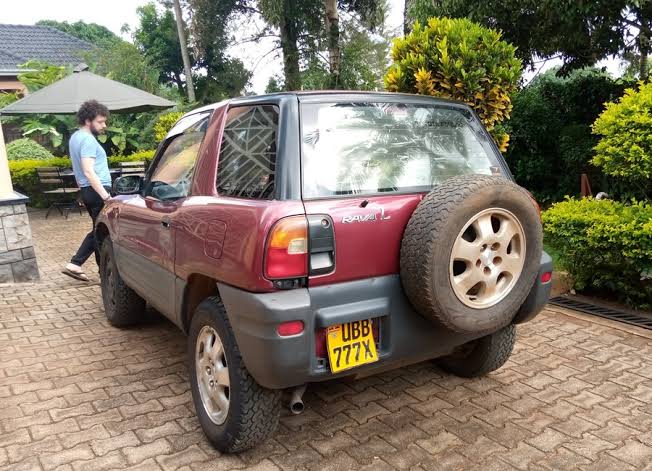
Weekly Car Rental in Uganda
Weekly Car Rental in Uganda, Renting a car by the week has become the go-to option for travelers exploring Uganda, the Pearl of Africa. Whether you’re planning a gorilla trekking expedition to Bwindi Impenetrable Forest, a game drive circuit through Murchison Falls and Queen Elizabeth National Parks, or a full self-drive loop connecting Uganda’s western and northern safari circuits, a weekly rental strikes the balance between cost savings and the flexibility to explore at your own pace. This guide breaks down everything you need to know about weekly car rental in Uganda in 2026 — pricing, vehicle types, included mileage, insurance, required documents, and the best routes to plan around a seven-day rental.
Why Choose a Weekly Car Rental in Uganda?
Daily car rental rates in Uganda typically run higher per day than weekly packages, since most rental companies build in a volume discount once a booking crosses the seven-day threshold. For travelers spending a week or more in the country — which is realistic given the driving distances between parks — a weekly rate can reduce total transport costs by 15% to 30% compared to booking day by day. Beyond the savings, a week gives you enough time to comfortably combine two or three national parks without the rushed pace that a 3–4 day rental forces.
| WHO WEEKLY RENTAL SUITS BEST
• Self-drive travelers combining 2–3 national parks in one circuit • Families or small groups wanting a private vehicle with flexible daily schedules • Photographers and birders who need extra time at each stop • Travelers arriving at Entebbe International Airport and touring independently • NGO staff, researchers, and business travelers needing a full week of ground transport |
Weekly Car Rental Rates in Uganda
Rates vary by vehicle type, rental company, whether you self-drive or hire a driver-guide, and the season (rates rise slightly during the June–September and December–February peak safari seasons). The table below reflects typical 7-day rental rates from established Uganda operators, self-drive and with driver, excluding fuel.
| Vehicle Type | Best For | Self-Drive (7 Days) | With Driver-Guide (7 Days) |
| Toyota RAV4 | Couples, light off-road, budget circuits | US$385 – US$455 | US$560 – US$630 |
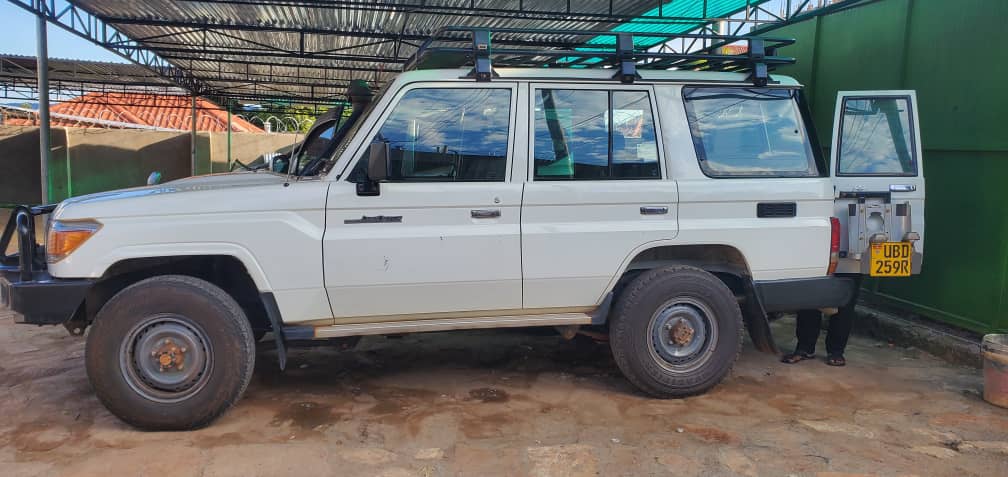
| Toyota Land Cruiser Prado | Small families, comfort on rough roads | US$490 – US$595 | US$700 – US$805 |
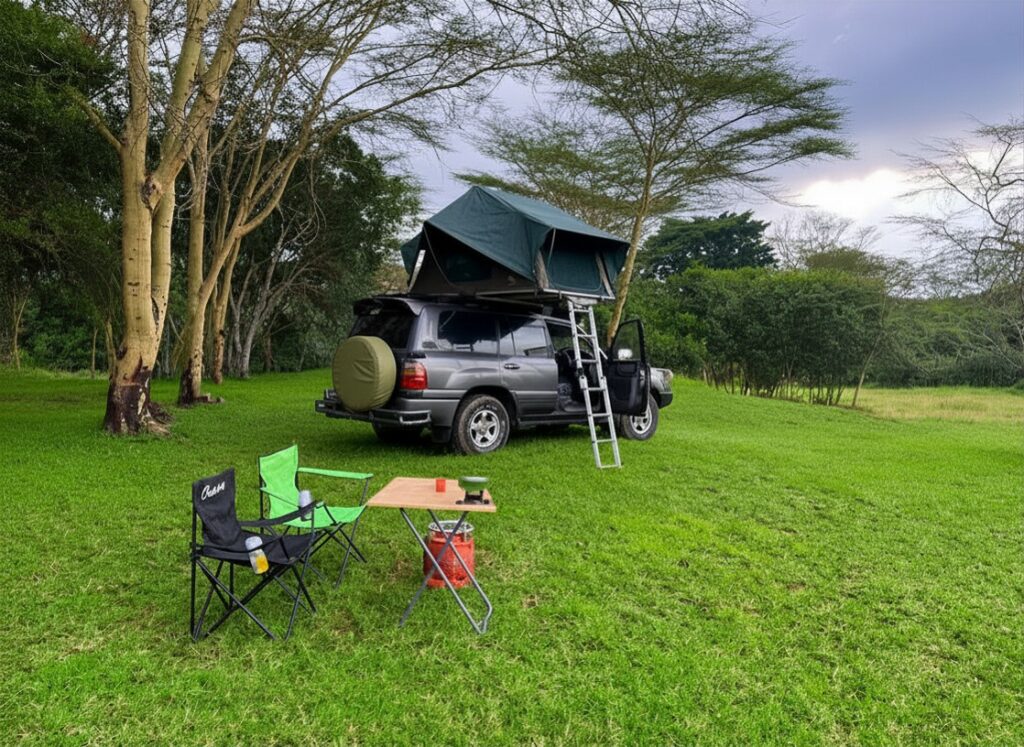
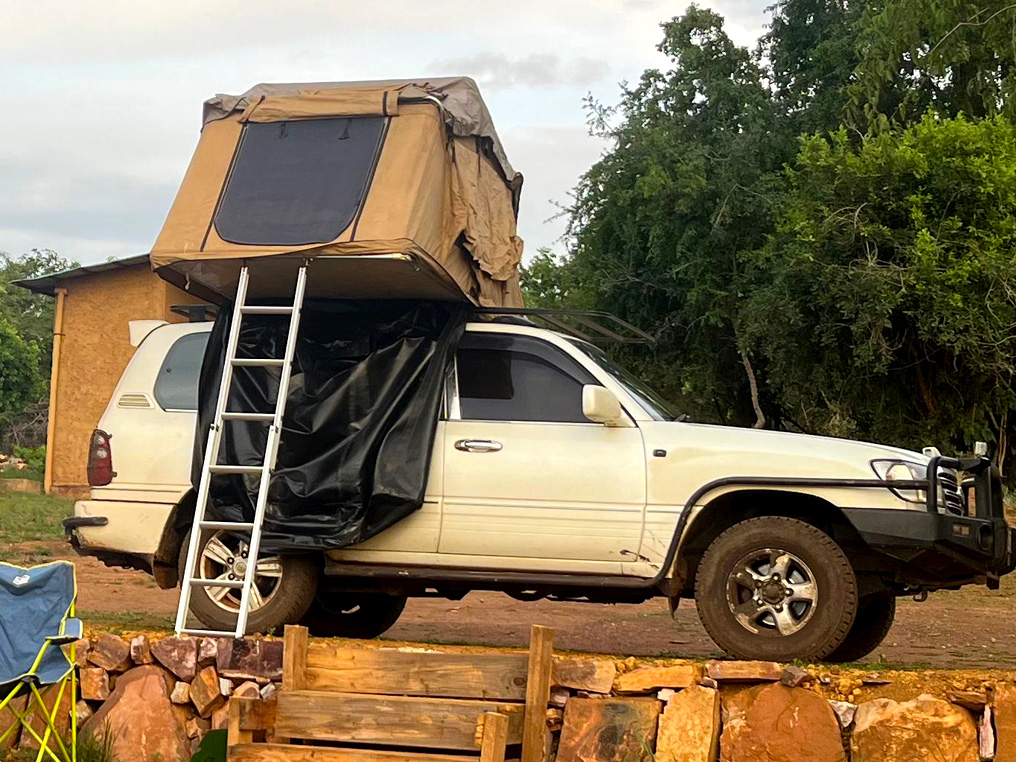
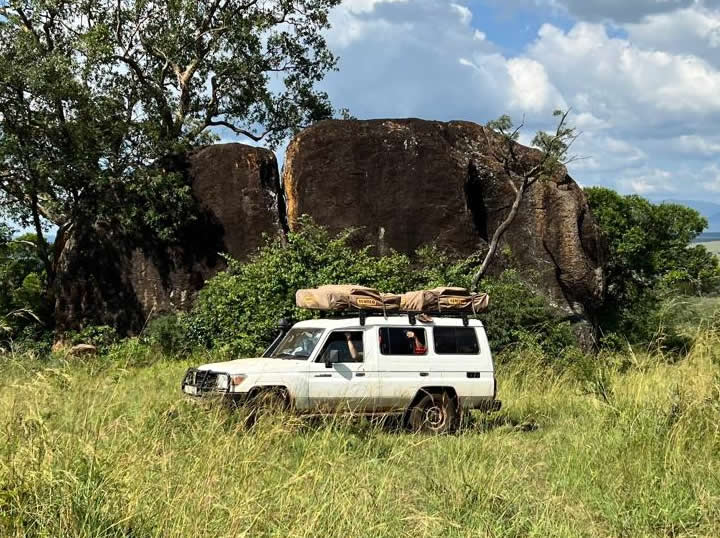
| Toyota Land Cruiser (Rooftop Tent) | Overlanding & camping safaris | US$560 – US$665 | US$770 – US$875 |
| Toyota Rav4 / Extended 4×4 | Bwindi & Kidepo long-distance loops | US$420 – US$490 | US$595 – US$700 |
| Safari Land Cruiser (7-seater, pop-up roof) | Groups of 4–6, full game-drive circuits | US$840 – US$980 | US$1,120 – US$1,260 |
| Minivan (Toyota Noah / Super Custom) | Groups on tarmac-heavy itineraries | US$350 – US$420 | US$525 – US$595 |
What’s Typically Included in a Weekly Rate
- Unlimited or high-cap mileage (commonly 1,400–2,000 km per week before excess charges apply)
- Third-party liability insurance and Collision Damage Waiver (CDW)
- 24/7 roadside breakdown assistance and a spare tyre, jack, and toolkit
- Airport pickup and drop-off at Entebbe International Airport
- A pre-departure vehicle briefing covering 4×4 low-range use and river-crossing technique
- Rooftop tent, bedding, and camping gear on overlanding-spec Land Cruisers (where selected)
Not typically included: fuel, park entrance fees, a second driver fee, cross-border permits (for trips into Rwanda or Kenya), and excess mileage beyond the weekly cap.
Requirements for Self-Drive Car Rental in Uganda
Documents You’ll Need
- A valid driving license held for at least 1–2 years (an International Driving Permit is recommended alongside your national license)
- A valid passport with at least 6 months’ validity
- A refundable security deposit, usually US$300–US$1,000 depending on vehicle class, held on a credit card
- Minimum age of 23–25 years, depending on the rental company and vehicle class
Road Rules & Practical Notes
- Uganda drives on the left-hand side of the road
- Speed limits are generally 50 km/h in towns and 80–100 km/h on highways
- Many national park roads require 4×4 and high clearance, especially in the rainy seasons (March–May and October–November)
- Police checkpoints are common on major routes; carry your rental agreement and license at all times
- Night driving outside towns is discouraged due to poor road lighting and wildlife crossings near park boundaries
Best 7-Day Self-Drive Routes to Plan Around a Weekly Rental
1. Kampala/Entebbe – Murchison Falls – Kibale – Queen Elizabeth (7 Days)
A classic western circuit: two nights at Murchison Falls for a Nile boat cruise and top-of-the-falls hike, a stop in Fort Portal for chimpanzee trekking in Kibale Forest, and two nights in Queen Elizabeth National Park for game drives and a Kazinga Channel boat safari before returning to Kampala.
2. Kampala – Lake Mburo – Bwindi (Gorilla Trekking) – Queen Elizabeth (7 Days)
Ideal for travelers prioritizing gorilla trekking. This route breaks the long drive to Bwindi with an overnight at Lake Mburo National Park, allows a trekking day (and buffer day) in Bwindi, and loops back through Queen Elizabeth for savanna game viewing.
3. Kampala – Kidepo Valley National Park (7 Days)
A more remote, adventurous route best suited to a rooftop-tent-equipped Land Cruiser. The drive north to Karamoja takes a full day each way, leaving 4–5 days to explore Kidepo’s rugged, wildlife-rich landscape with far fewer vehicles than the southern circuits.
| PLANNING TIP
• Book vehicles with rooftop tents at least 3–4 weeks ahead in peak season (June–September, December–February) • Add one buffer day per week for unpaved sections, especially in the rainy seasons • Confirm whether your quoted weekly rate includes cross-park transit distance, not just park-to-park straight lines |
Weekly vs Daily vs Monthly: Which Rental Term Makes Sense?
| Rental Term | Typical Discount | Best For |
| Daily (1–3 days) | Baseline rate, no discount | Short Kampala/Entebbe trips, quick business travel |
| Weekly (7 days) | 15% – 30% off daily rate | Single or double park safaris, gorilla trekking trips |
| Monthly (28+ days) | 30% – 45% off daily rate | Long-term expatriates, extended overland trips, researchers |
Tips for Getting the Best Weekly Rate
- Book directly with established local operators rather than international brokers to avoid markup fees
- Ask whether the weekly rate is calculated on a 6-night/7-day or full 7-night/8-day basis — this varies by company
- Bundle a rooftop tent and camping gear into the weekly rate rather than renting separately
- Confirm fuel policy: most Uganda rentals use a “full-to-full” policy, so return the vehicle with a full tank to avoid inflated refueling charges
- Cross-check whether park entrance fees and community/conservation fees are quoted separately, as these add up over a week-long circuit
Frequently Asked Questions
Is a 4×4 necessary for a weekly rental in Uganda?
For any itinerary that includes national parks — Murchison Falls, Queen Elizabeth, Bwindi, or Kidepo — yes. Park tracks are unpaved, often rutted, and can become impassable to two-wheel-drive vehicles after rain. A RAV4 or Land Cruiser with 4×4 capability is strongly recommended over sedans or standard minivans.
Can I drive a rental car across the border into Rwanda or Kenya?
Some companies allow cross-border travel with advance notice and an additional cross-border permit fee, typically US$50–US$150 depending on the destination country. Always confirm this in writing before booking if your itinerary includes gorilla trekking in Rwanda’s Volcanoes National Park or an extension into Kenya.
How much does fuel cost for a weekly self-drive circuit?
Fuel is not included in rental rates. A 7-day circuit covering 1,200–1,600 km typically costs US$150–US$250 in fuel for a 4×4, depending on current pump prices and terrain (fuel consumption rises on unpaved park roads and in low-range 4×4 sections).
Do I need a driver, or can I self-drive the whole week?
Self-driving is legal and common for confident drivers comfortable with left-hand traffic and unpaved roads. First-time visitors to East Africa, or those short on time, often prefer a driver-guide, which adds a daily guiding fee but removes navigation stress and adds local wildlife and cultural knowledge.