
Why a Self-Drive Safari Is the Best Way to Explore Uganda
A complete guide to freedom, flexibility, and unforgettable wildlife encounters behind the wheel of your own 4×4
Uganda has earned its nickname, the “Pearl of Africa,” for good reason. Within a single, compact country you can track mountain gorillas through misty rainforest, watch tree-climbing lions in Queen Elizabeth National Park, cruise the Nile below Murchison Falls, and fall asleep to the sound of hippos grazing outside your tent. Increasingly, travelers are discovering that the best way to experience this astonishing variety is not from the back seat of a group minibus, but from behind the wheel of their own 4×4. A self-drive safari puts you in complete control of your Uganda adventure, and once you understand the benefits, it is easy to see why more independent travelers are choosing to self-drive every year.
What Makes Uganda Perfect for a Self-Drive Safari
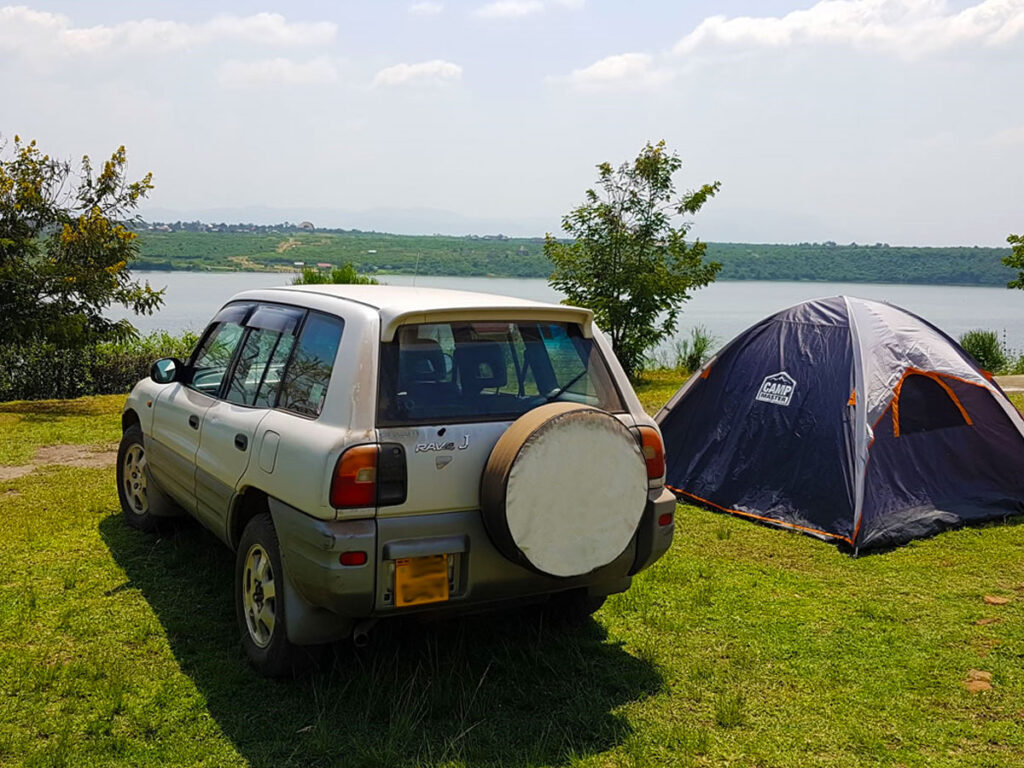
Unlike some larger African safari destinations, Uganda is remarkably compact and its national parks are linked by a growing network of well-signposted roads. Distances between major parks are manageable, park entry procedures are straightforward for self-drivers, and English is the official language, which makes navigating checkpoints, fuel stations, and ranger stations simple even for first-time visitors. Add to that friendly locals, reliable 4×4 rental companies in Kampala and Entebbe, and wildlife-dense parks that reward slow, unhurried exploration, and you have a country tailor-made for the independent road-tripper.
Top Benefits of Self-Driving in Uganda
Total Freedom and Flexibility
When you self-drive, your itinerary bends to your interests, not a fixed group schedule. Spotted a family of elephants crossing the track ahead? Stop for twenty minutes and watch. Want to leave the lodge before sunrise to catch the best game-viewing light in Queen Elizabeth National Park? You can. There is no guide waiting on other guests, no fixed departure time, and no group vote on whether to linger at a waterhole. This flexibility is, for most travelers, the single biggest reason to choose a self-drive safari over a guided group tour.
Significant Cost Savings
Guided safaris bundle vehicle hire, a driver-guide’s daily fee, fuel, and often a premium for exclusivity into one price. Renting a 4×4 and self-driving strips out the guide fee and lets you control your own fuel and food budget. For couples, families, or small groups of friends splitting the cost of one vehicle, self-driving Uganda can be considerably cheaper than booking an equivalent guided package, particularly over a longer two- or three-week itinerary.
A Deeper, More Immersive Experience
There is something different about navigating Uganda’s dirt tracks yourself, reading the landscape, deciding when to slow down for a pothole or speed up past a herd of buffalo. Self-driving forces a level of engagement with the country that a guided minibus simply does not offer. You stop in small trading centers, chat with local mechanics and fruit sellers, and experience Uganda as a traveler rather than as a passenger being shown a destination.
Privacy for Couples, Families, and Small Groups
A self-drive vehicle is yours alone. Families traveling with children can nap, snack, and take breaks on their own schedule. Couples on a honeymoon safari get uninterrupted time together. Photographers can wait as long as they like for the perfect shot without other passengers growing restless. This privacy is difficult to replicate on a shared group tour.
Better Wildlife Photography Opportunities
Photographers in particular gravitate toward self-drive safaris because they can position the vehicle exactly where the light and angle are best, and stay as long as necessary without pressure from other travelers or a guide keen to move on to the next sighting. Rooftop tent vehicles and pop-up roof 4x4s, both widely available for rent in Uganda, add an elevated shooting platform that further improves game photography.

| Traveler Tip
Book your 4×4 rental at least four to six weeks in advance during Uganda’s peak season (June to September and December to February) when demand for rooftop tent Land Cruisers and RAV4s is highest. |
Choosing the Right Vehicle for a Uganda Self-Drive Safari
Vehicle choice matters more in Uganda than in many other safari destinations because road conditions vary widely, from smooth tarmac connecting major towns to deeply rutted murram tracks inside the parks, especially during the rainy season. A 4×4 with high ground clearance is essential for most park circuits, and a diesel engine is generally preferred for its torque on muddy inclines.
- Toyota RAV4: a fuel-efficient, easy-to-drive compact 4×4, ideal for couples and first-time self-drivers sticking to well-maintained park roads.
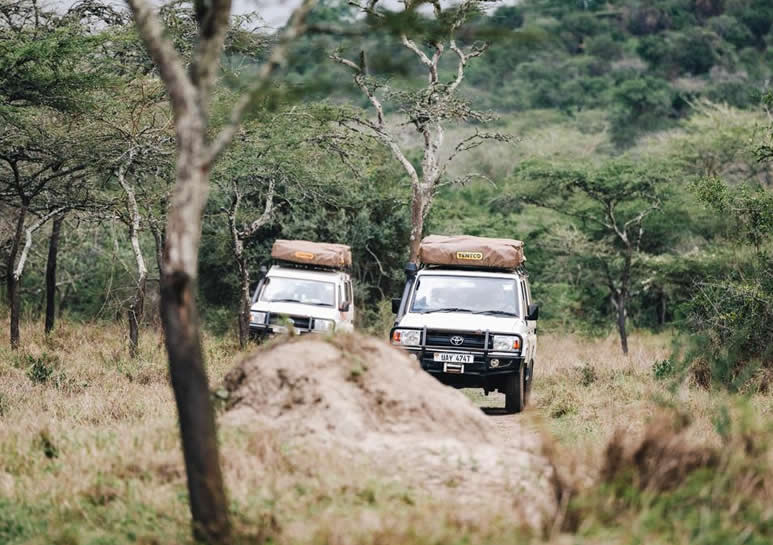
- Toyota Land Cruiser (with pop-up roof): the gold standard for serious game viewing, offering superior clearance, reliability, and an elevated roof hatch for photography.
- Toyota Hilux with rooftop tent: popular with overlanders and budget-conscious travelers who want to camp inside the parks rather than book lodges each night.
- Toyota Land Cruiser or Hilux double-cab: the best choice for larger families or groups of three to four needing extra luggage space for extended itineraries.
Top Destinations for a Uganda Self-Drive Safari
Uganda’s national parks each offer a distinct self-drive experience, from primate trekking in the southwest to boat cruises and big game viewing along the Nile in the north. The table below summarizes the country’s must-visit self-drive destinations.
| Destination | Highlights | Distance from Kampala | Best For |
| Murchison Falls NP | Nile boat cruise, tree-climbing lions, powerful waterfall | ~6 hrs | First-time visitors, big game |
| Queen Elizabeth NP | Tree-climbing lions, Kazinga Channel, crater lakes | ~5-6 hrs | Diverse wildlife, scenery |
| Bwindi Impenetrable NP | Mountain gorilla trekking, rainforest birding | ~8-9 hrs | Gorilla trekking, hiking |
| Kibale Forest NP | Chimpanzee tracking, primate diversity | ~5 hrs | Primate lovers |
| Lake Mburo NP | Zebra, impala, boat safaris, closest park to Kampala | ~3 hrs | Short weekend trips |
Sample 10-Day Uganda Self-Drive Safari Itinerary
Days 1-2: Kampala / Entebbe to Lake Mburo National Park
Collect your 4×4 in Kampala or Entebbe and drive southwest to Lake Mburo, Uganda’s most accessible savannah park, for an easy first day behind the wheel and a boat safari on the lake.
Days 3-5: Bwindi Impenetrable National Park
Continue to Bwindi for mountain gorilla trekking, with a buffer day for the trek itself and time to explore the surrounding Batwa cultural trails.
Days 6-7: Queen Elizabeth National Park
Drive north through the scenic Ishasha sector, famous for tree-climbing lions, before continuing to the main Mweya area for a Kazinga Channel boat cruise.
Days 8-9: Kibale Forest National Park
Head to Kibale for chimpanzee tracking in the morning, one of the best primate experiences in East Africa.
Day 10: Return to Kampala
Drive back to Kampala or Entebbe to return your vehicle, with time to stop at roadside markets along the way.
Road Conditions and Driving Tips
Uganda’s main highways connecting Kampala to regional towns are generally well-paved, but roads inside national parks are unpaved murram tracks that can become slippery and rutted during the rainy seasons (March to May and October to November). Drivers should be comfortable with manual transmission and basic 4×4 low-range operation before setting off.
| Safety First
Always carry a spare tire, jack, and basic toolkit, and confirm your rental company provides 24-hour roadside assistance. Avoid driving after dark outside towns; wildlife, cyclists, and poor lighting make night driving on rural roads risky. Carry printed park maps or download offline GPS maps, since mobile signal disappears inside most parks. Keep a safe distance from wildlife at all times and never exit the vehicle in the presence of elephants, buffalo, or big cats. |
Self-Drive vs. Guided Safari: How Do They Compare?
| Factor | Self-Drive Safari | Guided Group Safari |
| Flexibility | Full control of route and pace | Fixed itinerary and schedule |
| Cost (per person, small group) | Generally lower | Generally higher |
| Privacy | Vehicle is yours alone | Shared with other travelers |
| Local expertise | Self-guided; ranger guides inside parks | Driver-guide throughout |
| Best suited to | Confident, independent travelers | First-time Africa visitors wanting ease |
What Does a Uganda Self-Drive Safari Cost?
Costs vary by vehicle type, rental duration, and season, but as a general guide, a mid-range 4×4 such as a Toyota RAV4 typically rents for $60 to $90 per day, while a Land Cruiser with rooftop tent and full camping equipment ranges from $100 to $180 per day. Add park entry fees (roughly $40 to $45 per person per day for foreign non-residents), fuel, accommodation or camping fees, and activity costs such as gorilla trekking permits, which are priced separately and should be booked well in advance.
Practical Tips for a Successful Self-Drive Safari in Uganda
- Book gorilla and chimpanzee trekking permits several months ahead, as availability is limited.
- Carry sufficient Ugandan shillings in cash for park fees, fuel in rural areas, and small roadside purchases.
- Fill up your fuel tank whenever you pass a station in or near a park; stations can be scarce further along the route.
- Respect posted speed limits inside parks, both for safety and to avoid collisions with wildlife.
- Arrange comprehensive insurance and confirm your rental agreement clearly states off-road and park-track coverage
Final Thoughts
A self-drive safari transforms a trip to Uganda from a scheduled tour into a genuine adventure. The freedom to choose your own pace, the cost savings over a fully guided package, and the deep sense of connection that comes from navigating the country yourself all make self-driving one of the most rewarding ways to experience Uganda’s parks, primates, and people. With the right 4×4, a little preparation, and a sense of adventure, a Uganda self-drive safari is well within reach for independent travelers of almost any experience level.