Can You Drive a Left-Hand Car in Uganda?
| Quick Answer
No — not legally, and not practically. Uganda drives on the left, uses right-hand drive (RHD) vehicles as the road norm, and will not register a left-hand drive (LHD) car for use on public roads unless it has first been converted to right-hand drive. If you’re planning a self-drive safari in Uganda, rent or bring an RHD vehicle. Save the LHD car for Rwanda, DR Congo, or Burundi, which all drive on the right. |

Why Uganda Drives on the Left
Uganda’s rules of the road trace back to British colonial administration, which left the country — like Kenya, Tanzania, Rwanda-before-1976, South Africa, and the UK itself — driving on the left-hand side of the road. Because traffic keeps left, the practical and legal standard is a right-hand drive vehicle, where the driver sits on the side closer to the centreline and has a clear view down the oncoming lane for overtaking.
This matters more than it might seem for anyone planning to self-drive. The vehicle’s steering position and the direction of traffic are meant to work together. A right-hand drive car on a left-keeping road puts the driver on the correct side to judge oncoming traffic, overtake safely, and read the road. Mismatch the two — an LHD car on a left-driving road — and the driver’s view of the oncoming lane is blocked by the vehicle itself, exactly where visibility matters most.
Is It Actually Legal to Drive an LHD Car in Uganda?
In practice, no. Uganda’s traffic regulations require vehicles on public roads to have the steering wheel on the right-hand side. Left-hand drive vehicles are not permitted to be registered for road use unless they have undergone a full conversion, moving the steering column, pedals, and dashboard to the opposite side of the vehicle.
This is a registration and roadworthiness rule enforced through the Uganda Revenue Authority (URA) and traffic police, not merely a suggestion. Without a valid Ugandan number plate and matching registration documents that reflect a right-hand steering configuration, a vehicle cannot legally be driven on Ugandan public roads — and traffic checkpoints are common on both highway corridors and routes leading into national parks.

| Good to Know
The rule targets the vehicle’s steering configuration once it is on Ugandan roads — not simply where the car was manufactured or purchased. Many LHD vehicles sold across East Africa originate from continental Europe or the Middle East; whether a specific car is road-legal in Uganda depends entirely on whether it has been converted, not on its country of origin. |
Importing an LHD Vehicle Into Uganda
Uganda’s vehicle import regulations are relatively liberal on paper: both right-hand drive and left-hand drive vehicles are permitted to be imported, provided the car is no more than 15 years old from its year of manufacture and clears the standard pre-shipment inspection process required by URA. Importing an LHD vehicle is therefore not blocked at the border.
The catch comes at the registration stage. An imported LHD vehicle can clear customs and pay duty, but it cannot be issued a Ugandan number plate for road use in its original left-hand configuration. The owner has two realistic options:
- Convert the steering to right-hand drive through a licensed garage before registering the vehicle — a labour-intensive job involving the steering column, pedal box, dashboard, and wiring harness, and one that specialists generally advise against for anything beyond a straightforward economy vehicle.
- Keep the vehicle unregistered for Ugandan roads and use it only in a country where left-hand drive is the norm, such as Rwanda or DR Congo, if it will be operated across the border.
For anyone shipping in a personal vehicle for a long safari trip or relocation, it is far simpler — and considerably cheaper — to source a right-hand drive vehicle from the start, either through a local dealer or one of Uganda’s established self-drive rental fleets.
Self-Drive Safaris: Why This Matters for Visitors
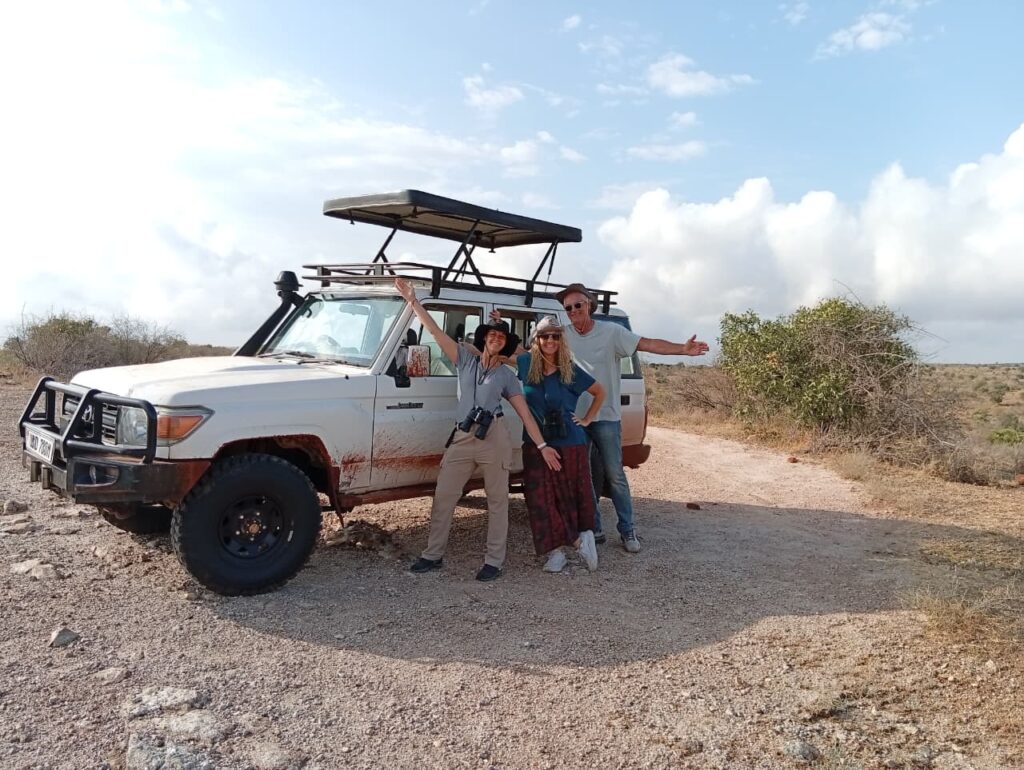
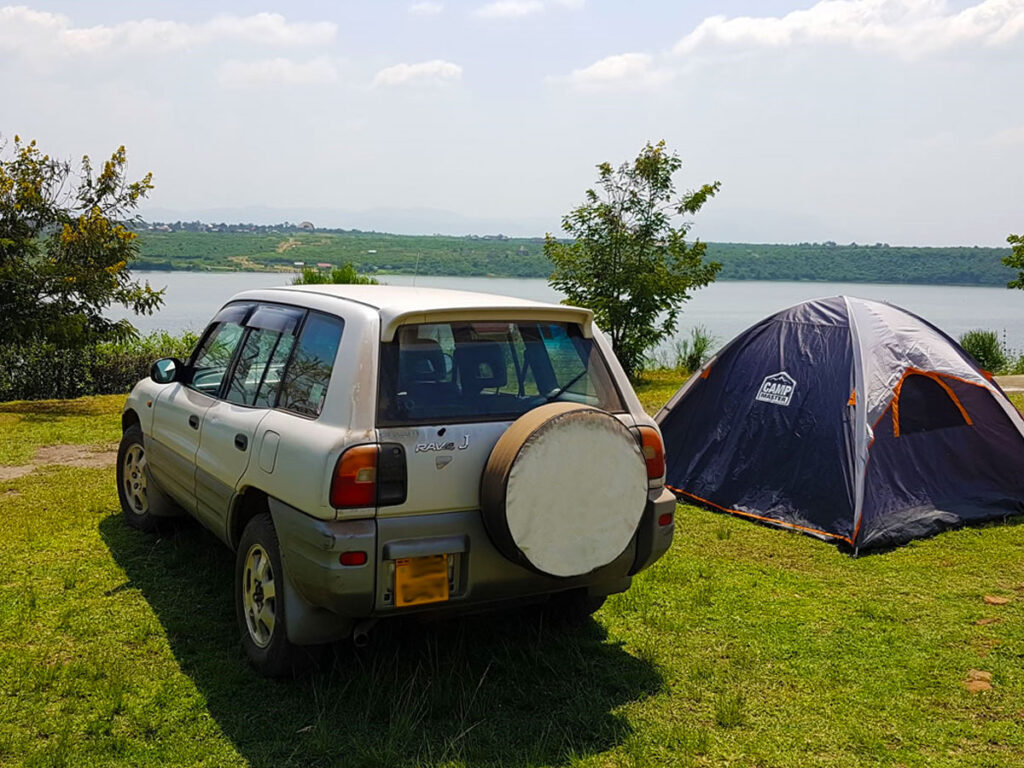
Most travellers researching this question aren’t importing a car — they’re planning a self-drive safari and want to know what to expect when they land. The reassuring answer is that this is a non-issue for the vast majority of visitors: every reputable Uganda self-drive rental company supplies right-hand drive vehicles as standard, from compact Toyota Vitz hatchbacks for budget road trips to 4×4 Land Cruisers and RAV4s fitted out for national park routes.
If you’re arriving from a right-hand traffic country — the UK, Kenya, Tanzania, Japan, Australia, South Africa — the vehicle will already feel familiar, even if the side of the road takes a day or two to get used to. If you’re arriving from a left-hand-drive, right-traffic country such as the United States, most of continental Europe, or DR Congo, expect two adjustments at once: steering position and direction of travel. Both settle with a short, deliberate adaptation period, ideally on quieter roads before tackling Kampala traffic or narrow national park tracks.
RHD vs LHD in Uganda: Side-by-Side
| Feature | Right-Hand Drive (RHD) | Left-Hand Drive (LHD) |
| Legal to drive in Uganda | Yes — standard and unrestricted | Only if converted to RHD before registration |
| Legal to register in Uganda | Yes, no restriction | No, unless the steering has been converted |
| Availability in rental fleets | Standard — nearly all rental cars | Essentially none offered to tourists |
| Overtaking visibility | Good — driver sits on the outer/verge side | Poor — driver sits on the centreline side, blind to oncoming traffic |
| Import allowed into Uganda | Yes | Yes, but must be converted before it can be plated and driven |
| Best used for | Any self-drive trip in Uganda | Cross-border trips into Rwanda, DRC, or Burundi (which drive on the right) |
Crossing Into Neighboring Countries
East Africa is a genuine patchwork when it comes to steering rules, and this catches out travellers doing multi-country self-drive itineraries. Uganda, Kenya, and Tanzania all drive on the left with RHD vehicles. Rwanda, Burundi, and DR Congo drive on the right, and LHD vehicles are the norm there.
This means a rental car sourced in Uganda for a Uganda-only itinerary is the correct choice for Uganda but the wrong-side vehicle for a self-drive extension into Rwanda or DR Congo, and vice versa. Travellers planning a cross-border loop — Kampala to Kigali, for example, or a gorilla trekking circuit spanning both countries — should confirm with their rental company whether the specific vehicle and its insurance are cleared for cross-border use, and budget extra care for the steering-side switch at the frontier.
Practical Tips for Driving in Uganda
- Rent right-hand drive by default. Confirm with your rental company in writing that the vehicle is RHD and properly registered for Ugandan roads — this should never be in question with an established operator, but it costs nothing to verify.
- Carry a valid International Driving Permit (IDP) alongside your home licence; it is valid for up to 90 days from entry, after which a Ugandan licence is required.
- Keep left, always. At unmarked junctions, traffic from the right typically has the right of way, though this is not always strictly observed — drive defensively.
- Budget extra adjustment time if you’re used to right-hand traffic and left-hand-drive cars — the mental switch takes longer than most visitors expect, especially when overtaking trucks on narrow highways.
- Expect mixed road conditions. Major routes between Kampala, Mbarara, Gulu, and Jinja are well maintained; rural and national park roads often demand a 4×4, particularly in the March–May and October–November rains.
- Carry your documents at all times. Police checkpoints are frequent on highways and near park entrances; driving without a valid licence, IDP, insurance, or registration can result in on-the-spot fines.
Frequently Asked Questions
Can tourists bring their own LHD car into Uganda for a self-drive holiday?
You can import it, but you cannot legally register and drive it on Ugandan public roads without converting it to right-hand drive first. For a short holiday, renting a locally registered RHD vehicle is by far the simpler and cheaper route.
Do rental companies in Uganda ever offer left-hand drive cars?
No. Established Uganda self-drive and safari rental fleets operate exclusively right-hand drive vehicles, since that is the only configuration that can be legally registered and insured for use on Ugandan roads.
How much does it cost to convert an LHD car to RHD in Uganda?
Costs vary widely depending on the vehicle model, complexity of the conversion, and the garage’s expertise, and can run into the millions of Ugandan shillings for a proper job. Specialists generally recommend it only for simpler, older vehicles, and advise against it for cars with complex electronics or safety systems, where a factory-built RHD equivalent is usually the safer and more cost-effective choice.
Is Rwanda a better fit if I already own a left-hand drive vehicle?
Yes. Rwanda, along with DR Congo and Burundi, drives on the right and uses left-hand drive vehicles as standard, so an LHD car is road-appropriate there without any conversion.
What happens if I’m caught driving an unconverted LHD car in Uganda?
An LHD vehicle without valid Ugandan registration matching its steering configuration is not road-legal, and driving it can expose you to fines, vehicle impoundment, and complications with insurance in the event of an accident. It is not a risk worth taking on a safari trip.
| Planning a Self-Drive Safari in Uganda?
Book a right-hand drive vehicle suited to your route — from a compact Vitz for Kampala and tarmac routes to a 4×4 Land Cruiser or RAV4 for Murchison Falls, Queen Elizabeth, or Bwindi. A properly registered RHD rental keeps you legal, insured, and comfortable on Ugandan roads from day one. |