
What Is the Best Way to Book a Rental Car in Uganda?
What Is the Best Way to Book a Rental Car in Uganda?, A practical, step-by-step guide to booking the right vehicle, avoiding hidden fees, and getting on the road with confidence — whether you’re headed to Bwindi, Murchison Falls, or Queen Elizabeth National Park.
What Is the Best Way to Book a Rental Car in Uganda? Uganda’s national parks, gorilla trekking trailheads, and crater lakes are made for road trips — but the single decision that shapes your entire trip is how you book your rental car. Book well, and you get a reliable 4×4, transparent pricing, and a company that answers the phone when you’re stuck at a park gate. Book poorly, and you risk hidden deposits, an unroadworthy vehicle, or an insurance gap that turns a flat tyre into a financial headache. This guide walks through the entire booking process — from choosing self-drive versus a driver-guide, to documentation, vehicle selection, timing, and the red flags that separate reputable operators from risky ones.

1. First, Decide: Self-Drive or Chauffeur-Driven?
Before comparing companies or prices, settle this question — it determines everything else about your booking, from the vehicle you need to the insurance you should ask for.
| Factor | Self-Drive | Driver-Guide (Chauffeured) |
| Best for | Confident, experienced drivers | First-time visitors, families, business travel |
| Cost | Lower — no daily driver fee | Higher, but includes local expertise |
| Road knowledge | You navigate unmarked rural roads yourself | Driver knows park gates, shortcuts, wildlife spots |
| Left-hand driving | You must adapt — Uganda drives on the left | Not a concern |
| Risk of vehicle damage | You bear it, subject to your insurance excess | Largely the driver’s responsibility |
| Flexibility | Total control over pace and stops | Still flexible, but shared with driver’s input |
If this is your first visit to Uganda, or your itinerary includes remote stretches like Kidepo Valley or the Ishasha sector, a driver-guide is usually the safer, less stressful choice. If you’ve driven in East Africa before and want full independence, self-drive with a well-maintained 4×4 is entirely manageable on the main tourist circuits.
2. Confirm You Meet the Documentation Requirements
Uganda’s rental companies are fairly consistent on paperwork, but requirements do vary slightly by operator and vehicle class. Sort these out before you book so you’re not caught out at pickup.
| What You’ll Typically Need
A valid driver’s licence held for at least 2 years (some companies require a minimum of 1 year). An International Driving Permit (IDP) alongside your home licence — required by most reputable companies for self-drive. A passport or national ID for identification. Minimum age of 20–23 years, depending on the vehicle category (4x4s and larger SUVs often set the higher threshold). A credit card or cash deposit to secure the booking — typically refundable if the car is returned undamaged. |
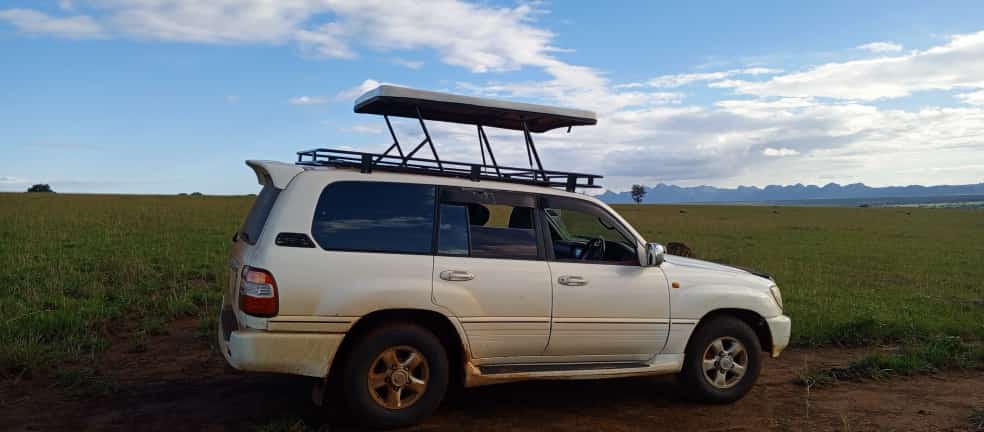
Ask your rental company to confirm requirements in writing before you travel, particularly if you’re arriving with a licence from a country whose format Ugandan traffic police may not immediately recognize. Carrying both your national licence and an IDP removes any ambiguity at checkpoints.
3. Choose the Right Vehicle for Your Route
The best vehicle depends entirely on where you’re going. Kampala’s tarmac roads are forgiving, but the murram tracks inside national parks are not.
| Itinerary Type | Recommended Vehicle | Why |
| City stays & short tarmac trips | Sedan or compact SUV (e.g. Toyota Vitz) | Fuel-efficient and easy to park in Kampala or Entebbe |
| Savannah parks (Queen Elizabeth, Kidepo) | 4×4 SUV (RAV4, Land Cruiser Prado) | Handles murram roads and dry-season dust with ease |
| Gorilla trekking & Bwindi/Mgahinga routes | 4×4 with high clearance (Land Cruiser, Land Rover) | Steep, often muddy mountain roads demand real off-road ability |
| Multi-week overland safaris | 4×4 with rooftop tent | Combines transport and accommodation for remote stretches |
| Larger families or groups | Land Cruiser (extended) or minivan | More seats, more luggage space, added comfort on long drives |
If your trip mixes both city time and park visits — which most itineraries do — renting one capable 4×4 for the whole trip is usually simpler and cheaper than swapping vehicles midway. Ask specifically whether the vehicle has done recent park-terrain trips, not just city driving; a car that looks clean in photos isn’t always road-tested for murram.
4. Time Your Booking Strategically
When you book affects both price and vehicle availability, especially around gorilla trekking permits and peak dry seasons (June–September and December–February).
- Book 4–6 weeks ahead for peak season travel, especially if your dates align with gorilla trekking permits.
- Reserving further in advance, or during shoulder months, often unlocks better rates and a wider choice of vehicles.
- Avoid booking your rental for pickup directly at the airport if you can help it — airport collection frequently carries a surcharge; a short taxi ride to a company office can offset the extra cost.
- If your trip depends on a specific vehicle type (e.g. a rooftop-tent 4×4), book earlier still — specialty vehicles have smaller fleets and sell out first.
5. Follow a Clear Booking Process
Once you’ve chosen self-drive or driver-guide and settled on a vehicle class, the booking itself should follow a predictable sequence:
- Shortlist 2–3 companies. Compare fleet photos, reviews, and whether pricing is quoted transparently (all-inclusive vs. add-ons).
- Request a written quote. It should state the daily rate, mileage policy, insurance excess, deposit amount, and what’s excluded (fuel, park fees, additional drivers).
- Confirm documentation requirements. Ask the company directly rather than relying on a generic website FAQ, since age and licence rules can vary by vehicle.
- Reserve and pay the deposit. Most companies require a partial deposit or the full amount to lock in your dates, with the remainder due on pickup or after the trip.
- Get written confirmation. Your booking confirmation should include the exact vehicle, pickup location, dates, and a direct contact number for roadside support.
- Inspect the vehicle at pickup. Photograph existing scratches, check tyres (including the spare), jack, and fluid levels before you sign the handover form.
- Return on schedule with the agreed fuel level. Late returns or a fuel shortfall are among the most common sources of unexpected charges.
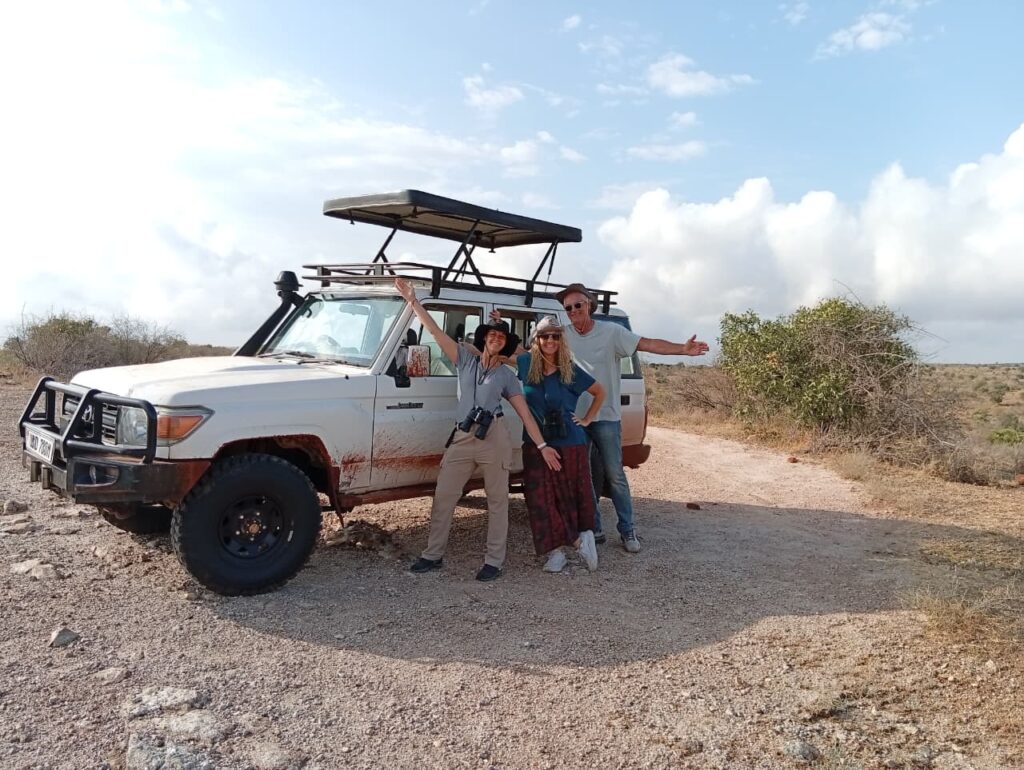
6. Understand Costs, Deposits & Insurance Before You Sign
Uganda rental pricing is usually straightforward, but the details that matter most are often in the fine print rather than the headline daily rate.
| Costs to Clarify Up Front
Insurance excess: typically USD 300–1,000 depending on vehicle class — confirm this before booking, not at pickup. Fuel policy: most rentals use a full-to-full policy; you pay for fuel used and return the tank full. Mileage: get unlimited mileage confirmed in writing if your itinerary covers long distances. Exclusions: standard insurance rarely covers off-road damage, tyre or windscreen chips, or violations of the rental agreement. Security deposit: often refundable, held on a credit card or in cash, and returned after a post-trip inspection. |
If a quoted daily rate looks unusually low compared to other companies, check what it excludes. The cheapest headline price sometimes hides a high insurance excess or a mandatory add-on that closes the gap once the full agreement is reviewed.
7. Vet the Company Before You Commit
| Red Flags Worth Taking Seriously
No physical office address or verifiable local phone number. Reluctance to put the quote, insurance terms, or deposit policy in writing. Vehicle photos that look generic, stock, or inconsistent across listings. Pressure to pay the full amount immediately via untraceable methods before any written agreement. No emergency or roadside-assistance contact provided for the duration of your rental. |
A short call or WhatsApp exchange before booking tells you a lot: reputable Uganda rental companies respond promptly, answer documentation questions directly, and are willing to send photos of the specific vehicle you’ll be driving — not just a stock catalogue image.
8. Final Tips for a Smooth Uganda Road Trip
- Carry printed and digital copies of your licence, IDP, passport, and booking confirmation.
- Download offline maps before departure — signal drops in many park areas.
- Save your rental company’s emergency number in your phone before you leave the pickup point.
- Budget separately for fuel and park entrance fees, as these are almost always excluded from the rental quote.
- Check the spare tyre and toolkit at handover — punctures are common on murram roads and you’ll want to be prepared.
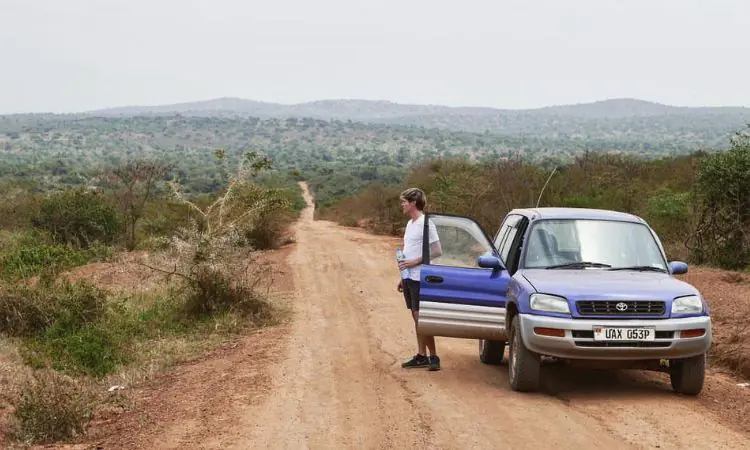
Frequently Asked Questions
Is it better to self-drive or hire a driver-guide in Uganda? Self-drive offers more freedom and lower cost, but suits confident drivers comfortable with left-hand driving and rough roads. First-time visitors, families, and those short on time generally do better with a driver-guide.
Do I need an International Driving Permit to rent a car in Uganda? Most reputable companies require one alongside your national licence for self-drive rentals, even though it isn’t always a strict legal requirement. Carry both to avoid any issues at checkpoints.
How far in advance should I book a rental car in Uganda? Aim for 4–6 weeks ahead during peak season (June–September and December–February), especially if your trip includes gorilla trekking permits. Off-peak travel allows more flexibility.
What vehicle is best for Uganda’s national parks? A 4×4 SUV with good ground clearance, such as a Toyota RAV4 or Land Cruiser Prado, comfortably handles most park roads. Steeper terrain around Bwindi favours a full-size 4×4 like a Land Cruiser or Land Rover.
Are fuel and park fees included in the rental price? No — these are almost always excluded and should be budgeted separately from the daily rental rate.
The Bottom Line
The best way to book a rental car in Uganda comes down to preparation: decide between self-drive and a driver-guide based on your experience and itinerary, confirm your documentation early, choose a vehicle suited to the roads you’ll actually drive, and get every cost — deposit, insurance excess, mileage, and fuel policy — in writing before you pay. Companies that answer questions clearly, provide real vehicle photos, and offer a working emergency contact are the ones worth booking with. Get these fundamentals right, and your Uganda road trip starts on solid ground, long before you reach your first park gate.