How to Rent a Car for Self-Drive in Uganda
Everything you need to know about requirements, costs, vehicle choice, insurance, road rules, and route planning before you pick up the keys.
How to Rent a Car for Self-Drive in Uganda, Self-drive car rental has become one of the most popular ways to explore Uganda, and it is easy to see why. Instead of following a fixed itinerary set by a tour operator, you choose your own route, set your own pace, and stop wherever the Pearl of Africa catches your eye — a roadside coffee stall, a fishing village on Lake Mburo, or a viewpoint over the Rift Valley escarpment. But renting a car for self-drive in Uganda is not quite the same as renting a car back home. Road conditions, park regulations, insurance rules, and driving on the left all take some getting used to. This guide walks you through the entire process step by step, from the documents you need before you land in Entebbe to the vehicle types best suited to Uganda’s national parks.

Why Choose Self-Drive Over a Guided Tour in Uganda
A guided safari with a driver-guide is still the easiest option for first-time visitors, but self-drive rewards travelers who want full control of their trip. With your own rental car, you decide how long to linger at Murchison Falls, whether to take the scenic route through Fort Portal’s crater lakes, or when to pull over for a herd of elephants crossing the road in Queen Elizabeth National Park. It is also often more affordable for couples or small groups traveling on a flexible schedule, since you are not paying for a driver’s daily rate.
| Who Self-Drive Suits Best
Confident drivers comfortable with manual transmission and 4×4 vehicles. Travelers who have driven on the left-hand side of the road before, or are willing to adjust quickly. Groups planning a flexible, multi-stop itinerary rather than a single fixed destination. Anyone comfortable navigating with GPS and offline maps in areas with inconsistent signage. |
Requirements to Rent a Self-Drive Car in Uganda
Before any rental company hands over the keys, you will need to meet a short list of legal and company-level requirements.
1. Driving License and International Driving Permit (IDP)
Uganda accepts valid foreign driving licenses, but if your license is not printed in English, you must carry an International Driving Permit alongside it. Most rental companies request both a home-country license and an IDP as a precaution, since traffic police at checkpoints may ask for either. The IDP must be arranged in your home country before you travel — it cannot be issued once you are in Uganda — and it is typically valid for around 90 days from your date of entry. Travelers from East African Community countries (Kenya, Tanzania, Rwanda, Burundi, South Sudan, and DRC) can usually drive on their national licenses without an IDP, provided the license is in English or accompanied by a certified translation.
2. Minimum Age and Driving Experience
Most rental agencies in Uganda require drivers to be at least 23 years old and to have held a valid license for a minimum of two years. Some companies apply an upper age limit as well, so it is worth checking directly if you or a member of your group falls outside the typical range.
3. Passport and Deposit
You will need a valid passport for identification, and a refundable security deposit is standard practice across nearly all Uganda rental companies. Deposits are usually held on a credit card or paid in cash and are refunded after the vehicle is returned undamaged. Ask up front what the deposit covers, how it is refunded, and how long the refund typically takes.
4. Rental Agreement and Vehicle Documents
Once your paperwork is approved, the rental company will provide the documents you must carry in the vehicle at all times:
- Vehicle registration certificate (a recent copy from the rental company).
- Certificate of vehicle insurance — driving without valid insurance attracts heavy fines.
- The signed rental agreement, which proves you are authorized to operate the vehicle.
- Your driving license and IDP, plus your passport.
| Practical Tip
Keep photocopies of your license, passport, insurance certificate, and rental agreement in a separate bag from the originals. If anything is lost or stolen, copies speed up resolving the issue with police or your rental provider. |
How to Rent a Car for Self-Drive in Uganda: Step-by-Step
- Decide your route and vehicle needs first. A Kampala city trip needs a very different car from a Murchison Falls or Bwindi self-drive safari, so map your itinerary before you request quotes.
- Request quotes from two or three reputable local rental companies rather than booking the first listing you see. Compare what is included — mileage limits, insurance level, and 24-hour breakdown support — not just the daily rate.
- Confirm cross-border terms early if your route crosses into Kenya, Tanzania, or Rwanda. You will need specific permission, additional insurance, and a signed letter of authorization from the rental company.
- Send your documents in advance — license, IDP, and passport scan — so the company can confirm eligibility before you arrive, especially if you are landing late at Entebbe International Airport.
- Inspect the vehicle thoroughly at pickup. Photograph existing scratches, check tire tread and the spare, test the 4×4 selector, and confirm the jack, tool kit, and jerry can are present.
- Review the insurance certificate and excess amount before signing. Ask specifically whether coverage applies on unpaved park roads, since some budget agreements narrow coverage once you leave paved highways.
- Sign the rental agreement, pay the deposit, and keep copies of everything before you drive off.

Choosing the Right Rental Vehicle
Vehicle choice is the single biggest factor in how comfortable your self-drive trip will be. Uganda’s national park roads are unpaved, rutted in the rainy season, and occasionally steep, so a standard saloon car or two-wheel-drive vehicle is not a safe choice for safari routes.
| Vehicle Type | Best For | Typical Daily Rate (excl. fuel) |
| Toyota RAV4 (4×4) | Couples and solo travelers on budget-friendly park routes | From US$ 50 |
| Toyota Land Cruiser Prado | Families and small groups needing comfort plus real off-road capability | From US$ 90 |
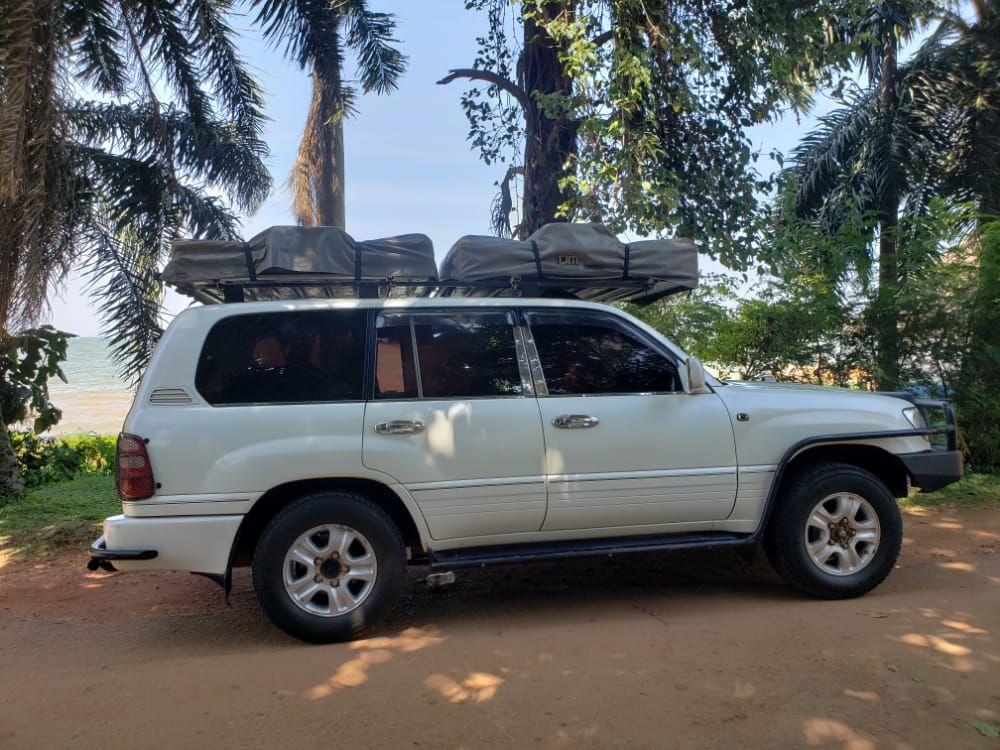
| Land Cruiser (Safari / Pop-Top) | Multi-park safaris with extended game drives and photography stops | From US$ 120 |
| Toyota Hilux (Double Cab, Rooftop Tent) | Camping-style self-drive itineraries and remote routes | From US$ 100 |
| Compact car (e.g. Toyota Vitz) | City driving in Kampala/Entebbe and paved-road-only trips | From US$ 35 |
As a rule of thumb, book a 4×4 with high ground clearance for any itinerary that includes a national park, and reserve compact cars strictly for city and highway travel.
What a Self-Drive Rental Actually Costs
Daily rental rates depend on vehicle type, rental duration, and season, and longer rentals typically bring the average daily rate down. Most quotes exclude fuel, which you budget separately, and fuel prices fluctuate but generally sit in the range of UGX 6,000–6,800 per litre. Beyond the base rate, plan for the following additional costs.
| Cost Item | What to Expect |
| Fuel | Budgeted separately from the rental rate; prices vary by region and season. |
| Security deposit | Refundable; held on card or paid in cash, released after a damage-free return. |
| Comprehensive insurance | Often optional upgrade; confirm whether it covers unpaved park roads. |
| Cross-border permit fee | Applies only if driving into Kenya, Tanzania, or Rwanda. |
| National park vehicle entry fees | Charged per vehicle at park gates, separate from your rental fee. |
| Late return / extra mileage | Check the daily mileage cap before you book a long multi-park route. |
Insurance: The Detail Most Travelers Overlook
Confirm the scope of your insurance in writing rather than assuming it is comprehensive. Some budget rental agreements limit coverage once a vehicle leaves paved highways — exactly where a Uganda self-drive safari spends most of its time. Ask directly whether the policy covers unpaved park roads, windscreen and tire damage, and what excess (the amount you pay out of pocket per incident) applies before you sign.
| Insurance Checklist Before You Sign
Does coverage extend to unpaved and off-road sections inside national parks? What is the excess amount per claim, and can you reduce it with an upgrade? Is windscreen and tire damage included, or charged separately? Is 24-hour roadside breakdown support included in the package? |
Road Rules and Driving Conditions in Uganda
Driving Side and General Rules
Uganda drives on the left-hand side of the road, the same as the United Kingdom, Kenya, and several neighboring countries. Seatbelts are mandatory for all occupants, and using a handheld phone while driving is prohibited.
Checkpoints and Documentation
Traffic police checkpoints are common on major routes, including the Kampala–Entebbe Expressway and the Kampala–Mbarara highway, as well as approach roads to national parks. Driving without the proper documents on hand can result in on-the-spot fines and, in some cases, the vehicle being held until paperwork is produced — another reason to keep your registration, insurance certificate, and rental agreement within reach at all times.
Daily Driving Distance
Uganda’s roads are slower than they look on a map. A workable rule of thumb is around 250–300 kilometers as a comfortable daily maximum on any route that includes unpaved sections, rising to roughly 400 kilometers on paved highway-only routes. Build buffer time into your itinerary for potholes, boda-boda motorcycle traffic, livestock on the road, and slow-moving trucks.

Night Driving
Avoid driving after dark outside major towns wherever possible. Unlit roads, unmarked speed bumps, pedestrians, and wildlife crossing near park boundaries all make night driving considerably riskier than daytime travel.
Driving a Rental Car Across Borders
Many Uganda rental companies allow cross-border self-drive trips into Kenya, Tanzania, or Rwanda if arranged in advance. You will typically need additional insurance valid in the destination country and a signed letter of authorization from the rental company confirming you are permitted to take the vehicle across the border. Arrange this well ahead of your trip, since not every vehicle in a company’s fleet is cleared for cross-border travel.
Safety Tips for a Smooth Self-Drive Trip
- Stick to main routes and well-used park tracks unless you are traveling with a GPS unit loaded with offline maps.
- Rent from a reputable, established company that offers 24-hour breakdown support.
- Carry extra drinking water, a first-aid kit, and a fully charged power bank on long park routes.
- Check the spare tire, jack, and tool kit at pickup — not after you are stuck on a dirt track.
- Fill up whenever you pass a fuel station in a town; stations can be sparse near remote parks.
- Respect posted speed limits near villages, where pedestrians and children are common along the roadside.
Frequently Asked Questions
Is self-drive safe in Uganda?
Yes, for confident and experienced drivers. Self-drive is considered safe if you stick to main roads, avoid night driving, and rent from a reputable company that offers support services.
Can I drive a rented car from Uganda into Kenya or Rwanda?
Yes, many companies permit this with advance arrangement, additional insurance, and a signed letter of authorization.
Do I need a 4×4 for a Uganda self-drive safari?
Yes. A standard saloon or two-wheel-drive car is not recommended for national park roads, which are frequently unpaved, rutted, and steep in places.
Are both manual and automatic vehicles available?
Yes, most rental fleets in Uganda offer both, though manual 4×4 vehicles are more widely available for safari-spec models.
What happens if I overstay the 90-day IDP validity?
After 90 days from your entry date, you are required to obtain a Ugandan driving license through the Uganda Revenue Authority to continue driving legally.
Final Thoughts
Renting a car for self-drive in Uganda takes a bit more preparation than a typical car rental abroad — an International Driving Permit arranged before you travel, a 4×4 suited to park roads, and insurance that actually covers where you plan to drive. Get those three details right, and a self-drive trip through Uganda’s parks, crater lakes, and highland roads becomes one of the most rewarding ways to experience the country on your own terms.