Discover Uganda’s National Parks: The Pearl of Africa’s National Parks
Uganda’s National Parks, Uganda parks an extraordinary range of landscapes and wildlife into a single, compact country. Winston Churchill’s famous description of Uganda as the “Pearl of Africa” still rings true today: within a few hours’ drive you can move from savannah plains alive with lions and elephants to misty mountain forests sheltering half the world’s remaining mountain gorillas, and on to snow-capped equatorial peaks and thundering Nile waterfalls.
Ten national parks, managed by the Uganda Wildlife Authority (UWA), form the backbone of this safari country. Each protects a distinct ecosystem — savannah, tropical rainforest, wetland, or afro-montane forest — giving visitors an unusually varied safari experience without needing to leave a single country. This guide walks through each of Uganda’s national parks in detail, covering what makes it worth visiting, when to go, how to get there, and what it costs, so you can plan an itinerary that matches your time, budget, and interests.

| QUICK FACT
Uganda Wildlife Authority manages 10 national parks, alongside 12 wildlife reserves, 5 community wildlife management areas, and 13 wildlife sanctuaries, covering habitats from lowland savannah to snow-capped mountains. |
Uganda National Parks at a Glance
Use this quick-reference table to compare Uganda’s parks before diving into the full profiles below.
| Park | Region | Signature Draw | Best For |
| Bwindi Impenetrable | South-western Uganda | The Home of the Mountain Gorillas | Gorilla trekking across four sectors: Buhoma, Ruhija, Rushaga, and Nkuringo |
| Queen Elizabeth | Western Uganda, along the Rwenzori foothills | Uganda’s Most Diverse Savannah | Tree-climbing lions in the Ishasha sector |
| Murchison Falls | North-western Uganda, along the Victoria Nile | Uganda’s Largest Wilderness | Boat cruise to the base of the falls, with close-up hippos, crocodiles, and elephants |
| Kibale | Western Uganda, near Fort Portal | The Primate Capital of the World | Chimpanzee tracking and the half-day Chimpanzee Habituation Experience |
| Kidepo Valley | Far north-eastern Uganda, on the Karamoja–South Sudan border | Uganda’s Wild, Remote Frontier | Large predator populations, including lions, cheetahs, and spotted hyenas |
| Lake Mburo | South-western Uganda, en route to Bwindi or Queen Elizabeth | Uganda’s Most Accessible Savannah | Uganda’s largest population of plains zebra, estimated at around 3,000 animals |
| Mgahinga Gorilla | Extreme south-western Uganda, part of the Virunga range | Gorillas and Golden Monkeys Among the Volcanoes | Trekking for the Nyakagezi gorilla family, Uganda’s most stable habituated group |
| Rwenzori Mountains | Western Uganda, on the border with the DRC | Africa’s Legendary ‘Mountains of the Moon’ | Multi-day treks toward Margherita Peak, Africa’s third-highest summit |
| Semuliki | Western Uganda, in the Semuliki Valley near the DRC border | A Slice of Central African Rainforest | Sempaya hot springs, including the boiling ‘male’ geyser |
| Mount Elgon | Eastern Uganda, straddling the border with Kenya | Uganda’s Gentle Giant on the Kenyan Border | Sipi Falls, a dramatic three-tier waterfall at the mountain’s base |
1. Bwindi Impenetrable National Park
The Home of the Mountain Gorillas
Bwindi Impenetrable National Park is a UNESCO World Heritage Site and Uganda’s flagship safari destination, protecting roughly half of the world’s remaining population of endangered mountain gorillas. Draped across steep, mist-cloaked ridges in the Albertine Rift, its ancient forest is one of the most biologically diverse habitats in Africa.
Highlights & Activities
- Gorilla trekking across four sectors: Buhoma, Ruhija, Rushaga, and Nkuringo
- Over 350 bird species, making it a top East African birding destination
- Batwa cultural encounters with the forest’s original inhabitants
- Nature walks to waterfalls and along the Munyaga River trail

| BEST TIME TO VISIT
June to August and December to February (dry seasons, firmer trekking trails) |
| GETTING THERE
8–9 hours by road from Kampala, or a 1-hour scheduled flight to Kihihi or Kisoro airstrips |
| ENTRY FEES & PERMITS
Gorilla trekking permits cost $800 per person (2026 rate; advance booking through UWA or a licensed operator is essential, as daily permits are strictly limited) |
2. Queen Elizabeth National Park
Uganda’s Most Diverse Savannah
Queen Elizabeth National Park is Uganda’s most visited savannah park, spanning craters, lakes, and the Kazinga Channel that links Lake Edward and Lake George. It is famous for the tree-climbing lions of Ishasha and some of the richest biodiversity of any protected area in Africa.
Highlights & Activities
- Tree-climbing lions in the Ishasha sector
- Boat cruise along the Kazinga Channel for hippos, elephants, and birdlife
- Over 600 recorded bird species — one of Africa’s best birding parks
- Chimpanzee tracking in the nearby Kyambura Gorge

| BEST TIME TO VISIT
December to February and June to September (dry seasons for game viewing) |
| GETTING THERE
5–6 hours by road from Kampala, or roughly 1 hour by scheduled flight to Mweya or Kasese airstrip |
| ENTRY FEES & PERMITS
Park entry around $40 per person per day for foreign non-residents; boat cruise and chimp tracking are booked separately |
3. Murchison Falls National Park
Uganda’s Largest Wilderness
Murchison Falls is Uganda’s largest national park, centred on the point where the Nile forces itself through a narrow, seven-metre gorge before thundering 43 metres into the valley below. It combines dramatic scenery with classic Big Five-style savannah game viewing.
Highlights & Activities
- Boat cruise to the base of the falls, with close-up hippos, crocodiles, and elephants
- Hike to the top of the falls for sweeping views of the Nile
- Game drives across the northern savannah for lions, giraffes, and buffalo
- Day trips to Ziwa Rhino Sanctuary to see rhinos in the wild
| BEST TIME TO VISIT
December to February and June to September (dry seasons) |
| GETTING THERE
Around 5 hours by road from Kampala via the new oil-access roads, or a 45-minute flight to Pakuba airstrip |
| ENTRY FEES & PERMITS
Park entry around $45 per person per day; boat cruises and launch trips are booked as separate activities |
4. Kibale National Park
The Primate Capital of the World
Kibale National Park protects one of the last great tracts of tropical rainforest in East Africa and holds the highest concentration and diversity of primates on the continent, including a habituated community of chimpanzees.
Highlights & Activities
- Chimpanzee tracking and the half-day Chimpanzee Habituation Experience
- Thirteen primate species, including L’Hoest’s and red colobus monkeys
- Bigodi Wetland Sanctuary walk for birdlife just outside the park
- Forest walks through dense, cathedral-like rainforest

| BEST TIME TO VISIT
December to February and June to September (drier trails, easier tracking) |
| GETTING THERE
4–5 hours by road from Kampala via Fort Portal, or a scheduled flight to Kasese followed by a short drive |
| ENTRY FEES & PERMITS
Chimpanzee permits cost around $300 per person; the Habituation Experience costs more and requires advance booking |
5. Kidepo Valley National Park
Uganda’s Wild, Remote Frontier
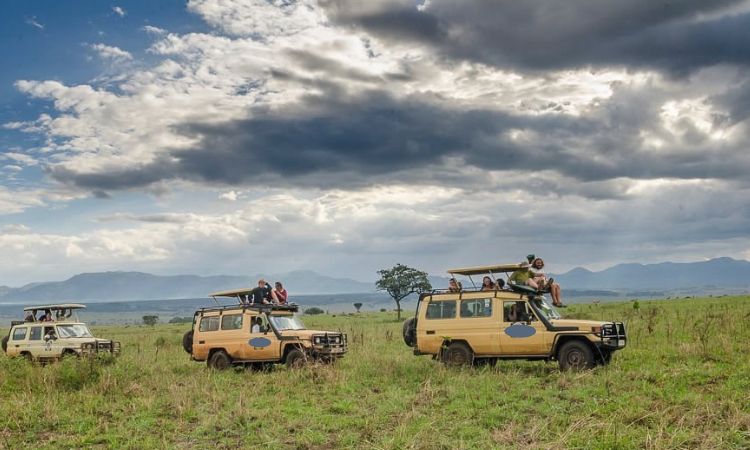
Kidepo Valley is frequently rated among Africa’s most spectacular parks by seasoned safari travellers, precisely because of its remoteness. Rolling savannah framed by rugged mountains hosts wildlife found nowhere else in Uganda, with almost none of the crowds of the southern parks.
Highlights & Activities
- Large predator populations, including lions, cheetahs, and spotted hyenas
- Species unique to Uganda here, such as bat-eared foxes and greater kudu
- Karamojong cultural visits offering a rare glimpse of pastoralist life
- Vast, uncrowded landscapes ideal for photography
| BEST TIME TO VISIT
September to March (dry season; some roads are difficult in heavy rains) |
| GETTING THERE
9–10 hours by road from Kampala, or a 1.5-hour scheduled flight — flying is strongly recommended |
| ENTRY FEES & PERMITS
Park entry around $40 per person per day |
6. Lake Mburo National Park
Uganda’s Most Accessible Savannah
Compact and easily reached from Kampala, Lake Mburo is Uganda’s smallest savannah park and a practical stopover on longer itineraries. It is the best place in the country to see plains zebra and eland, and offers activities not permitted in most other Ugandan parks.
Highlights & Activities
- Uganda’s largest population of plains zebra, estimated at around 3,000 animals
- Horseback safaris and guided walking safaris among plains game
- Boat trips on Lake Mburo for hippos, crocodiles, and water birds
- Night game drives for a chance at leopard and other nocturnal species

| BEST TIME TO VISIT
Year-round; June to September and December to February are driest |
| GETTING THERE
Around 4 hours by road from Kampala — the most accessible of Uganda’s savannah parks |
| ENTRY FEES & PERMITS
Park entry around $40 per person per day |
7. Mgahinga Gorilla National Park
Gorillas and Golden Monkeys Among the Volcanoes
Mgahinga sits at the northern tip of the Virunga volcanic range, sharing its mountains with Rwanda and the Democratic Republic of Congo. Smaller and quieter than Bwindi, it offers gorilla trekking alongside volcano hikes and golden monkey tracking.
Highlights & Activities
- Trekking for the Nyakagezi gorilla family, Uganda’s most stable habituated group
- Golden monkey tracking in the bamboo forest
- Hikes up Mount Sabinyo, Mount Gahinga, or Mount Muhabura
- Batwa Trail cultural and forest heritage walk

| BEST TIME TO VISIT
June to August and December to February (dry seasons) |
| GETTING THERE
8–9 hours by road from Kampala, or a flight to Kisoro airstrip followed by a short drive |
| ENTRY FEES & PERMITS
Gorilla permits cost $800 per person; golden monkey permits are booked separately at a lower cost |
8. Rwenzori Mountains National Park
Africa’s Legendary ‘Mountains of the Moon’
The Rwenzori range is a UNESCO World Heritage Site of glaciers, alpine lakes, and Afro-montane vegetation zones rarely seen elsewhere in Africa. This is Uganda’s premier trekking destination for hikers seeking a serious mountain challenge rather than a wildlife drive.
Highlights & Activities
- Multi-day treks toward Margherita Peak, Africa’s third-highest summit
- Otherworldly giant lobelias and groundsels in the afro-alpine zone
- Shorter day hikes to waterfalls for travellers without time for a full expedition
- Views over the Rift Valley on clear days

| BEST TIME TO VISIT
June to August and December to February (driest, safest trekking conditions) |
| GETTING THERE
4–5 hours by road from Kampala to Kasese, the main trailhead town |
| ENTRY FEES & PERMITS
Multi-day trekking packages are priced by day count and route through licensed operators; park entry is separate |
9. Semuliki National Park
A Slice of Central African Rainforest
Semuliki protects a low-lying extension of the vast Ituri rainforest of the Congo Basin, giving Uganda a distinctly Central African character found nowhere else in the country. It is a specialist destination for birders and those interested in geothermal features.
Highlights & Activities
- Sempaya hot springs, including the boiling ‘male’ geyser
- Over 400 bird species, many found nowhere else in East Africa
- Forest walks in search of forest-dwelling primates
- Cultural visits with the Batwa and Bamaga communities

| BEST TIME TO VISIT
December to February and June to September (drier, more accessible trails) |
| GETTING THERE
5–6 hours by road from Kampala via Fort Portal |
| ENTRY FEES & PERMITS
Park entry around $35 per person per day |
10. Mount Elgon National Park
Uganda’s Gentle Giant on the Kenyan Border
Mount Elgon is an ancient, extinct volcano with one of the largest calderas in the world. Less visited than Uganda’s western parks, it rewards travellers with waterfalls, caves, and multi-day hikes through a quiet, scenic corner of the country.
Highlights & Activities
- Sipi Falls, a dramatic three-tier waterfall at the mountain’s base
- Multi-day hikes to Wagagai Peak, the mountain’s highest point
- Exploration of caves used historically by local communities and elephants for salt
- Coffee tours through the surrounding Arabica-growing region

| BEST TIME TO VISIT
June to August and December to February (drier trekking conditions) |
| GETTING THERE
4–5 hours by road from Kampala to Mbale or Sipi Falls |
| ENTRY FEES & PERMITS
Park entry around $35 per person per day; multi-day hikes are priced separately by route |
Planning Your Uganda National Parks Safari
Self-Drive vs. Guided Safari
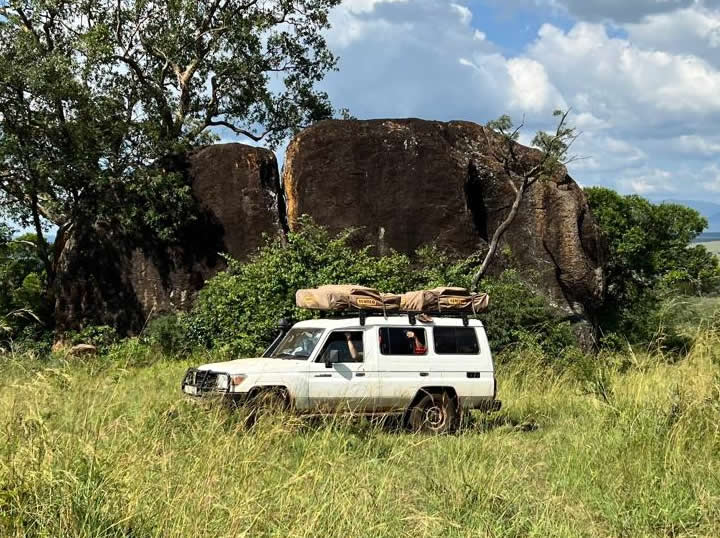
Uganda’s savannah parks — Murchison Falls, Queen Elizabeth, and Lake Mburo — are increasingly popular for self-drive safaris thanks to well-signposted tracks and improving road infrastructure, including the new oil-access roads that have cut travel time to Murchison Falls to under five hours from Kampala. A reliable 4×4 with high clearance, GPS navigation, and a printed park map are essential, particularly in the wet season. More remote or logistically complex parks, such as Kidepo Valley, Bwindi, and the Rwenzori Mountains, are better suited to a guided tour or a combination of scheduled flights and a local driver-guide.
When to Go
Uganda sits on the equator and is warm year-round, but rainfall patterns shape the best travel windows. The two dry seasons — December to February and June to September — offer the firmest roads, easiest game viewing, and the best conditions for gorilla trekking and mountain hikes. The wetter months bring lush scenery, fewer crowds, and lower lodge rates, and remain a good option for travellers prioritising birding or budget.
Booking Gorilla and Chimpanzee Permits
Gorilla trekking permits are the single most important item to book early on any Uganda itinerary. Priced at $800 per person as of 2026, permits are limited to a small number of trekkers per gorilla family per day and regularly sell out months in advance during the June-to-September and December-to-February peak seasons. Chimpanzee tracking permits, priced around $250 per person, are more readily available but should still be booked well ahead for popular parks such as Kibale.
| PLANNING TIP
Book gorilla trekking permits through the Uganda Wildlife Authority or a licensed tour operator at least 3–6 months ahead of a peak-season visit. Combine Murchison Falls with a stop at Ziwa Rhino Sanctuary to complete a Big Five checklist within Uganda’s borders. |
Frequently Asked Questions
How many national parks does Uganda have?
Uganda has 10 officially designated national parks managed by the Uganda Wildlife Authority (UWA): Bwindi Impenetrable, Queen Elizabeth, Murchison Falls, Kibale, Kidepo Valley, Lake Mburo, Mgahinga Gorilla, Rwenzori Mountains, Semuliki, and Mount Elgon.
Which Uganda national park is best for gorilla trekking?
Bwindi Impenetrable National Park offers the widest choice of gorilla families across four trekking sectors, while Mgahinga Gorilla National Park offers a smaller-scale alternative in the Virunga volcanoes, often combined with golden monkey tracking and volcano hikes.
What is the best time of year to visit Uganda’s national parks?
The two dry seasons, December to February and June to September, offer the best road conditions, easiest wildlife viewing, and firmer gorilla-trekking trails. Uganda’s parks are still rewarding in the wetter months, with lush scenery and fewer crowds.
Can I self-drive between Uganda’s national parks?
Yes. Uganda’s parks are well suited to self-drive safaris with a reliable 4×4 vehicle, particularly Murchison Falls, Queen Elizabeth, and Lake Mburo, which have well-maintained tracks. More remote parks such as Kidepo Valley are better reached by scheduled flight.
How much does a gorilla trekking permit cost in Uganda?
As of 2026, a gorilla trekking permit costs $800 per person, booked in advance through the Uganda Wildlife Authority or a licensed tour operator. Permit numbers are limited each day, so early booking is strongly advised, especially in peak season.
Start Planning Your Uganda Safari
From the gorilla-filled forests of Bwindi to the roaring waters of Murchison Falls and the wild plains of Kidepo Valley, Uganda’s ten national parks offer one of the most varied safari experiences on the African continent. Whichever combination of parks fits your itinerary, booking permits early, choosing the right season, and matching your transport plan — self-drive or guided — to each park’s terrain will set the foundation for an unforgettable trip to the Pearl of Africa.