Is Road Tripping in Uganda Safe?
Is Road Tripping in Uganda Safe? Yes, road tripping in Uganda is safe for the majority of travelers, provided you prepare properly. Thousands of tourists self-drive or take chauffeur-driven road trips through Uganda every year to reach gorilla trekking sites in Bwindi, chimpanzee forests in Kibale, and the savannah plains of Queen Elizabeth and Murchison Falls National Parks without incident. Uganda’s main highways connecting Kampala to Entebbe, Jinja, Mbarara, Masaka, Gulu, and Masindi are generally well-paved and well-signposted, with regular traffic checkpoints.
That said, “safe” in the Ugandan context looks different from a road trip in Europe or North America. Road conditions deteriorate quickly once you leave the tarmac, driving styles are more assertive, pedestrians and livestock share the road, and rural roads leading into national parks can become extremely difficult during the rainy season. Safety on a Uganda road trip depends heavily on your vehicle, your driving experience, the time of year, and how well you plan your route.

Current Travel Advisory Status (2026)
Before discussing road conditions, it’s worth addressing the elephant in the room: government travel advisories for Uganda changed significantly in 2026, and the picture is more nuanced than a single headline suggests.
The Ebola Outbreak Context
In May 2026, an Ebola outbreak caused by the Bundibugyo virus was confirmed in the Democratic Republic of Congo and spread into Uganda, prompting the World Health Organization to declare a Public Health Emergency of International Concern. Uganda recorded 20 confirmed cases and two deaths. The country responded quickly: the last Ebola patient was discharged from Kampala’s Mulago National Referral Isolation Centre on July 16, 2026, and after a 12-day monitoring period with no new cases, Uganda’s Ministry of Health officially declared the country Ebola-free on July 28, 2026.
Despite this, the U.S. State Department’s Travel Advisory for Uganda remained at Level 4 — “Do Not Travel” — as of its most recent update in early August 2026, citing crime, health, terrorism, and unrest, alongside continued advisories against travel to the DRC and South Sudan. This is a notably stricter rating than the Level 3 “Reconsider Travel” advisory that had applied earlier in the year, before the outbreak. Travelers should treat this as a fast-moving situation and check the official advisory again close to their departure date, since the rating may ease as the outbreak stays resolved.
Separately from the health situation, security assessments note that Kampala and the Karamoja region, along with Uganda’s western and northern border areas, carry higher crime risk, and that Allied Democratic Forces (ADF) activity near the DRC border has driven isolated attacks within about 50 kilometers of that frontier since late 2025. The core tourist circuit — Queen Elizabeth, Bwindi, Kibale, and Murchison Falls National Parks — has generally maintained more stable conditions than these border-adjacent areas.
Road Conditions Across Uganda
Uganda’s road network falls into two very different categories, and understanding which one you’ll be driving on each day is the single biggest factor in trip safety.
| Road Type | Condition | Vehicle Needed |
| Kampala–Entebbe Expressway | Modern, paved, tolled dual carriageway | Any vehicle |
| Major highways (Kampala–Mbarara, Kampala–Jinja, Kampala–Gulu) | Tarmacked, generally well-maintained, well-signposted | Sedan or SUV |
| Secondary town roads (Fort Portal, Kasese, Masindi) | Mostly tarmac with patchy stretches and potholes | SUV recommended |
| Park access roads (Bwindi, Kidepo, Rwenzori foothills) | Unpaved murram tracks; narrow, steep, and slippery when wet | 4×4 required |
| Rainy-season rural routes | Can become impassable or heavily rutted after storms | 4×4 with high clearance |

The road to Bwindi Impenetrable Forest in particular is notorious for washouts and landslides during and after heavy rain, which is why many gorilla-trekking operators strongly recommend a professional driver-guide for that stretch even if you’re self-driving elsewhere. A genuine 4×4 — not just an SUV badge — is treated as a necessity rather than a luxury for any itinerary that includes national parks or the rainy season (roughly March–May and September–November).
Common Safety Risks for Self-Drivers
- Erratic driving and overtaking: Boda-boda motorcycles, matatus (shared taxis), and trucks often overtake on blind corners; defensive driving is essential.
- Pedestrians, cyclists, and livestock: Roads through villages and rural areas are shared space, especially at dawn and dusk.
- Potholes and unmarked road damage: Even paved highways can have sudden, unmarked hazards, particularly after rain.
- Night driving: Poor or absent street lighting, unlit vehicles, and roaming animals make driving after dark significantly riskier — most guides recommend being off the road by sunset.
- River crossings and washed-out sections: Some park routes cross seasonal streams that can rise quickly during storms.
- Fatigue on long driving days: Distances that look short on a map can take much longer than expected on rough terrain.
Wildlife & National Park Driving Safety
Driving through or near Uganda’s national parks adds a wildlife dimension that doesn’t exist on ordinary road trips. Elephants, buffalo, and antelope frequently cross park roads, and collisions — while uncommon — can be serious given the size of the animals involved.
- Keep to posted speed limits inside park boundaries (usually 25–40 km/h).
- Never approach or feed wildlife from your vehicle, and give elephants, in particular, a wide berth and an easy escape route.
- Stay inside your vehicle unless you’re at a designated viewpoint or with an armed ranger, especially in areas with buffalo, hippo, or big cats.
- Avoid driving park roads after dark; nocturnal animal movement and unlit road hazards both increase sharply.
- Budget extra time for game-viewing stretches — rangers and other drivers will often flag sightings that are worth a cautious stop.
Health & Disease Considerations
Health preparation is as much a part of “road trip safety” in Uganda as the driving itself.
- Malaria: Uganda is a malaria-risk country year-round; antimalarial prophylaxis, repellent, and mosquito nets are strongly recommended.
- Yellow fever vaccination: Required for entry by many travelers and a sensible precaution regardless.
- Routine and travel vaccines: Hepatitis A and B, typhoid, and routine boosters are commonly recommended by travel clinics.
- Ebola monitoring: Although Uganda was declared Ebola-free on July 28, 2026, travelers should watch for updated CDC and WHO guidance, avoid contact with wildlife carcasses or bushmeat, and follow any screening measures still in place at borders and airports.
- Altitude and remoteness: Some park regions are hours from the nearest hospital; comprehensive travel insurance with medical evacuation cover is essential.
Crime & Personal Security
Petty theft and, less commonly, armed robbery are the main crime risks tourists should plan around, with incidents more concentrated in parts of Kampala after dark and in border-adjacent regions than along the core tourist circuit.
- Keep vehicle doors locked and windows up while driving through towns and traffic.
- Don’t leave valuables visible inside a parked vehicle, even briefly.
- Use secured parking at hotels and lodges overnight.
- Avoid displaying cash, jewelry, or expensive electronics in public.
- Same-sex relationships are criminalized in Uganda and public attitudes are unwelcoming; LGBTQ+ travelers are advised to be discreet, particularly outside major towns.
Self-Drive vs. Chauffeur-Driven: Which Is Safer?
Both approaches are used successfully by tourists every year, and the right choice depends on your driving experience and risk tolerance rather than one option being universally “safer.”
| Factor | Self-Drive | Chauffeur-Driven |
| Best for | Experienced 4×4 / off-road drivers | First-time visitors, families, tight schedules |
| Local hazard awareness | Learned as you go | Built in — driver knows road, weather, wildlife patterns |
| Flexibility | Full control over route and pace | Set by itinerary, though still adjustable |
| Stress level | Higher, especially on rough or rainy routes | Lower — you can focus on the scenery |
| Cost | Lower (rental only) | Higher (rental plus driver fee) |
| Paperwork help (permits, checkpoints) | You handle it yourself | Driver typically assists |
A common middle ground many travelers choose is self-driving the well-paved main highways and hiring a local driver-guide for the more demanding, weather-affected stretches — such as the final approach to Bwindi — where local knowledge of current road conditions matters most.
Practical Safety Tips for Your Road Trip
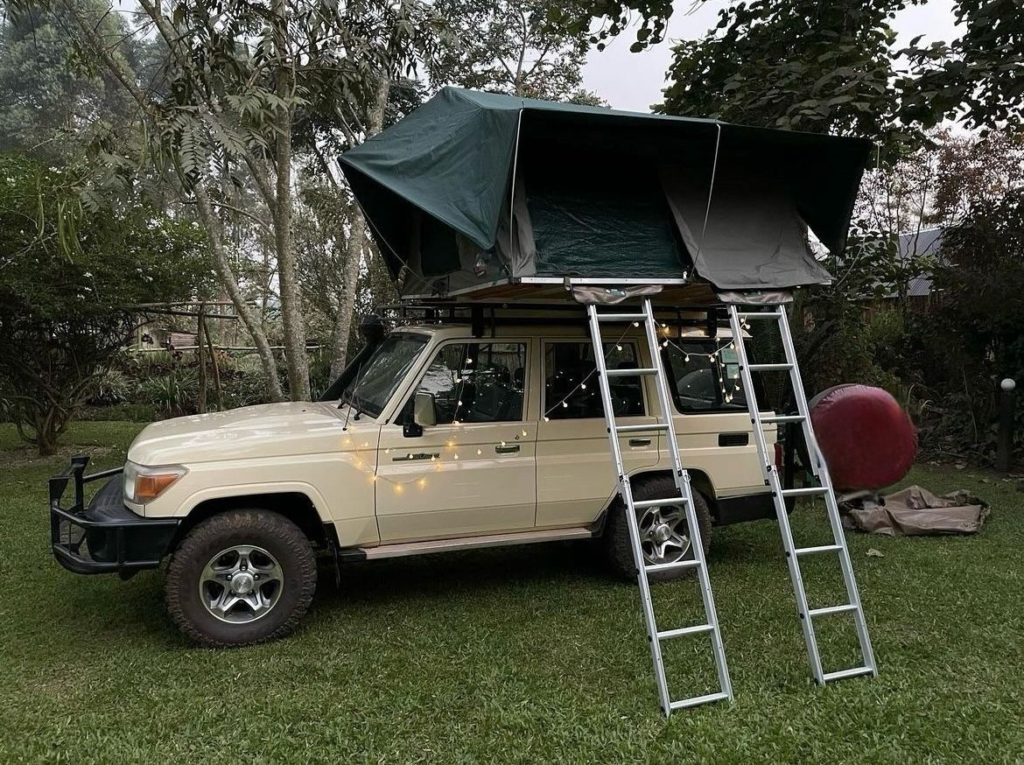
- Rent a genuine 4×4 (Land Cruiser, RAV4, or similar) from a reputable, well-reviewed rental company with roadside assistance.
- Download offline maps (Maps.me or similar) before you travel, since mobile signal is patchy in rural and park areas.
- Carry printed or offline copies of park permits, driving permits, and identification.
- Service and inspect the vehicle — tires, spare, brakes, fluids — before setting out, especially before long or rural legs.
- Plan to be off rural and park roads before sunset.
- Carry extra cash in small denominations for fuel, tolls, and emergencies, since card acceptance is limited outside major towns.
- Keep a basic first-aid kit, extra drinking water, and a charged power bank in the vehicle.
- Register with your embassy’s traveler alert program and check the latest official advisory shortly before departure.
Frequently Asked Questions
Is it safe to self-drive in Uganda as a foreigner?
Yes, for experienced drivers who are comfortable with a 4×4 on rough terrain. Many first-time visitors find a chauffeur-driven or hybrid approach more relaxing given Uganda’s road conditions and driving culture.
What is the current government travel advisory for Uganda?
As of early August 2026, the U.S. State Department rates Uganda at Level 4 — “Do Not Travel” — citing crime, health, terrorism, and unrest, even though the Ebola outbreak that partly triggered the rating was declared over on July 28, 2026. Always check your own government’s current advisory before booking, since ratings can change.
Do I need a 4×4 to visit Uganda’s national parks?
For any itinerary that includes national park access roads or travel during the rainy season, yes. A 4×4 with good clearance is considered essential rather than optional by most local operators.
Is it safe to drive at night in Uganda?
Night driving is not recommended. Poor lighting, unlit vehicles, animals on rural roads, and difficulty spotting hazards make after-dark driving substantially riskier than daytime travel.
Is Uganda safe for solo travelers and families?
Both solo travelers and families visit Uganda successfully every year, particularly along the established tourist circuit. Standard precautions — secured accommodation, daytime driving, avoiding isolated areas after dark — apply to both groups.