
Camping Sites in Uganda: Where to Camp During a Self-Drive Safari
Camping Sites in Uganda , Uganda is East Africa’s best-kept camping secret. For self-drive travelers with a rooftop tent or ground tent strapped to a 4×4, the country offers something few destinations can match: campsites perched on the Nile, hidden in the Bwindi mist, overlooking Lake Mburo’s zebra-dotted plains, and tucked beneath the Rwenzori’s snow-capped peaks — most of them for less than the price of a hotel breakfast. This guide covers every major camping site inside and around Uganda’s national parks, what each one costs, what facilities to expect, and how to build them into a self-drive itinerary.
| QUICK ANSWER
The best all-round camping bases for a Uganda self-drive safari are Red Chilli Rest Camp (Murchison Falls), Simba Campsite (Queen Elizabeth), Rwonyo Campsite (Lake Mburo), and Buhoma Community Campground (Bwindi). All accept rooftop-tent vehicles and cost roughly UGX 40,000–70,000 (about USD 10–20) per person, per night for a basic UWA public pitch. |
Why Camp on a Uganda Self-Drive Safari
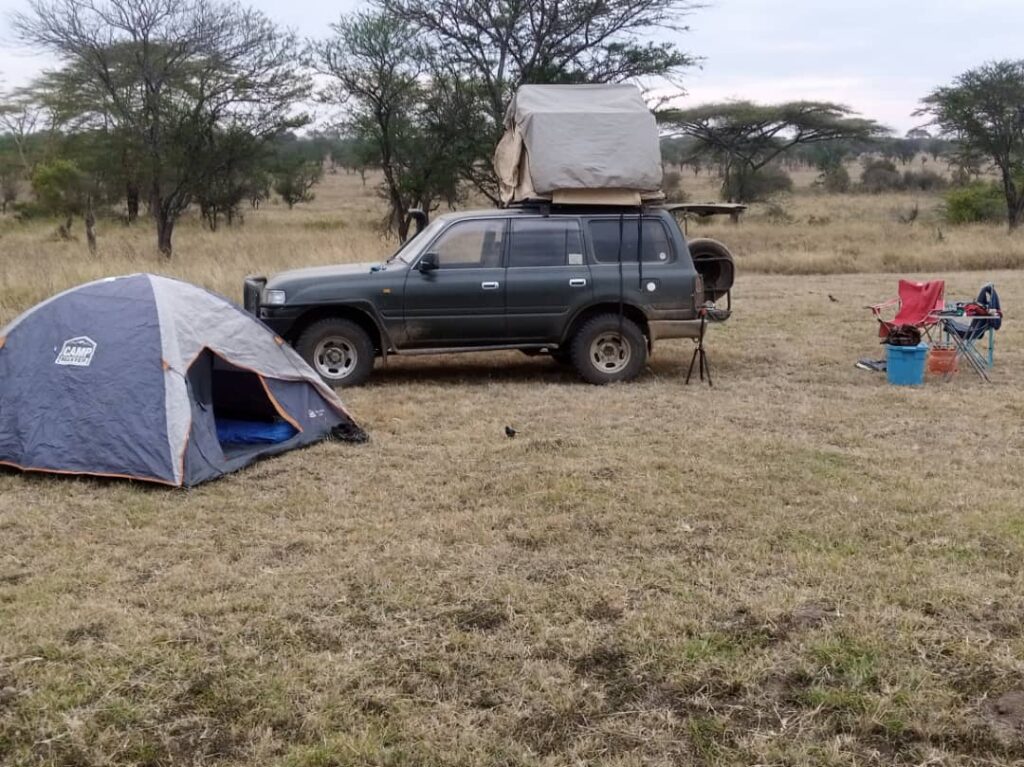
Camping is the natural companion to self-driving in Uganda. It puts you inside the park boundary rather than in a lodge on the periphery, which means you hear hyenas whooping past your tent at Murchison and wake up to buffalo grazing metres from the fence at Queen Elizabeth. It is also dramatically cheaper than lodge accommodation — a public campsite pitch typically costs under USD 15 per person, compared with USD 150–400 for a mid-range lodge room — freeing up budget for park fees, fuel, and activities like boat cruises or gorilla permits.
Most UWA (Uganda Wildlife Authority) public campsites provide the basics: a pit latrine or long-drop toilet, a water point, firewood, and a night ranger or askari for security. They do not provide tents, bedding, or food, so self-sufficiency is the rule. This is precisely why rooftop tent 4×4 rentals have become the standard set-up for overlanding Uganda: a Land Cruiser or Land Cruiser Prado fitted with a rooftop tent, fridge, and cooking kit lets you pull into almost any campsite in the country and be set up within ten minutes.
Types of Campsites in Uganda
Not all Ugandan campsites are the same, and knowing the difference helps you choose the right one for your route and comfort level.
-
UWA Public Campsites
Run directly by the Uganda Wildlife Authority inside national park boundaries. These are no-frills sites — a cleared patch of ground, a long-drop toilet, sometimes a basic shower block, and a resident night warden. They are the cheapest option in the country and the most authentic way to camp inside a park. Examples include Rwonyo (Lake Mburo), Ishasha and Simba (Queen Elizabeth), and Apoka (Kidepo Valley).
-
Wilderness / Special Campsites
A step up in exclusivity, these are semi-private sites within the park that a single group can book exclusively, away from other campers. Murchison Falls National Park’s wilderness camping option is the best-known example, offering total privacy for a premium of roughly double the standard public campsite fee.
-
Private and Lodge-Run Campgrounds
Independent operators and lodges around park entrances run campgrounds with proper hot showers, flush toilets, bar and restaurant facilities, and sometimes power points for charging camp fridges overnight. Red Chilli Rest Camp (Murchison Falls) and Mihingo Camp’s camping ground (Lake Mburo) fall into this category. Expect to pay USD 10–25 per person, per night.

-
Community Campgrounds
Run by local community associations, usually just outside a park gate, these sites channel camping fees directly into the surrounding community. Buhoma Community Rest Camp near Bwindi is the standout example, combining budget camping with cultural performances and home-cooked meals.
Best Camping Sites by National Park
Murchison Falls National Park
Uganda’s largest national park and the highlight of most Northern Circuit self-drive itineraries, thanks to the Nile crashing through a 7-metre gorge and abundant game on the northern bank.
- Red Chilli Rest Camp — the classic overlander base near Paraa, with shaded rooftop-tent-friendly pitches, hot showers, a bar, and a restaurant serving as a meeting point for self-drivers heading further north into Kidepo.
- Fort Murchison Campsite — a smaller, quieter riverside option on the southern bank with direct Nile frontage, popular for sunset views of hippos.
- Murchison Falls Wilderness Camping — book an exclusive UWA site away from other vehicles for total privacy; ideal for groups wanting an authentic bush-camping night.
- Nile Safari Camp’s overflow camping area — a private option with access to the lodge’s restaurant and bar for travellers wanting occasional creature comforts.
Queen Elizabeth National Park
Famous for tree-climbing lions in Ishasha and the Kazinga Channel boat cruise, Queen Elizabeth is a near-mandatory stop on any southwestern Uganda self-drive loop.
- Simba Campsite — the main public campsite near Mweya Peninsula, with views over the Kazinga Channel and easy access to the visitor centre and fuel station.
- Ishasha Public Campsite — set in the remote southern sector where the tree-climbing lions live; basic facilities, but the wildlife density more than compensates.
- Enjojo Lodge Campground and Bush Lodge Campsite — private options along the Kasese–Mweya road with hot showers and camp kitchens, good for travellers wanting a mid-way comfort level.

Bwindi Impenetrable National Park
The gorilla-trekking capital of Uganda, Bwindi’s steep, forested terrain means camping options cluster around the four trekking sectors rather than inside the park itself.
- Buhoma Community Rest Camp — budget camping right at the main trailhead, with meals, cultural dance performances, and profits reinvested in the local community.
- Ruhija Gorilla Safari Lodge Campground — a cooler, higher-altitude option near the Ruhija sector, convenient for early gorilla permit starts.
- Rushaga and Nkuringo community campsites — smaller, lesser-known pitches near the southern trekking sectors, ideal for combining gorilla trekking with a Lake Mutanda add-on.
Kibale National Park
The chimpanzee-tracking hub of Uganda, and a convenient overnight stop between Queen Elizabeth and Fort Portal on a self-drive loop.
- Sebitoli Campsite — inside Kibale’s northern sector, quieter and less visited, with resident forest sounds through the night.
- Isunga Lodge Campground and Chimpanzee Forest Guest House camping area — private sites near the main Kanyanchu trailhead, both within walking distance of the chimp permit office.
Lake Mburo National Park
Uganda’s smallest savannah park and the closest to Kampala, making it a natural first or last night on a self-drive circuit.
- Rwonyo Campsite — the main public campsite by the park headquarters, unfenced, so zebra and impala frequently wander through camp at dawn.
- Mihingo Camp Campground — a private option on a rocky outcrop with a swimming pool and sundowner deck overlooking the plains.
- Rwakobo Rock Campsite — just outside the park boundary, offering panoramic views and a lower-cost alternative with full facilities.
Kidepo Valley National Park
Remote, rugged, and Uganda’s most spectacular park for travellers willing to drive the extra distance north — often the finale of an extended overlanding trip.
- Apoka Public Campsite — inside the park near the visitor centre, with sweeping views over the Narus Valley and its concentrations of buffalo and elephant.
- Nga’Moru Wilderness Camp campground — a private site on the park’s edge with hot bucket showers and a strong focus on birdlife.
Semuliki National Park
A low-lying rainforest park near the Congo border, less visited but a worthwhile detour for birders and hot-spring enthusiasts.
- Sempaya Gate Campsite — a simple UWA site near the famous Sempaya hot springs, useful for overnighting before an early birding walk.
Mount Elgon National Park
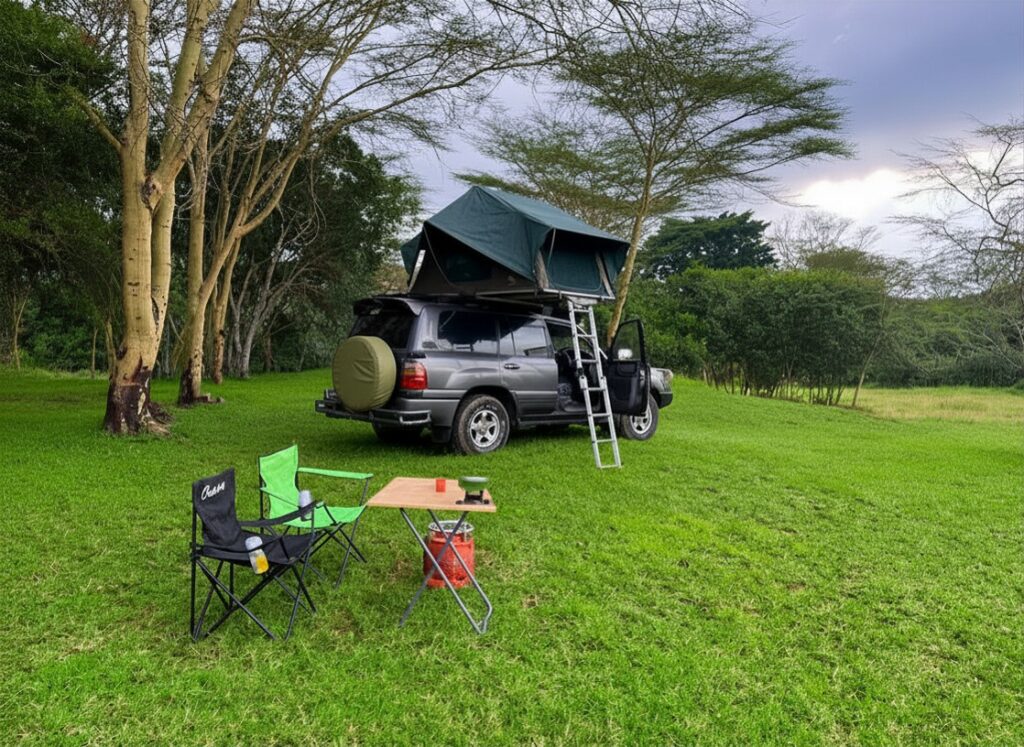
For self-drivers looking to combine wildlife with hiking, Mount Elgon’s campsites double as trailheads for multi-day treks to the caldera.
- Budadiri and Kapkwai campsites — basic UWA-run pitches at the two main trailheads, cool nights recommended, warm sleeping bags essential.
Uganda Camping Fees at a Glance
Camping fees are separate from park entrance fees, vehicle fees, and activity permits, and are charged per person, per night. Rates below reflect current UWA tariffs; always confirm at the park gate or with UWA directly, as tariffs are reviewed periodically.
| Campsite Type | Foreign Non-Resident | Foreign Resident | East African Citizen |
| UWA public campsite | USD 30–40 / night | USD 25–30 / night | UGX 20,000–30,000 / night |
| Wilderness / special campsite (e.g. Murchison) | USD 40 / night | USD 35 / night | UGX 30,000 / night |
| Private / lodge-run campground | USD 15–30 / night | USD 12–25 / night | UGX 20,000–40,000 / night |
| Community campground (e.g. Buhoma) | USD 10–20 / night | USD 10–15 / night | UGX 15,000–25,000 / night |
Remember to budget separately for park entrance fees (roughly USD 40–45 per person per 24 hours in most parks, more in Murchison Falls’ new Category A-Plus tier), self-drive game-drive fees (around USD 10 per vehicle per day), and any activity permits such as gorilla or chimpanzee trekking.
Rooftop Tent or Ground Tent? Choosing Your Camping Set-Up
The overwhelming majority of self-drive rental fleets in Uganda now come fitted with rooftop tents, and for good reason on a wildlife safari.
Rooftop tents
- Keep you off the ground and away from snakes, ants, and curious hyenas — a genuine safety advantage in unfenced campsites like Rwonyo or Ishasha.
- Set up and pack down in minutes, which matters when you are covering long distances between parks.
- Come as standard on most Land Cruiser and Land Cruiser Prado rentals in Uganda, often bundled with a fridge, table, and chairs.
Ground tents
- Cost less to rent and are lighter on fuel consumption since nothing sits on the roof rack.
- Give you more sleeping space for families or groups of three or more.
- Require extra vigilance in unfenced campsites — always ask the night warden about recent wildlife activity before pitching.
Essential Camping Gear Checklist
Most self-drive rental companies in Uganda supply a rooftop tent, bedding, a camp fridge, gas cooker, and basic cookware as standard. Beyond that, pack the following:
- Head torch and spare batteries — campsites have no lighting after dark
- Insect repellent with DEET and a permethrin-treated layer for evenings
- Antimalarial medication and a basic first-aid kit
- Reusable water containers — not all campsites have reliably safe drinking water
- Warm layers for highland parks (Bwindi, Mount Elgon, Kidepo nights can drop below 10°C)
- Cash in small UGX denominations for camping fees and community campground payments
- A physical park map or offline GPS route, since mobile signal disappears inside most parks
Camping Safety Tips for Uganda’s National Parks
- Never leave food inside the tent or vehicle cab overnight — store it in the fridge or a sealed box in the boot.
- Stay inside your tent or vehicle between dusk and dawn; most public campsites are unfenced and hippos, buffalo, and elephants regularly pass through.
- Use the campsite’s night warden — a small tip is customary and they know exactly where animals were last spotted that evening.
- Keep a working torch by your sleeping bag and check surroundings before stepping out at night.
- Register your vehicle and route with the UWA gate on entry, especially in remote parks like Kidepo Valley.

| TRAVEL SAFETY NOTE
Check the latest UWA and Ministry of Health advisories before travelling, and confirm the current status of any regional disease outbreaks in the areas you plan to visit. Your camping fee receipt and park entry ticket should be kept for the duration of your visit, as rangers may ask to see them. |
Best Time of Year to Camp in Uganda
Uganda’s camping season runs year-round, but conditions vary. The two dry seasons — December to February and June to September — offer the firmest access roads and the most comfortable camping nights, particularly in savannah parks like Queen Elizabeth and Lake Mburo. The wetter months (March–May and October–November) bring lush scenery and fewer other campers, but expect muddier tracks in and out of campsites and pack a tarp or footprint for your tent.
Sample 7-Day Self-Drive Camping Itinerary
| Day | Route | Camp for the Night |
| 1 | Kampala – Lake Mburo National Park | Rwonyo Campsite |
| 2 | Lake Mburo – Queen Elizabeth National Park (Mweya sector) | Simba Campsite |
| 3 | Kazinga Channel boat cruise – Ishasha sector | Ishasha Public Campsite |
| 4 | Ishasha – Bwindi Impenetrable National Park | Buhoma Community Rest Camp |
| 5 | Gorilla trekking in Bwindi | Buhoma Community Rest Camp |
| 6 | Bwindi – Kibale National Park (via Fort Portal) | Sebitoli Campsite |
| 7 | Chimpanzee tracking – return to Kampala | — |
Frequently Asked Questions
Do I need to book campsites in advance?
Public UWA campsites rarely require advance booking outside of peak gorilla-trekking season (June–September, December–February), but it is worth confirming availability with UWA or your rental company before departure, especially for wilderness and special campsites that are exclusive to one group.
Yes, provided standard precautions are followed — staying inside your tent after dark, using the night warden, and avoiding walking alone at night. Community campgrounds near Bwindi are particularly well suited to solo overlanders thanks to their friendly, family-run atmosphere.
Can I camp outside official campsites?
No. Camping is only permitted at designated UWA, private, or community sites. Off-site camping inside national park boundaries is prohibited for both safety and conservation reasons.
Do campsites have electricity?
Most public campsites do not. Private and lodge-run campgrounds sometimes offer power points at the bar or reception area for charging fridges and devices overnight.
Final Word
Camping remains the most authentic and cost-effective way to experience Uganda’s national parks on a self-drive safari. Whether you are pulling a rooftop-tent Land Cruiser into Rwonyo at sunset or pitching a ground tent under Kidepo’s star-filled sky, the campsites covered in this guide give you a base at every major stop on Uganda’s self-drive circuit. Plan your route around two or three parks per week, budget for camping and park fees separately, and always confirm current UWA tariffs before you set off.