
14 day Uganda Self – Drive Safari Itinerary
14 day Uganda Self – Drive Safari Itinerary , Uganda packs an outsized variety of landscapes and wildlife into a country roughly the size of Oregon — savanna plains, misty mountain rainforest, the source of the Nile, and half of the world’s remaining mountain gorillas, all reachable by road within a two-week loop. A self-drive itinerary gives you control over pace, photography stops, and detours that a fixed group tour simply can’t match, and Uganda’s well-developed rental market makes it one of the most self-drive-friendly countries in East Africa.

This 14-day Uganda self-drive itinerary is built around five of the country’s flagship destinations — Lake Mburo, Bwindi Impenetrable Forest, Queen Elizabeth National Park, Kibale Forest, and Murchison Falls — with a closing stop in Jinja at the source of the Nile. Below you’ll find a full day-by-day route, drive times, a realistic cost breakdown, vehicle recommendations, and road-safety guidance to help you plan with confidence.
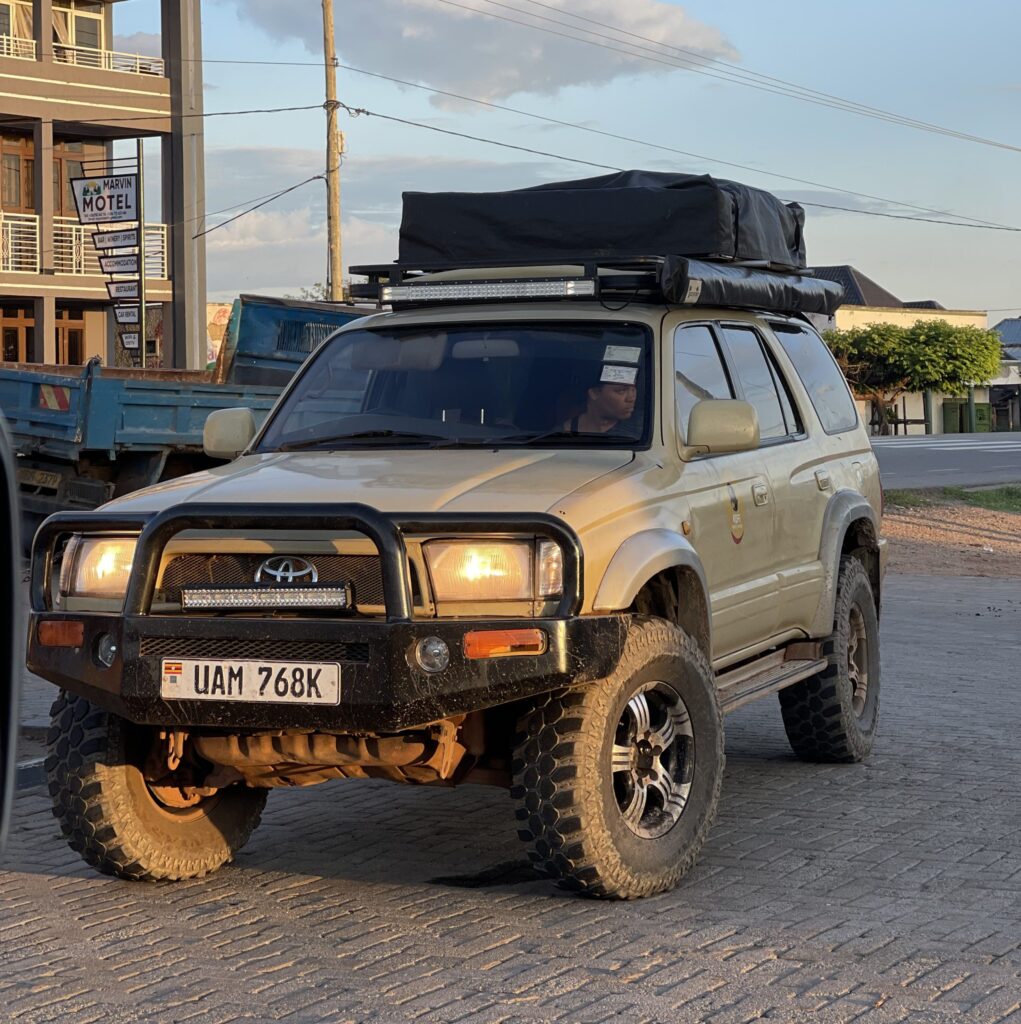
Choosing the Right 4×4 for This Route
Road conditions on this itinerary range from smooth tarmac between major towns to steep, rain-affected murram tracks approaching Bwindi and inside the parks. A reliable 4×4 with good ground clearance is essential, not optional.
| VEHICLE RECOMMENDATION
Toyota Land Cruiser Prado — the most comfortable, capable all-rounder for this route; ideal for groups of 2–4. Toyota RAV4 — a lighter, more fuel-efficient option that still handles Uganda’s park roads well in dry conditions. Toyota Hilux Double Cab with rooftop tent — best for travelers combining lodge stays with a few nights of self-drive camping. |
Best Time of Year for This Itinerary
The two dry seasons — December to February and June to September — offer the firmest roads and easiest gorilla and chimpanzee trekking conditions. The June–September window also coincides with peak wildlife visibility in Queen Elizabeth and Murchison Falls, as animals concentrate around remaining water sources. The rainier months (March–May and October–November) bring lush scenery and thinner crowds, but expect slower going on murram roads, particularly the stretch into Bwindi.
Day-by-Day Itinerary
Total distance covered: approximately 2,300 km over 14 days. Each day below includes the driving route, estimated drive time, and overnight base.
| DAY 1 Arrival in Entebbe & 4×4 Rental Pickup
Entebbe International Airport → Entebbe / Kampala |
Drive time: 20–45 minutes
Overnight: Entebbe
Your 14-day Uganda self-drive safari begins the moment you land at Entebbe International Airport, on the shores of Lake Victoria. After clearing immigration, collect your rental 4×4 — a Toyota Land Cruiser Prado, RAV4, or Toyota Hilux double-cab with rooftop tent are the most popular choices for this route because they handle Uganda’s mix of tarmac and murram (dirt) roads with ease.
Take the rest of the day to settle in: adjust to driving on the left-hand side, familiarize yourself with the vehicle’s 4WD controls, and pick up a local SIM card and cash in Ugandan shillings. Entebbe’s botanical gardens and the Uganda Wildlife Education Centre are relaxed, low-key ways to ease into the trip before the long drives begin.
Spend the night in Entebbe rather than pushing straight into Kampala traffic — it sets a calmer tone for the three weeks ahead and puts you close to the airport in case of any last-minute vehicle checks.
| DAY 2 Entebbe to Lake Mburo National Park |
Drive time: Approx. 4.5–5 hours / 230 km
Overnight: Lake Mburo
Leave Entebbe early to skip Kampala’s morning traffic, joining the well-paved Masaka Road southwest toward Mbarara. This stretch is one of Uganda’s smoothest, making it a gentle introduction to long-distance self-driving before the rougher park tracks later in the trip.
Lake Mburo is Uganda’s smallest savanna park but punches well above its weight — it’s the only park on this itinerary where you can see zebra, eland, and impala, and it’s one of the few places in East Africa where a guided walking safari alongside grazing wildlife is permitted.
| DAY 3 Lake Mburo Game Drive & Boat Cruise
Lake Mburo National Park (full day) |
Drive time: Local game-drive tracks only
Overnight: Lake Mburo
Spend a full day exploring Lake Mburo by 4×4. Morning game drives along the acacia-lined tracks are the best time to spot zebra, buffalo, and the park’s dense population of impala, while the afternoon boat cruise on the lake itself brings you close to hippos, crocodiles, and a long list of waterbirds, including the elusive African finfoot.
Because distances inside the park are short, this is a good day to service the vehicle yourself — check tyre pressure, top up washer fluid, and confirm your spare tyre and jack are accessible before the longer drive to Bwindi tomorrow.
| DAY 4 Lake Mburo to Bwindi Impenetrable Forest
Lake Mburo → Bwindi Impenetrable National Park |
Drive time: Approx. 5–6 hours / 230 km
Overnight: Bwindi (Buhoma or Ruhija sector)
This is one of the more demanding drive days on the itinerary, winding through the terraced hills of Kabale and Kanungu districts on narrow, twisting roads. The scenery — layered tea plantations and steep green ridgelines — is spectacular, but budget extra time for slow-moving traffic and switchbacks, especially in the final hour into Bwindi.
Engage 4WD for the final stretch of murram road into your lodge, particularly in the rainy seasons (March–May and September–November), when the red clay can become slick.
| DAY 5 Gorilla Trekking in Bwindi
Bwindi Impenetrable National Park (full day) |
Drive time: Trekking on foot, 2–8 hours depending on gorilla family location
Overnight: Bwindi
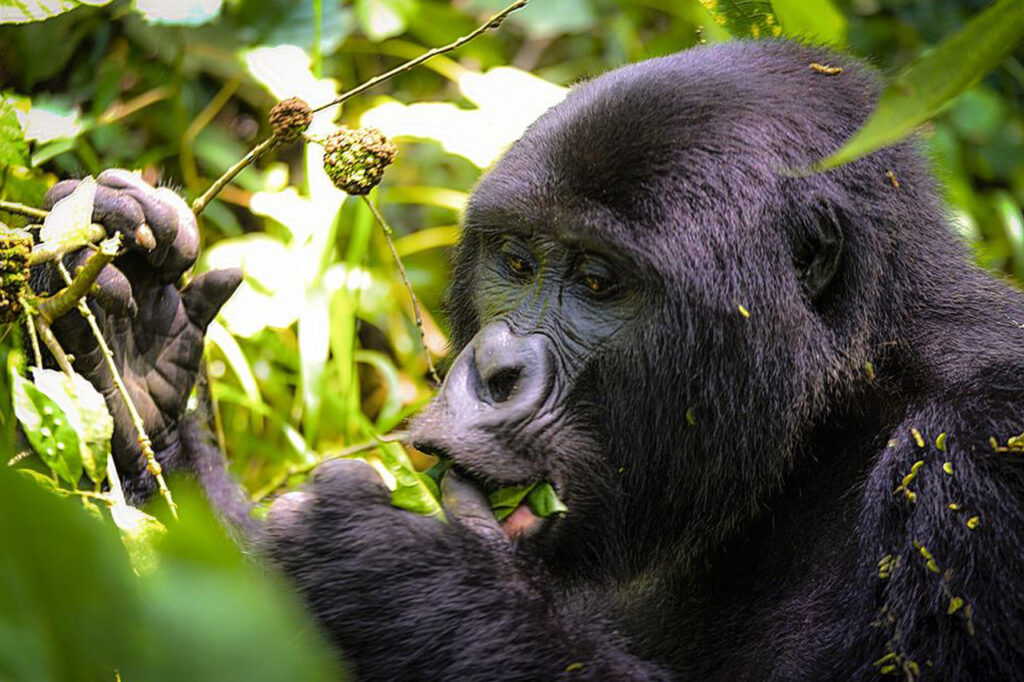
This is the centerpiece of the entire itinerary. Bwindi shelters roughly half of the world’s remaining mountain gorillas, and a permit (booked well in advance through the Uganda Wildlife Authority) gets you a strictly limited hour in the company of a habituated gorilla family.
Trekking difficulty varies enormously by which family you’re assigned and where they’ve nested that morning — come prepared with sturdy waterproof boots, gardening gloves for grabbing vegetation on steep sections, and a walking stick, which local porters can rent out at the briefing point.
| DAY 6 Bwindi to Queen Elizabeth NP via Ishasha
Bwindi → Ishasha Sector → Queen Elizabeth National Park |
Drive time: Approx. 4–5 hours / 200 km
Overnight: Queen Elizabeth (Central/Mweya sector)
Route north through the Ishasha sector of Queen Elizabeth National Park, famous for its tree-climbing lions. Drive slowly through this section with your windows down — the lions are often draped along the branches of the fig trees lining the track, and Ishasha sees far fewer vehicles than the park’s central sector.
Continue on to the central Mweya or Kasenyi area in the afternoon, where you’ll be based for the next two nights.
| DAY 7 Queen Elizabeth Game Drive & Kazinga Channel Cruise
Queen Elizabeth National Park (full day) |

Drive time: Local game-drive tracks + boat cruise
Overnight: Queen Elizabeth
An early-morning self-drive game run through the Kasenyi plains offers the best odds of lion sightings, along with elephant, buffalo, and Uganda kob in large numbers. In the afternoon, take the two-hour boat cruise along the Kazinga Channel, which connects Lake Edward and Lake George — it’s consistently rated one of the best wildlife-viewing boat trips in Africa for its sheer density of hippos, crocodiles, and birdlife along the banks.
| DAY 8 Queen Elizabeth to Kibale Forest National Park
Queen Elizabeth → Kibale Forest National Park (via Fort Portal) |
Drive time: Approx. 3.5–4 hours / 180 km
Overnight: Kibale / Fort Portal area
A shorter, scenic drive north through Fort Portal, framed by views of the Rwenzori Mountains — the legendary ‘Mountains of the Moon’ — on clear days. Kibale Forest is Uganda’s premier destination for chimpanzee tracking and hosts the highest primate density of any East African forest.
Arrive in time for an afternoon walk in Bigodi Wetland Sanctuary, a community-run reserve just outside the park that’s excellent for monkeys and forest birds without needing a permit.
| DAY 9 Chimpanzee Trekking in Kibale Forest
Kibale Forest National Park (full day) |
Drive time: Trekking on foot, 2–5 hours
Overnight: Kibale
Set out at dawn for chimpanzee trekking, or upgrade to the Chimpanzee Habituation Experience for a longer, less crowded morning with a community that’s still being acclimatized to human presence. Kibale is also home to eleven other primate species, including L’Hoest’s and red colobus monkeys, so keep the camera ready even between chimp sightings.
The afternoon is free — use it to service the vehicle again ahead of the long drive to Murchison Falls, and to rest before tomorrow’s early start.
| DAY 10 Kibale to Murchison Falls National Park
Kibale → Murchison Falls National Park (via Hoima) |
Drive time: Approx. 6–7 hours / 300 km
Overnight: Murchison Falls (Paraa area)
The longest drive day of the trip, heading north through Hoima toward the Nile and Uganda’s largest national park. Roads are a mix of tarmac and well-graded murram; fuel up fully in Hoima, as options thin out closer to the park.
Time your arrival for the Paraa ferry crossing over the Nile, which links the park’s southern and northern sectors — ferries run on a set schedule, so check departure times with your lodge in advance to avoid a long wait at the crossing.
| DAY 11 Murchison Falls Game Drive & Nile Boat Cruise
Murchison Falls National Park (full day) |
Drive time: Local game-drive tracks + boat cruise
Overnight: Murchison Falls
Morning game drives across the park’s northern savanna are a strong bet for lion, giraffe, and some of the largest elephant herds in Uganda. In the afternoon, take the launch cruise upriver on the Nile to the base of Murchison Falls itself, where the entire river is forced through a gap barely seven meters wide before thundering into the gorge below.
| DAY 12 Top of the Falls & Transfer Toward Jinja
Murchison Falls → Kampala area / en route to Jinja |

Drive time: Approx. 5–6 hours / 300 km
Overnight: Kampala or Jinja
Before leaving, hike or drive to the top of Murchison Falls for a view straight down into the gorge — a dramatically different perspective from yesterday’s boat cruise. Then begin the long drive south, retracing the route toward Kampala with an overnight stop positioned to break up the journey to Jinja.
| DAY 13 Jinja: Source of the Nile
Jinja (full day) |
Drive time: Short local drives only
Overnight: Jinja
Jinja, on the northern shore of Lake Victoria, marks the source of the Nile and is Uganda’s adventure-sports hub. Take a boat trip out to the actual source point, and — if your itinerary has any energy left — add white-water rafting, kayaking, or a quad-biking excursion through the surrounding countryside.
It’s a fitting, lower-key close to a trip that’s covered savanna, rainforest, and two of the world’s great primates, before the short final drive back to Entebbe.
| DAY 14 Jinja to Entebbe & Departure
Jinja → Entebbe International Airport |
Drive time: Approx. 3–4 hours / 210 km
Overnight: Departure
A relatively easy final drive back to Entebbe, ideally timed to leave a buffer of several hours before your flight. Return the vehicle at the rental office (most operators offer airport drop-off), settle any final fuel or damage-deposit checks, and reflect on 14 days that will have covered well over 2,000 km of Uganda’s parks, forests, and Nile-side towns.
Estimated Cost Breakdown
Costs below are per-person estimates in USD for a mid-range 14-day trip and will vary by season, group size, and negotiated rental rates. Gorilla and chimpanzee permits should be booked several months in advance directly through the Uganda Wildlife Authority or a licensed operator, as availability is limited.
| Expense | Rate | Estimated Total |
| 4×4 rental (Prado/RAV4/Hilux, self-drive, 14 days) | $50–$120 / day | $700 – $1,680 |
| Fuel (approx. 2,300 km total) | ~$1.50–1.70 / litre | $300 – $400 |
| Gorilla trekking permit (Bwindi, per person) | $700 (foreign non-resident) | $700 |
| Chimpanzee trekking permit (Kibale, per person) | $200 | $200 |
| Park entry fees (Lake Mburo, QENP, Murchison, per person/day) | $35–$45 / park / day | $250 – $350 |
| Accommodation (mid-range, 13 nights) | $60–$150 / night | $780 – $1,950 |
| Boat cruises (Kazinga Channel, Nile launch) | $30–$40 per cruise | $70 – $90 |
| Visa & entry (single-entry / East Africa visa) | $50–$100 | $50 – $100 |
Rough total per person: $2,850 – $5,450, excluding international flights, tips, and optional activities such as white-water rafting in Jinja.
Road Safety & Practical Driving Tips
| BEFORE YOU GO — CHECK CURRENT ADVISORIES
Health and security situations in the region can change. Check the current U.S. State Department travel advisory, UK FCDO guidance, or your own government’s travel advice for Uganda before departure, and again a few days before you fly. Confirm with your rental company and lodges whether any park sectors have temporary access restrictions, and ask your operator about the latest entry-screening requirements at borders and park gates. |
Beyond checking current advisories, a few practical habits make a real difference on this route:
- Avoid driving after dark outside towns — wildlife, cyclists, and unlit vehicles are common hazards on rural roads.
- Carry a printed or offline map as backup; mobile signal drops in stretches of Bwindi, Kibale, and Murchison Falls.
- Keep a basic first-aid kit, extra drinking water, and a fully inflated spare tyre — punctures are the most common roadside issue on murram sections.
- Engage 4WD proactively on wet clay sections rather than after losing traction.
- Carry small-denomination Ugandan shillings for park gate fees, fuel in smaller towns, and community campsite fees.
- Wash hands regularly and follow posted hygiene protocols at park entrances, particularly in border and forest-edge areas.
What to Pack for a Uganda Self-Drive Safari
- Waterproof hiking boots and gardening gloves for gorilla and chimp trekking
- Neutral-toned clothing (khaki, olive, grey) plus a warm layer for early-morning game drives
- Rain jacket — even in dry season, forest sectors see sudden showers
- Binoculars and a zoom lens for both primate trekking and savanna game drives
- Power bank and universal adapter — charging points are limited at remote lodges
- Malaria prophylaxis and a basic personal medical kit, discussed in advance with a travel clinic
- Printed copies of gorilla/chimp permits, driving licence, and rental agreement
Frequently Asked Questions
Is it safe to self-drive in Uganda?
Uganda is one of the more self-drive-friendly countries in East Africa, with a reasonable network of tarmac roads between major towns and clearly marked park circuits. Standard precautions apply: avoid night driving in rural areas, keep valuables out of sight, and stay current on official travel advisories for the specific regions on your route.
Do I need a 4×4 for this entire route?
Yes. While the main highways are tarmacked, every park on this itinerary requires driving on murram or dirt tracks, some of which become slippery in the rainy season. A 4×4 with genuine low-range capability is strongly recommended over a standard SUV.
How far in advance should I book gorilla trekking permits?
Ideally three to six months ahead, especially for travel during the June–September or December–February peak seasons, as Uganda Wildlife Authority releases a limited number of permits per gorilla family per day.
Can this itinerary be shortened?
Yes — travelers with less time often drop either Lake Mburo or Jinja to create a tighter 10 to 11-day loop focused on gorillas, chimps, and the two major savanna parks, though this itinerary is designed to give each stop enough time to feel unhurried.
Final Thoughts
A 14-day self-drive itinerary through Uganda is a genuinely rare kind of trip — one that puts mountain gorillas, tree-climbing lions, chimpanzee troops, and the source of the Nile all within reach of a single, well-planned loop behind the wheel of your own 4×4. With the right vehicle, realistic time buffers for the rougher drive days, and up-to-date safety information in hand, this route rewards travelers with a depth and flexibility that no scheduled group tour can offer.