Do I Need a 4×4 for Entire Route in Uganda?
| QUICK ANSWER
Do I Need a 4×4 for Entire Route in Uganda, No single vehicle type is required for all of Uganda. Tarmac highways between major towns are comfortable in any car, but the moment your route enters a national park, a remote district, or the rainy season, ground clearance and four-wheel drive stop being optional. If your itinerary touches Bwindi, Kidepo Valley, the Ishasha sector of Queen Elizabeth, or Murchison Falls’ northern tracks, plan for a 4×4 for the whole trip rather than swapping vehicles halfway. |

Understanding Uganda’s Road Network
Before deciding on a vehicle, it helps to know what you are actually driving on. Uganda’s roads fall into three broad categories, and most self-drive routes mix all three in a single day.
1. Tarmac highways
The trunk roads linking Kampala, Entebbe, Mbarara, Fort Portal, Kabale, Jinja, and Gulu are sealed and generally well maintained. A standard sedan, hatchback, or budget crossover handles these stretches without difficulty, including the Kampala–Mbarara highway and the Kampala–Jinja route.
2. Murram (gravel) roads
Once you leave the highway for a district road or a park access route, tarmac gives way to compacted red murram. In dry weather these are passable in a car with reasonable ground clearance; in wet weather they turn slick, rutted, and occasionally impassable without four-wheel drive.
3. Park tracks and off-road sections
Inside national parks — and on the final approach roads to several of them — tracks are unpaved, uneven, and frequently cut by streams, mud wallows, or eroded sections. This is where 4×4, high clearance, and low-range gearing matter most.
Route-by-Route: Where You Do and Don’t Need a 4×4
Below is a practical breakdown of the most common legs on a Uganda self-drive itinerary, grouped by how demanding the road actually is.
Sections where a 2WD car is genuinely fine
- Entebbe Airport to Kampala
- Kampala to Jinja (source of the Nile)
- Kampala to Mbarara via the paved highway
- Kampala to Fort Portal on the main road
- Lake Mburo National Park’s main circuit in dry season, approached via the sealed highway
On these legs, a saloon car or compact crossover is a legitimate way to save on rental costs, provided you are travelling in the dry season and staying on the main routes.
Sections where a 4×4 is strongly recommended
- Kampala to Fort Portal onward to Kibale Forest and the crater lakes region
- Fort Portal to Queen Elizabeth National Park’s Mweya and Kasenyi circuits
- Kabale to Bwindi Impenetrable National Park (steep, winding, frequently muddy)
- Any approach to Kidepo Valley National Park in Karamoja
- Murchison Falls National Park’s northern game-drive tracks and the ferry-side circuits
These sections combine steep gradients, loose surfaces, and long distances from help. A capable 4×4 with good ground clearance is the sensible default, not just a precaution.
Sections that require a 4×4 without exception
- The Ishasha sector of Queen Elizabeth National Park, known for its tree-climbing lions and notoriously soft black-cotton soil
- The final gorilla trekking access roads around Bwindi’s Rushaga, Nkuringo, and Ruhija sectors
- Any river crossing or seasonal wetland track flagged by park rangers
| IMPORTANT WARNING
Black-cotton soil, common around Ishasha and parts of Murchison Falls, becomes almost impossible to drive on when wet, even for some 4x4s. If heavy rain is forecast, check with your rental company or park rangers before attempting these tracks, and never attempt to push through standing water of unknown depth. |
How the Season Changes the Answer
Uganda has two dry seasons — roughly December to February and June to August — and two wet seasons in between. The same road that is an easy drive in July can become a genuine 4×4-only challenge in April.
| Season | Typical Months | Effect on Road Conditions |
| Long dry season | June – August | Firmest ground of the year; murram roads and park tracks are at their most passable. |
| Short dry season | December – February | Good driving conditions on most routes; the preferred window for lighter vehicles. |
| Long rains | March – May | Frequent heavy downpours; murram roads soften, park tracks can become impassable without 4×4. |
| Short rains | October – November | More variable; some days are fine, others require waiting out a downpour before continuing. |
If your entire trip falls inside a dry-season window and your route avoids Ishasha, Kidepo, and the Bwindi trekking roads, a well-maintained crossover can work. Outside those windows, treat 4×4 as the default for any route that leaves the main highways.
2WD, Soft-Roader, or 4×4? A Quick Decision Guide
| Your Route Profile | Recommended Vehicle Type |
| Kampala, Entebbe, Jinja and paved-highway towns only | Standard sedan or hatchback |
| Highways plus one or two dry-season park visits on maintained circuits | Compact crossover with reasonable clearance |
| Multi-park safari including Queen Elizabeth, Murchison Falls, or Kibale | Mid-size 4×4, e.g. Toyota RAV4 or Land Cruiser Prado |
| Gorilla trekking, Kidepo Valley, Ishasha, or wet-season travel anywhere | Full 4×4 with high clearance, e.g. Land Cruiser Prado, Land Cruiser 70 Series, or Hilux |
| Extended self-drive safari of two weeks or more across regions | Full 4×4 throughout, to avoid mid-trip vehicle swaps |
| TRAVEL TIP
Renting one 4×4 for the entire trip is almost always cheaper and less stressful than starting with a saloon car and later paying for an emergency 4×4 swap once you reach a park gate that turns you away. |
Best Vehicle Types for Uganda Self-Drive Routes
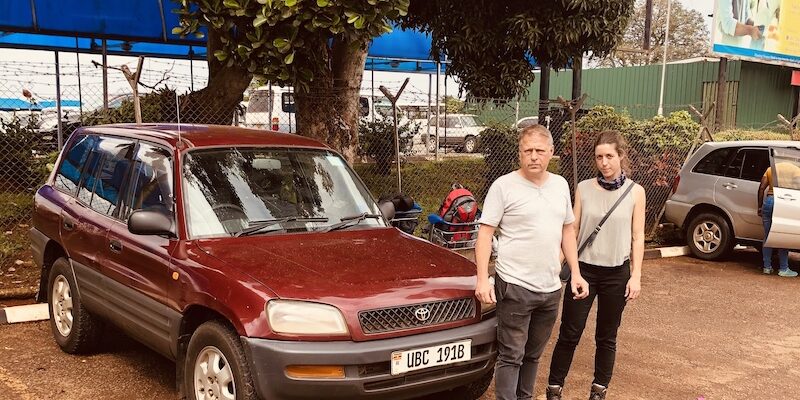
Toyota RAV4
A practical, fuel-efficient choice for couples or small families sticking to main circuits such as Lake Mburo, Queen Elizabeth’s core tracks, and highway-linked towns. Not the best choice for Ishasha or Bwindi’s steepest sections.
Toyota Land Cruiser Prado
The most popular mid-size option for multi-park itineraries. Good ground clearance, comfortable for long distances, and capable enough for Bwindi’s access roads and most of Murchison Falls‘ tracks.
Toyota Land Cruiser 70 Series or Hilux
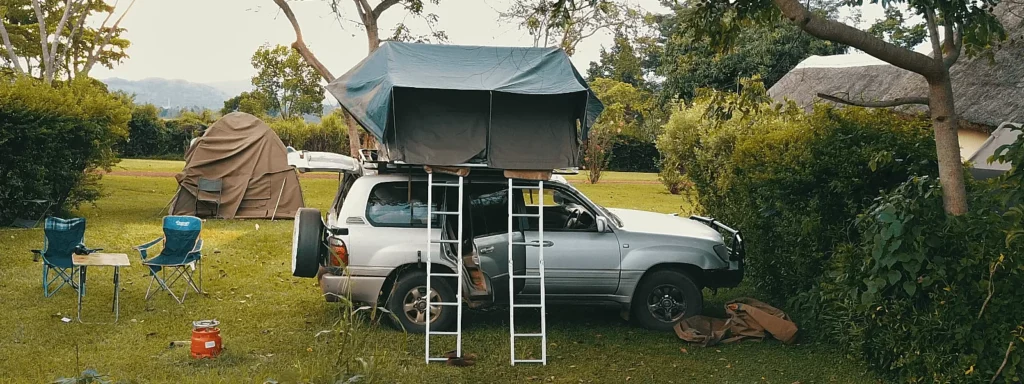
The go-to choice for rooftop-tent camping trips, Kidepo Valley, and any route where reliability and off-road strength matter more than creature comforts. Slower and firmer-riding than a Prado, but built for exactly this terrain.
Toyota Land Cruiser V8
The premium option for larger groups or families wanting comfort alongside serious off-road capability across a long, multi-park circuit.
Practical Tips for Driving Uganda’s Mixed Roads
- Book your rental with a spare tyre, jack, and recovery gear confirmed before you leave the depot.
- Fill the fuel tank at every opportunity in remote areas; stations can be sparse beyond regional towns.
- Keep to posted speed limits, particularly inside national parks, where enforcement and wildlife crossings are both strict.
- Carry your International Driving Permit alongside your home licence, plus the vehicle’s registration and insurance documents.
- Ask your rental company about the current state of your specific route before departure; conditions can change quickly after a storm.
- Avoid driving after dark on rural roads, where potholes, pedestrians, and livestock are harder to see.
Frequently Asked Questions
Can I do a Uganda self-drive safari without a 4×4 at all?
Only if your entire itinerary stays on paved highways and you skip park interiors, gorilla trekking roads, and remote regions. For most safari itineraries, this is not realistic.
Is a 4×4 required by law to enter Uganda’s national parks?
There is no blanket legal requirement, but several park authorities and lodges will not guarantee access on certain tracks, especially in the wet season, if your vehicle lacks four-wheel drive and adequate clearance.
What about renting a 2WD for the highway legs and switching to a 4×4 for parks?
This is possible with some rental companies but adds cost, logistics, and lost time at handover points. Most self-drive travelers find a single well-chosen 4×4 for the whole route is simpler and often cheaper overall.
Do I need a rooftop tent as well as a 4×4?
No. A rooftop tent is only necessary if you plan to camp; for lodge-based itineraries, a comfortable 4×4 with enough luggage space is sufficient.
The Bottom Line
For a route confined to Uganda’s main tarmac highways, a standard car will do the job. The moment your itinerary includes a national park interior, a gorilla trekking sector, Kidepo Valley, or any travel during the rainy season, a 4×4 stops being a luxury and becomes the vehicle that actually gets you there and back. When in doubt, plan your entire self-drive route around one capable 4×4 rather than mixing vehicle types along the way.