Things to Know Before you Self-Drive in Uganda
Things to Know Before you Self-Drive in Uganda, Uganda is one of the last great frontiers for self-drive safaris in East Africa. Between the misty crater lakes of the west, the thundering waters of Murchison Falls, and the gorilla-filled forests of Bwindi, a self-driven road trip lets you set your own pace, stop wherever the light is good, and reach places that scheduled tours often rush past. But driving yourself through Uganda is a different experience from a self-drive holiday in Europe or North America, and a little preparation goes a long way. This guide walks you through everything you need to know before you get behind the wheel — from licensing and vehicle choice to road conditions, park fees, safety, and budgeting — so your Uganda self-drive safari is smooth, legal, and genuinely enjoyable.

What This Guide Covers
- Driving rules, road etiquette, and what to expect on Uganda’s roads
- Licensing: do you need an International Driving Permit?
- Choosing the right rental vehicle for the terrain
- Road conditions, murram roads, and seasonal driving challenges
- Fuel, cash, and connectivity along your route
- National park entry, permits, and Uganda Wildlife Authority rules
- Safety on the road and around wildlife
- Health precautions and travel insurance
- Realistic budgeting for a Uganda self-drive trip
- A practical packing checklist
Uganda Drives on the Left — And Other Road Rules
Uganda follows the British system of driving on the left-hand side of the road, a legacy of colonial-era infrastructure. If you’re used to driving on the right, budget a day or two to adjust, particularly at roundabouts and when overtaking. Vehicles are right-hand drive, which changes your sightlines for overtaking on narrow rural roads.
- Seatbelts are mandatory for driver and front passenger, and increasingly enforced in towns.
- Speed limits are generally 50 km/h in towns and 80–100 km/h on the highway, though signage is inconsistent — drive to conditions, not the sign.
- Police checkpoints are common on major routes; slow down, greet the officer politely, and have your documents ready.
- Using a phone while driving is illegal, as is driving under the influence of alcohol.
| WARNING — Roundabouts and Boda-Bodas
Give way to traffic already on the roundabout, and watch constantly for boda-boda motorcycle taxis weaving between lanes — they are the single biggest hazard for self-drive visitors in town centers. |
Do You Need an International Driving Permit?
Visitors driving in Uganda must hold a valid driving licence from their home country, and an International Driving Permit (IDP) is strongly recommended and often required by car rental companies as a condition of the rental agreement. The IDP is not a substitute for your national licence — you must carry both together at all times.
- Get it before you travel: IDPs are issued by your home country’s motoring authority (e.g. AAA in the US, the RAC or AA in the UK) and typically cannot be obtained once you arrive in Uganda.
- Validity: Most IDPs are valid for one year from issue, so check the expiry date covers your entire trip.
- Self-drive rental requirement: Rental companies generally require the renter to be at least 23–25 years old with a minimum of 2–3 years’ driving experience, in addition to the IDP.
Choosing the Right Vehicle for Uganda’s Terrain
Vehicle choice is the single biggest factor in how comfortable your Uganda self-drive trip will be. Uganda’s tarmac highways connect major towns, but almost every national park is reached via unpaved murram roads that turn to thick mud in the rainy season.
Recommended Vehicle Types
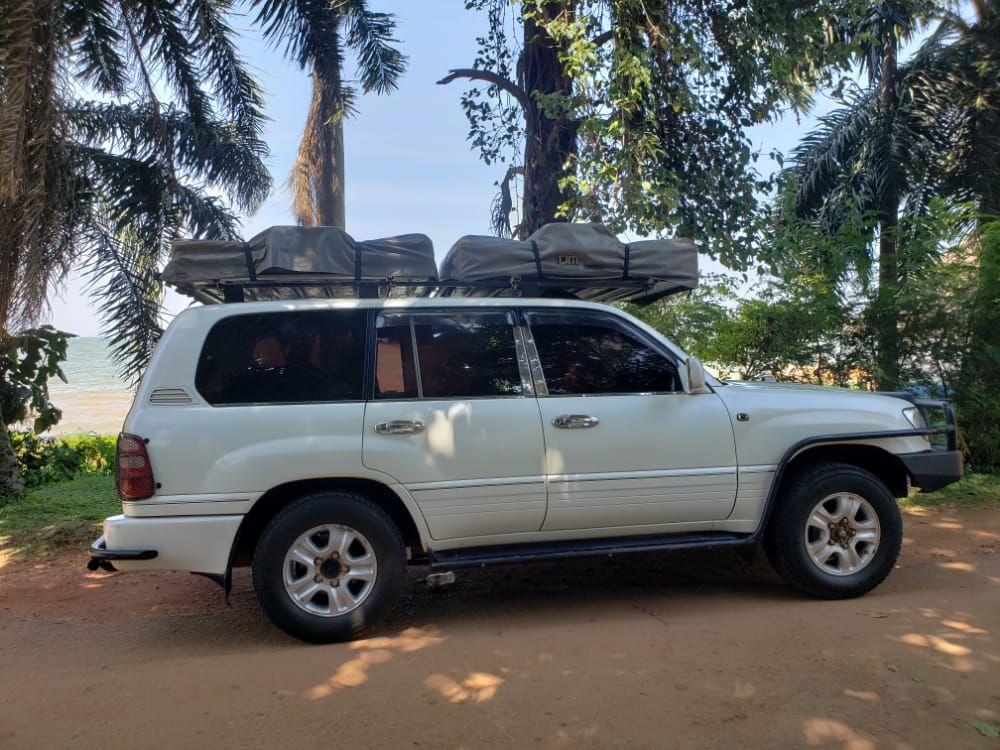
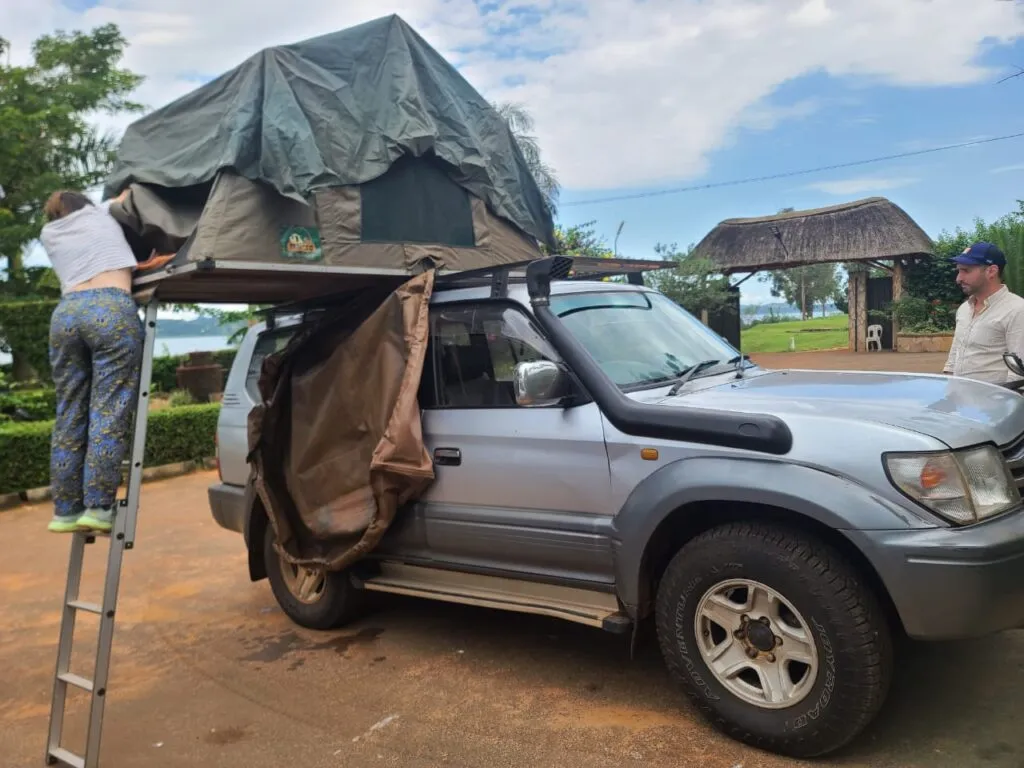
- Toyota Land Cruiser (Prado or 76/78 Series): The gold standard for Uganda self-drive — high clearance, reliable 4×4 system, and widely serviceable if something goes wrong. Often available with a rooftop tent for overlanding-style trips.
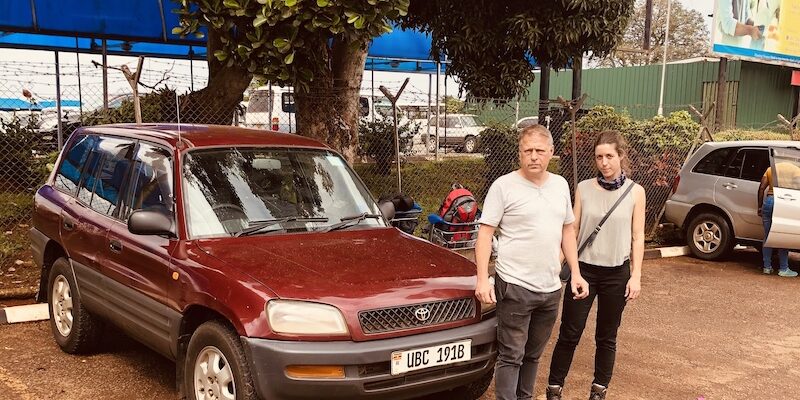
- Toyota RAV4: A popular budget-friendly 4×4 option for travelers sticking mainly to more accessible parks like Lake Mburo or Queen Elizabeth’s northern sector, though clearance is lower than a Land Cruiser.
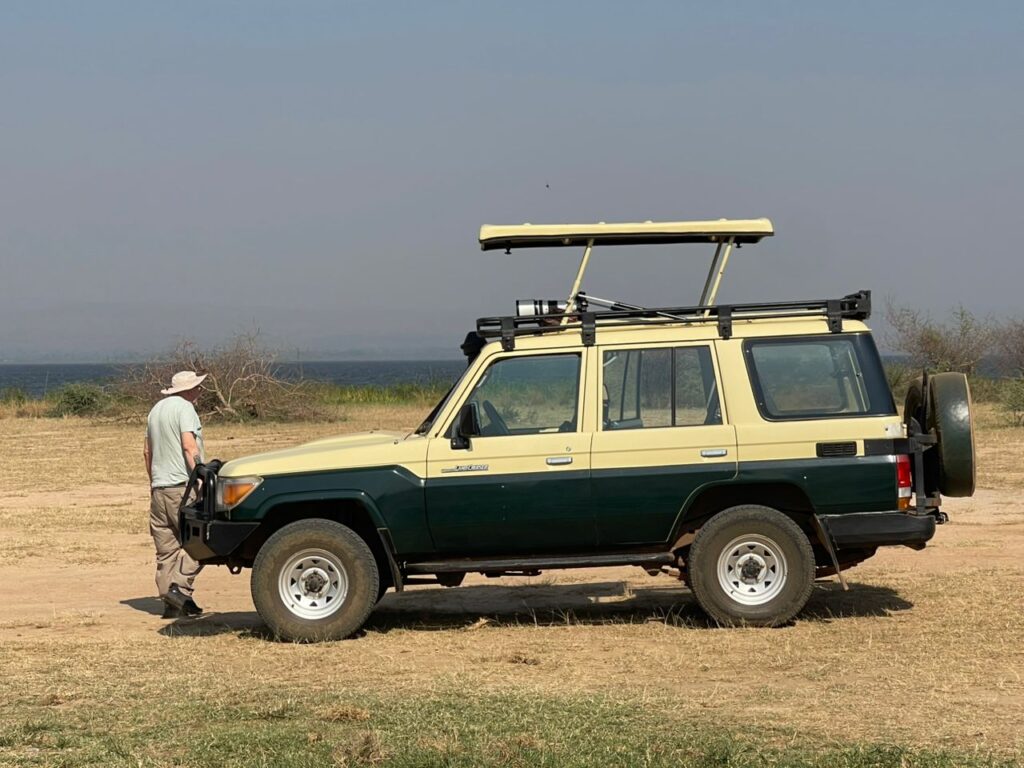
- Safari vans (Toyota Hiace/Super Custom, 4×4 converted): Good for larger groups on established routes, less ideal for very rough tracks like the Ishasha sector or northern Kidepo Valley.
| TIP — Rooftop Tent Rentals
A Land Cruiser fitted with a rooftop tent is increasingly popular for Uganda self-drive trips, combining vehicle and accommodation in one rental and cutting significantly into lodging costs on longer itineraries such as gorilla trekking loops through Bwindi and Queen Elizabeth. |
Whichever vehicle you choose, insist on 4×4 for any itinerary that includes Murchison Falls, Kidepo Valley, Ishasha, or the Rwenzori foothills. Confirm the rental includes a full-size spare tyre (ideally two on remote itineraries), a jack, a tow rope, and a functioning jerry can for extra fuel.
Road Conditions: Tarmac, Murram, and the Rainy Season
Uganda’s main highways connecting Kampala, Entebbe, Jinja, Mbarara, Fort Portal, and Gulu are sealed tarmac and generally in good condition, though potholes appear without warning, especially after heavy rain. Once you leave the highway for a national park access road, expect graded murram (compacted red laterite gravel) that can be smooth and fast in dry weather or deeply rutted and slippery within an hour of rain starting.
- Dry season (December–February, June–September) is the easiest time for self-drive, with firmer roads and fewer washouts.
- Wet season (March–May, October–November) can make certain park tracks impassable without 4×4 low range, particularly in Queen Elizabeth’s Ishasha sector and parts of Kidepo Valley.
- Night driving on rural roads is strongly discouraged — unlit boda-bodas, cattle, pedestrians, and poor signage make it genuinely dangerous. Plan to arrive at your destination before dusk.
| GOOD TO KNOW — Google Maps Isn’t Always Right
Offline navigation apps sometimes route drivers onto tracks that are impassable for a standard vehicle. Cross-check your route with your rental company or lodge before setting out on unfamiliar back roads, especially in the west and north. |

Fuel, Cash, and Staying Connected
Fuel stations (Shell, Total, Stabex) are reliable in towns and along major highways, but become sparse once you’re deep inside or between national parks. A simple rule for Uganda self-drive: fill up every time you pass a station in a town, and never let your tank drop below half in remote areas.
- Cash: Ugandan Shillings (UGX) are needed for fuel, park entrance fees, small purchases, and tips. ATMs are common in cities and larger towns but scarce near national parks, so withdraw enough cash before heading into remote regions.
- Mobile money: MTN Mobile Money and Airtel Money are widely used and useful as a backup payment method.
- Connectivity: 4G coverage is decent along main routes and in towns but patchy or absent inside parks. A local SIM (MTN or Airtel) is cheap and worth buying at the airport or in Kampala.
National Park Entry, Fees, and UWA Rules
All of Uganda’s national parks are managed by the Uganda Wildlife Authority (UWA), which sets entrance fees, permit requirements, and in-park driving rules. Entrance fees are generally payable in cash (USD or UGX) or by card at park gates, and are valid for 24 hours from time of entry.
| Park | Foreign Non-Resident (per 24hrs) | Vehicle Fee (foreign-registered) |
| Murchison Falls NP | USD 40 | USD 30–150 (by seats) |
| Queen Elizabeth NP | USD 40 | USD 30–150 (by seats) |
| Bwindi Impenetrable NP | USD 40 | USD 30–150 (by seats) |
| Kidepo Valley NP | USD 40 | USD 30–150 (by seats) |
| Lake Mburo NP | USD 30 | USD 30–150 (by seats) |
Gorilla trekking permits for Bwindi or Mgahinga must be booked in advance through UWA or a licensed operator — these regularly sell out months ahead in peak season (June–September, December–February) and are entirely separate from the park entrance fee.
- Stick to designated tracks inside parks — off-road driving is prohibited and heavily fined.
- Speed limits inside parks are typically 40 km/h (25 km/h near animals) to protect wildlife.
- Game drives before 6:30am and after 6:30pm generally require a ranger guide, and self-drive game viewing hours vary by park — confirm at the gate.
Safety on the Road and Around Wildlife
Self-drive safaris come with two distinct safety considerations: ordinary road safety, and safety around wild animals. Both are manageable with common sense and a bit of local knowledge.
Road Safety
- Avoid driving after dark outside of towns.
- Keep doors locked and windows up in busy towns and at traffic stops.
- Carry a printed or offline map as backup — mobile signal drops in valleys and forested areas.
- Share your daily route and expected arrival time with your lodge or a contact back home.
Wildlife Safety
- Never exit your vehicle inside a national park except at designated points — this applies even for photos of seemingly calm elephants or buffalo.
- Give elephants and buffalo a wide berth on park roads; reverse slowly rather than trying to pass a herd blocking the track.
- At Ishasha and Kidepo, tree-climbing lions and larger predators mean extra caution is needed even from inside the vehicle at close range.
| WARNING — Regional Health Notice
Check current travel health advisories for East Africa before departure, including any updates on disease outbreaks in the border regions of Uganda, Rwanda, and the DRC, and confirm requirements with your government’s travel advisory site and a travel health clinic. |
Health Precautions and Travel Insurance
- Malaria risk exists throughout Uganda, including in and around national parks — antimalarial prophylaxis, repellent, and long sleeves in the evening are strongly advised.
- Yellow fever vaccination certificates are required for entry by many travelers depending on their country of departure — check current requirements before you fly.
- Comprehensive travel insurance covering emergency evacuation is essential; some remote park areas are hours from the nearest clinic.
- Carry a basic first-aid kit, rehydration salts, and any personal medication in sufficient supply, as pharmacies are scarce outside major towns.
Budgeting for a Uganda Self-Drive Safari
Costs vary widely depending on vehicle type, trip length, and how many parks and permits you include. The table below gives a realistic per-day range for two travelers, excluding gorilla trekking permits.
| Expense | Budget Range (2 travelers/day) | Notes |
| 4×4 rental (Land Cruiser) | USD 90–160 | Often includes rooftop tent option |
| Fuel | USD 20–40 | Higher on long park transfers |
| Park entrance fees | USD 60–80 | Two people, one park per day |
| Camping / mid-range lodging | USD 40–150 | Camping cheapest, lodges higher |
| Food and drink | USD 20–40 | Self-catering lowers this significantly |
A two-week Uganda self-drive itinerary covering the western parks and gorilla trekking typically runs USD 2,000–4,500 per person all-in, with camping and a shared rental vehicle bringing costs toward the lower end.
Practical Packing Checklist for Self-Drive Travelers
- Original driving licence and International Driving Permit
- Printed rental agreement and emergency contact numbers
- Cash in small denominations (USD and UGX) for fees, fuel, and tips
- Local SIM card or portable Wi-Fi device
- Offline maps (Maps.me or downloaded Google Maps regions)
- Basic first-aid kit and antimalarials
- Reusable water bottles and a water purification method
- Head torch and spare batteries for camping or rooftop tent stops
- Binoculars and a good camera zoom lens for wildlife
- Light rain jacket, warm layer for early morning game drives, and neutral-colored clothing
Final Thoughts
Self-driving in Uganda rewards travelers who plan ahead but still leave room for spontaneity — the freedom to pull over for a roadside chameleon crossing, linger an extra hour at a crater lake viewpoint, or push on to catch the last light over the Rwenzori’s. With the right vehicle, a valid IDP, a realistic sense of road conditions, and respect for park rules and wildlife, a Uganda self-drive safari is one of the most rewarding ways to experience the Pearl of Africa on your own terms.