Why Rent 4×4 Car in Uganda
Why Rent 4×4 Car in Uganda , The Complete Self-Drive & Chauffeur-Driven Four-Wheel-Drive Rental Guide for Uganda Safaris
Uganda’s national parks demand a vehicle built for the terrain: red murram roads, steep escarpments in Queen Elizabeth National Park, flooded black-cotton soil around Ishasha, and the rugged Kidepo Valley track in the far northeast. A standard sedan simply cannot cope. This guide walks you through everything you need to know about renting a four-wheel-drive (4WD/4×4) vehicle in Uganda — the best models, current rental rates, self-drive requirements, chauffeur-driven alternatives, insurance, and practical tips for choosing the right rental company for your safari.

| Quick Answer
4×4 rental in Uganda typically costs $70–$250+ per day depending on the vehicle class, rental duration, and whether you choose self-drive or chauffeur-driven. A Toyota Land Cruiser Prado, RAV4, or Land Cruiser TX/TZ with pop-up roof is the most popular choice for gorilla trekking and national park safaris. |
Why You Need a 4×4 for a Uganda Safari
Uganda is nicknamed the “Pearl of Africa” partly because of its dramatic, varied terrain — and that terrain is exactly why two-wheel-drive vehicles are unsuitable for most safari itineraries. Renting a proper 4×4 isn’t a luxury upsell; in many parks it’s the only realistic way to get around safely.
- Road conditions: Most park roads are unpaved murram or dirt tracks that turn to deep mud during the March–May and September–November rains.
- Ground clearance: A 4×4’s higher clearance protects the undercarriage from rocks, ruts, and eroded sections common on tracks like the Ishasha channel and the Kidepo–Karenga road.
- River crossings and steep inclines: Routes in Queen Elizabeth NP and around the Rwenzori foothills include shallow fords and steep escarpment climbs that 2WD vehicles regularly get stuck on.
- Game viewing height: A raised 4×4, especially one with a pop-up roof, gives unobstructed sightlines over tall grass for spotting lions, elephants, and the tree-climbing lions of Ishasha.
- Breakdown risk: Parks are remote, with limited phone signal and few garages nearby — a reliable, well-maintained 4×4 significantly reduces the chance of being stranded.
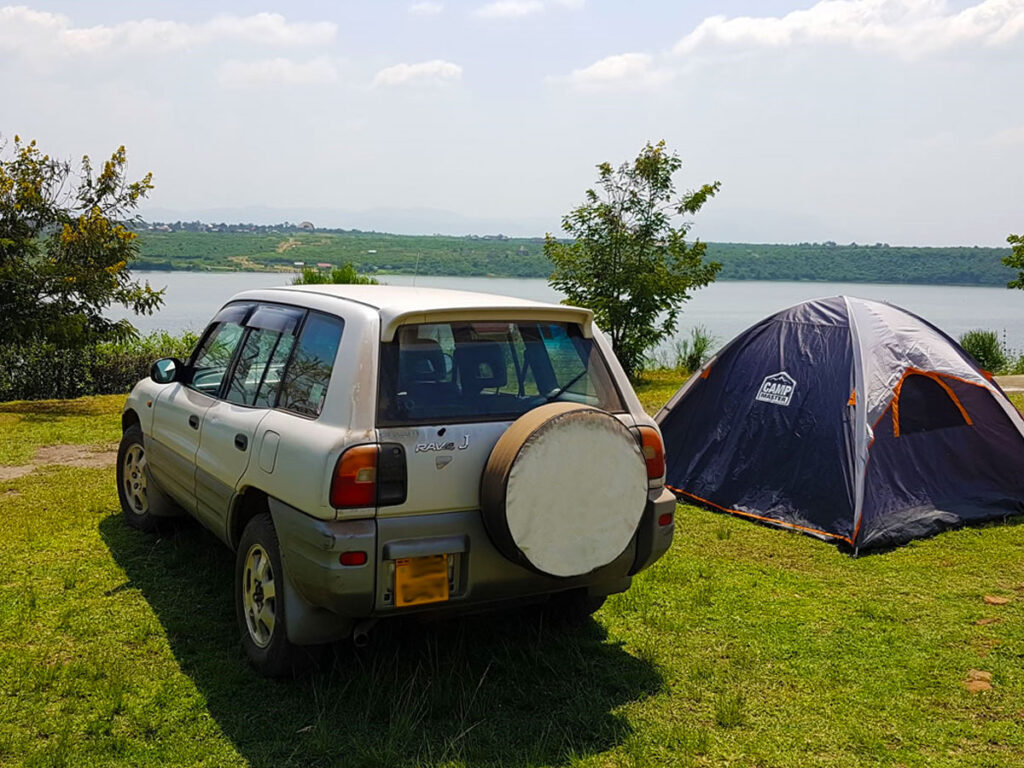
Best 4×4 Vehicles for Self-Drive in Uganda
Rental fleets in Kampala, Entebbe, and near the major parks are built around a handful of proven models. Your choice depends on group size, budget, and how remote your itinerary is.
Toyota RAV4
The RAV4 is the most affordable true 4×4 on the market and a favourite among budget and mid-range self-drive travellers. It seats up to 4 passengers comfortably, handles murram roads well, and is economical on fuel. It is best suited to shorter circuits such as Lake Mburo, Queen Elizabeth, and Murchison Falls, and less ideal for the roughest sections of Kidepo Valley.
Toyota Land Cruiser Prado (TX / TZ)
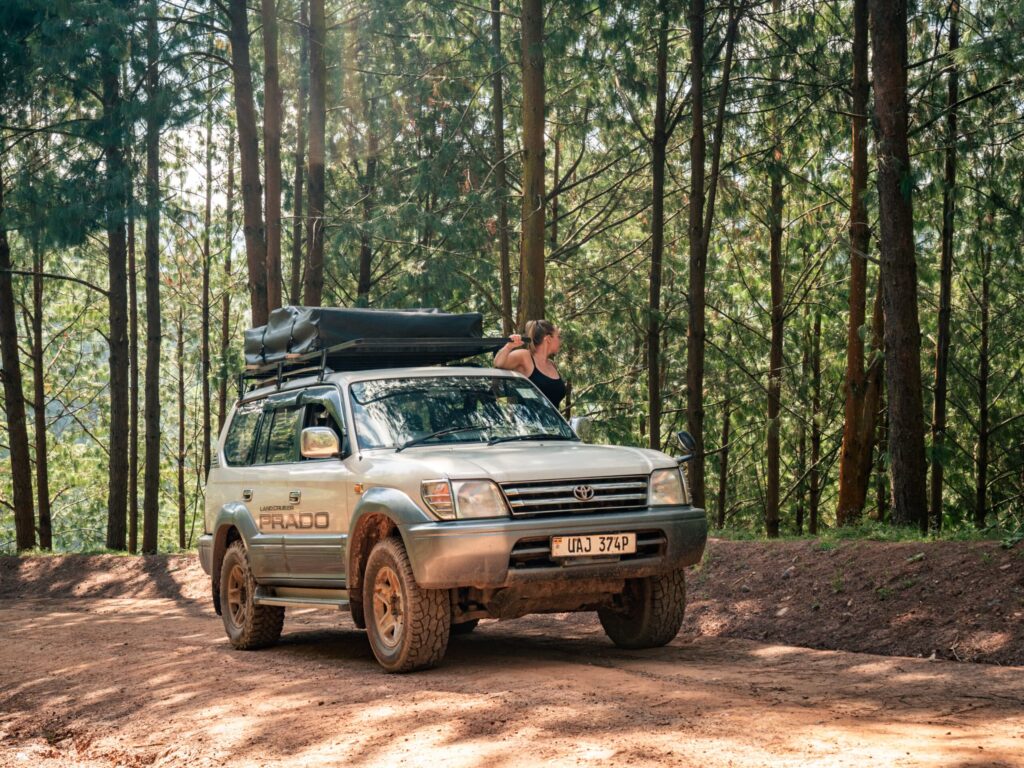
The Prado is the backbone of Uganda’s safari rental fleet. Available with or without a pop-up canvas roof, it comfortably seats 5–7, offers excellent ground clearance, and copes confidently with mud, steep gradients, and long-distance driving. Most operators offering a “safari-spec” vehicle mean a Prado TX or TZ.
Toyota Land Cruiser 76/78 Series (Hardtop)
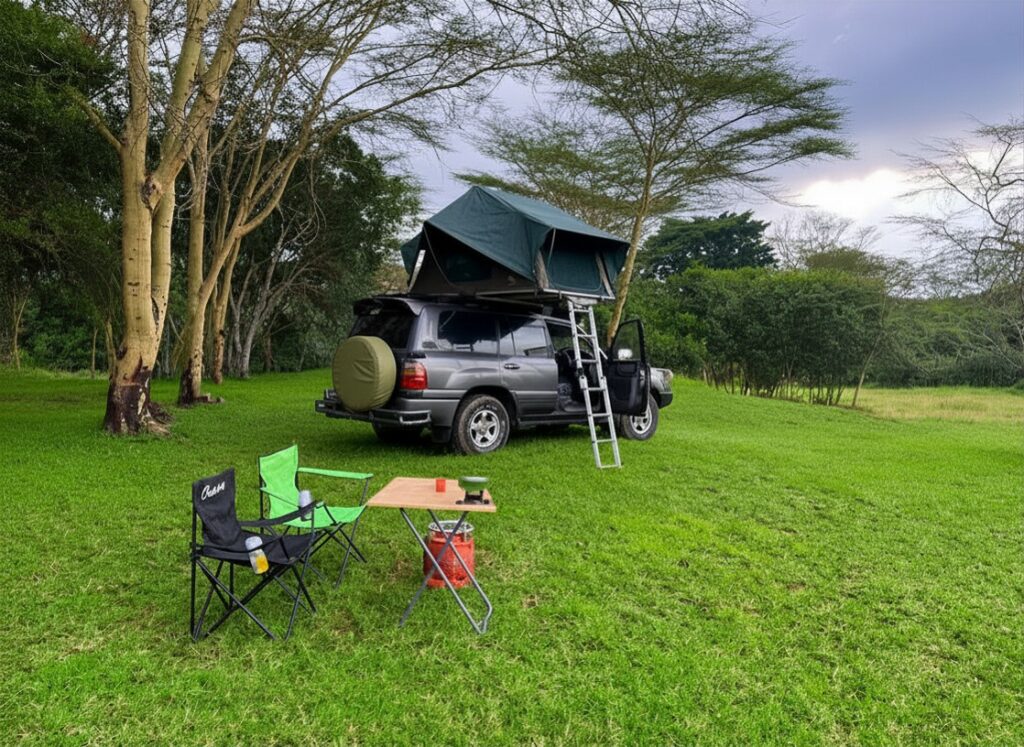
Built for extreme durability, the 70-Series Land Cruiser is the vehicle of choice for overlanders, rooftop-tent camping trips, and multi-week self-drive expeditions across Uganda, Rwanda, and northern Tanzania. It is more spartan than a Prado but virtually unstoppable off-road.
Toyota Land Cruiser V8 / Land Cruiser 200
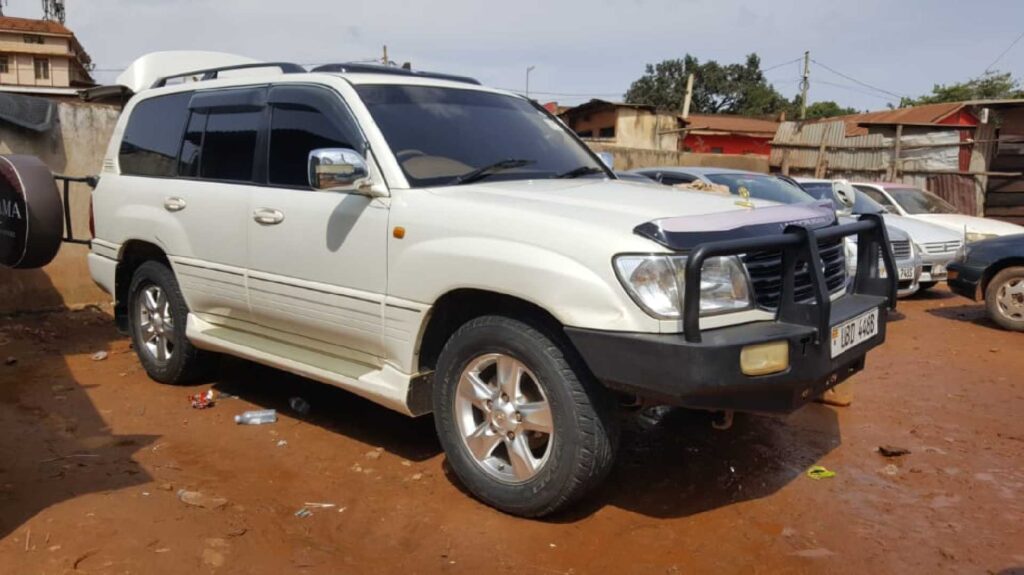
For travelers who want maximum comfort alongside serious off-road capability — families, honeymooners, or small groups on a premium budget — the V8 offers leather interiors, air conditioning that copes with equatorial heat, and a smoother ride on long transfers such as Kampala to Kidepo.
Toyota Hilux / Land Cruiser Pick-Up (Double Cab)
Popular for camping safaris and trips carrying rooftop tents, fuel jerry cans, or extra luggage, the double-cab Hilux combines genuine 4×4 capability with a load bed for gear.
Self-Drive vs. Chauffeur-Driven 4×4 Rental
Uganda rental companies offer both self-drive and chauffeur-driven (guided) 4×4 hire. Each has distinct advantages depending on your driving experience, itinerary complexity, and comfort with East African road conditions.
| Factor | Self-Drive | Chauffeur-Driven |
| Cost | Lower daily rate | 20–40% higher, but includes a guide-driver |
| Flexibility | Full control of route and pace | Driver sets the practical pace; you can still request stops |
| Navigation | Requires GPS/offline maps; park roads are poorly signed | Driver-guides know the tracks and gorilla trekking points |
| Wildlife spotting | You do all the spotting yourself | Trained guides spot game and know ranger checkpoints |
| Best for | Confident, experienced off-road drivers | First-time visitors, families, gorilla trekking transfers |
| Risk | You bear breakdown/accident logistics | Company handles issues; driver knows local contacts |
Uganda 4×4 Rental Prices (Typical Ranges)
Rates vary by company, season, vehicle age, and included mileage, but the ranges below reflect what most operators currently quote for Uganda rentals in 2026.
| Vehicle | Self-Drive (per day) | Chauffeur-Driven (per day) | Best For |
| Toyota RAV4 | $70–$90 | $95–$120 | Budget circuits, small groups |
| Land Cruiser Prado (TX) | $110–$150 | $140–$180 | Most national parks |
| Land Cruiser Prado (TZ, pop-up roof) | $130–$170 | $160–$200 | Gorilla trekking & game drives |
| Land Cruiser 78 Series (camping spec) | $150–$190 | $180–$230 | Overlanding, rooftop tent trips |
| Land Cruiser V8 / 200 Series | $180–$250+ | $220–$300+ | Premium comfort, families |
Rates typically include a mileage allowance (commonly 200–250 km/day), basic insurance, and 24-hour roadside support. Longer rentals (10+ days) usually attract a discounted daily rate, and fuel is almost always excluded.
What’s Usually Included in a Uganda 4×4 Rental
- Comprehensive or third-party insurance (confirm the excess/deposit amount before signing)
- A daily mileage allowance, with extra kilometres charged separately
- Camping gear add-ons (rooftop tent, fridge, cooking kit) for an additional daily fee
- 24-hour breakdown assistance and a spare tyre, jack, and basic tool kit
- Airport or hotel delivery and collection in Kampala or Entebbe
- A second spare tyre and extra jerry cans for remote routes like Kidepo, on request
Self-Drive Requirements in Uganda
- Valid driving licence: Your national licence is usually accepted for up to 90 days; an International Driving Permit (IDP) is strongly recommended and required by some companies.
- Minimum age: Most rental companies require drivers to be at least 23–25 years old, with 2+ years of driving experience.
- Security deposit: Expect a refundable deposit of $500–$1,500 depending on the vehicle, held on a credit card or in cash.
- Passport and proof of accommodation: Required for the rental agreement and border-crossing permits if you plan to drive into Rwanda, Kenya, or Tanzania.
- Signed rental agreement: Read the mileage limit, insurance excess, and off-road/border-crossing clauses carefully before signing.
- Vehicle inspection: Photograph the vehicle’s condition (body, tyres, windscreen) together with the rental agent before driving off.
| Money-Saving Tip
Book 4×4 rentals at least 3–4 weeks ahead during the July–September and December–February peak seasons, when the best-maintained Land Cruisers and Prados are reserved first. Renting for 7+ days almost always unlocks a lower daily rate than booking day-by-day. |
Best Routes That Require a 4×4
Kampala/Entebbe → Murchison Falls National Park
A mix of tarmac and murram road; the final stretch into the park and the game-drive tracks along the Nile delta require genuine 4WD, especially after rain.
Queen Elizabeth National Park & the Ishasha Sector
Home to Uganda’s famous tree-climbing lions, the Ishasha tracks cross black-cotton soil that becomes near-impassable in a 2WD vehicle during the rains.
Bwindi Impenetrable Forest (Gorilla Trekking)
Steep, winding red-dirt roads climb through the Kigezi highlands to reach the park’s trailheads. A Prado or similar mid-size 4×4 is the standard choice for this route.
Kidepo Valley National Park
Uganda’s most remote park, an 8–10 hour drive from Kampala on a route with long unpaved stretches. This is where a robust Land Cruiser (Prado TZ, 78-Series, or V8) is essential rather than optional.
Tips for Choosing a Reliable 4×4 Rental Company
- Check recent reviews on Google and TripAdvisor specifically for the vehicle condition, not just customer service.
- Ask for the vehicle’s year and service history — a well-maintained 2018–2022 model beats an older vehicle with high mileage.
- Confirm whether cross-border travel (Rwanda, Kenya, Tanzania) is permitted and what documentation it requires.
- Clarify the insurance excess and what happens in the event of a breakdown or accident in a remote park.
- Request photos of the actual vehicle you will receive, not stock images from the company’s website.
- Confirm whether airport pickup, a spare tyre, and roof tents (if needed) are included or charged separately.
Frequently Asked Questions
Do I need a 4×4 for every Uganda national park?
Not strictly for every park — Lake Mburo and some parts of Murchison Falls are manageable in a 2WD during the dry season — but a 4×4 is strongly recommended for Queen Elizabeth, Bwindi, Kidepo, and any itinerary spanning the rainy seasons.
Can I drive a rented 4×4 from Uganda into Rwanda or Kenya?
Many companies allow cross-border travel with prior written permission, additional insurance, and sometimes a cross-border fee. Always confirm this before booking if your itinerary includes gorilla trekking in Rwanda or a Kenya extension.
Is a pop-up roof worth the extra cost?
For game drives, yes — a pop-up roof lets passengers stand and view wildlife 360 degrees around the vehicle, which is especially valuable in Queen Elizabeth and Murchison Falls National Parks.
How much fuel does a 4×4 safari require?
Budget roughly 10–15 litres per 100 km depending on the vehicle and terrain. Fuel is available in major towns near the parks, but it’s wise to fill up whenever possible and carry a jerry can for remote routes like Kidepo.
What’s the difference between a Land Cruiser TX and TZ?
The TZ trim typically includes the pop-up canvas roof and extra safari-oriented features, while the TX is the standard closed-roof configuration — both share the same reliable drivetrain.